Tag: book-reviews

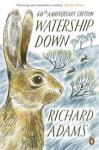
  • Title: Watership Down
    Author: Richard Adams
    Year: 1972
    Country: UK

    Format: Paperback
    Pages: 472
    Read: 19 – 31 January 2026
    First reading

    Fiver, the runt of his litter, has visions. When an ominous man-made object appears in a nearby field, Fiver foresees the destruction of his warren—but the Chief Rabbit refuses to evacuate. Led by Fiver’s brother Hazel, a handful of plucky rabbits flee the warren and set out to make a new home on Watership Down. Along the way they cross hazardous streams, roads, predators, snares, and—worst of all—a ruthless, despotic rabbit called General Woundwort. It will take all of Hazel’s cunning, Fiver’s foresight and Bigwig’s courage to survive.

    Watership Down is notorious for its power to traumatise young readers. This is a story about rabbits, but it’s a world away from the cute and cosy tales of Peter Rabbit. It’s part epic quest, part war story… it just happens to star rabbits. Richard Adams keeps the tension consistently high. During the whole thing I felt almost as highly-strung as those nervous bunnies! But the really upsetting, gruesome moments are carefully spaced out. One rabbit’s encounter with a snare is the only bit that truly shocked me—I read those paragraphs through tears. I can easily see how it would be Too Much for a preteen reader.

    The story has a mythological quality, not least because the rabbits have their own folklore and language. Their name for the Sun, their God, is ‘Frith’. (As a fan of the experimental musician Fred Frith, this particularly tickled me!) The rabbits also boost their morale by sharing stories of El-arairah, a legendary trickster rabbit. These touches, along with the use of Lapine language, make the book rather immersive. It’s set on downland not far from my house, but it felt like another world entirely. By the end, those strange Lapine words had become second nature to me, so that I didn’t need any translation for Bigwig’s war cry: “Silflay hraka, u embleer rah!”

    There’s a lot to love about Watership Down. It’s a thrilling story, engagingly told, with memorable characters and strong commentary about mankind’s relationship with the natural world. The structure is very satisfying: Each obstacle teaches the rabbits a valuable lesson (wood floats in water, rope can be chewed through, etc) which helps them defeat the next. My only real complaint is that it’s maybe a little too long. I enjoyed it and admired it, but by the end I was ready for it to be over. I’d still definitely recommend it though… as long as you’re not too squeamish!

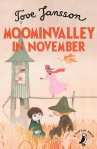
  • Title: Moominvalley in November
    (Moomins #9)
    Author: Tove Jansson
    (Translated by Kingsley Hart)
    Year: 1970
    Country: Finland

    Format: E-book
    Pages: 160
    Read: 11 – 19 January 2026
    First reading

    Moominvalley in November is the final book in Tove Jansson’s Moomins series. The Moomin family themselves don’t actually appear, having moved suddenly in the previous book to a remote lighthouse. Instead this book follows a disparate group of visitors who are disappointed to find the Moomin family home abandoned. The visitors (including Moomintroll’s mercurial bestie Snufkin) stay for a while, hoping for the family to return, while gradually learning how to be comfortable with each other… and with themselves.

    Snufkin padded along calmly, the forest closed round him and it began to rain. The rain fell on his green hat and on his raincoat, which was also green, it pittered and pattered everywhere and the forest wrapped him in a gentle and exquisite loneliness.

    The Moomins books always did have a streak of melancholy, but in this one it’s more pronounced than ever; most likely influenced by Tove Jansson’s grief at the loss of her mother. The Moomin family’s absence is keenly felt, especially by the young orphan Toft, a storyteller who yearns to be adopted by Moominmamma. Then there’s Grampa-Grumble, who has decided to make the most of his dementia by deliberately forgetting his family; and Fillyjonk, who struggles with anxiety after a near-death experience.

    These are troubled characters—and they don’t always understand, or openly express, their troubles. The whole book (apart from its quietly hopeful ending) is shrouded in sadness, loneliness, and unspoken loss. I can’t guess how younger readers would react to such a book, but my melancholic inner child (and my equally melancholic adult self) found it a moving and absorbing read. I love that Tove Jansson never patronises her readers. She trusts them to understand what remains unspoken.

    I’m sad to have reached the end of the Moomins series, but it certainly ended on a high note—albeit in a minor key. I still plan to circle back and read the very first book, so my personal journey through Moominvalley isn’t quite finished. (And the comic book series is starting to look mighty tempting too!) Ever since I read Comet in Moominland back in April of ’25, I’ve fallen completely in love with the Moomins. I fully expect to reread the whole series in the coming years.

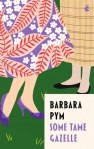
  • Title: Some Tame Gazelle
    Author: Barbara Pym
    Year: 1950
    Country: UK

    Format: E-book
    Pages: 252
    Read: 30 December 2025 – 9 January 2026
    First reading

    “Some tame gazelle, or some gentle dove:
    Something to love, oh, something to love!”

    ~ Thomas Haynes Bayly

    Some Tame Gazelle is a comedy about two fiftysomething spinsters, the not-especially-venerable Bede sisters, Belinda and Harriet. For the last thirty years Belinda, the older and dowdier of the two, has been carrying a torch for Henry Hoccleve, the village’s married Archdeacon. Meanwhile Harriet, the more glamorous and outspoken sister, repeatedly rejects the advances of the melancholy Italian Count Riccardo Bianco, preferring instead to dote on a series of young curates. But when new guests come to stay with the Archdeacon, will they upset Belinda and Harriet’s comfortable life together?

    We really ought to love one another, she thought warmly, it was a pity it was often so difficult.

    This was my first time reading Barbara Pym and it certainly won’t be my last! Some Tame Gazelle is so good, I find it hard to believe it was her debut novel. I’m a big fan of bittersweet comedies and funny dramas, so it really hit the spot for me. Pym’s wry observations of village life made me chuckle and smile with recognition. (I grew up in a small Oxfordshire village myself, so it feels very much like my childhood home, albeit a few decades before my time.) There are several running gags that get funnier each time—especially “the Apes of Brazil.” But Pym balances this humour beautifully with pathos. My heart ached for poor Belinda, with her constant self-doubt and her comfortably hopeless crush on Henry.

    Belinda gave a contented sigh. It had been such a lovely evening. Just one evening like that every thirty years or so. It might not seem much to other people, but it was really all one needed to be happy.

    Nothing much actually happens plot-wise. Like a sitcom, the status quo is temporarily upended, then restored. The Bede sisters reject some unexpected suitors, then continue to focus their affections on people who either can’t or won’t love them back. The characters don’t grow or change; they confirm exactly who they always were. In the end, Some Tame Gazelle is a story about how having “something to love, oh, something to love!” is so much easier and more comfortable than allowing yourself to be loved.

  • Title: A Quiet Place
    Author: Seicho Matsumoto
    (Translated by Louise Heal Kawai)
    Year: 1971
    Country: Japan

    Format: Paperback
    Pages: 231
    Read: 31 December 2025 – 4 January 2026
    First reading

    A Quiet Place is a crime thriller by prolific Japanese author Seicho Matsumoto. While away on a business trip, middle-aged bureaucrat Tsuneo Asai receives the devastating news that his younger wife Eiko has died of a heart attack. When he visits the small boutique where she collapsed, Asai is puzzled that his wife never once mentioned visiting the area. Nearby he notices several seedy couples’ hotels—quiet places. Was Eiko leading a double life? And was her death more suspicious than it first seemed?

    ~ Warning: The following contains significant plot spoilers. ~

    The cover of this book describes Seicho Matsumoto as Japan’s Agatha Christie. While that’s true for the other Matsumoto stuff I’ve read, I’d argue A Quiet Place is really more like a psychological thriller by Patricia Highsmith. Asai’s investigations reveal that his wife was having an affair—he’d been too devoted to his job to notice. Eventually he confronts Eiko’s lover and, provoked by the man’s apparent lack of remorse, impulsively murders him. From there, what started as a typical investigation plot pivots into Highsmithian paranoia. It’s an interesting development, and a genre I enjoy, so I’m not disappointed by it. But I do think it’s somewhat misleading to sell it as a Christiesque murder mystery. It’s not so much a whodunit as a howgetawaywithit.

    This is a quick and enjoyable read. Matsumoto’s social commentary is interesting—Asai is forced into impossible situations by Japanese social customs and his all-consuming dedication to work. And as a fan (and writer) of haiku, I love that a haiku plays a vital role in the investigation. But it’s not as evocative or as gripping as the other Matsumoto books I’ve read. In fact it’s probably my least favourite Matsumoto book so far. I’d recommend Inspector Imanishi Investigates or Tokyo Express as better starting places.

    (Just one more thing: The final scene unexpectedly made me laugh. Asai comes face to face with the very witnesses he’s been trying to avoid, and gives himself away by shrieking and running away. At that moment I couldn’t help but picture him as Homer Simpson!)