Tag: children’s fiction

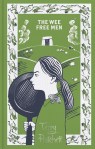
  • Title: The Wee Free Men
    (Discworld #30, Tiffany Aching #1)
    Author: Terry Pratchett
    Year: 2003
    Country: UK

    Format: Hardback
    Pages: 310
    Read: 10 – 16 February 2026
    Reread

    Nine-year-old Tiffany Aching lives with her parents on a farm. Her duties include making the cheese and looking after her perpetually sticky little brother Wentworth. Also she’s a witch… or at least hopes to be someday, just like Granny Aching before her. One day Tiffany’s quiet, peaceful life is threatened by nightmarish creatures from another realm. Using Wentworth as bait, she fights off the first monster with nothing but an iron frying pan and righteous fury. But bigger, scarier things are coming, things too powerful for Tiffany to handle alone. Luckily she has help from a witch called Miss Tick, a talking frog that may once have been human, and a clan of tiny blue pictsies called the Nac Mac Feegle—the titular Wee Free Men. (Imagine, if you will, Braveheart crossed with Smurfs.)

    “Ye ken how to be strong, do ye?”
    “Yes, I think so.”
    “Good. D’ye ken how to be weak? Can ye bow to the gale, can ye bend to the storm?

    This is the thirtieth Discworld book overall, the first in the Tiffany Aching sub-series aimed at younger readers. As such it’s shorter than a standard Discworld book, the humour is moderately less bawdy (though there are still some references for Mum and Dad to stifle a smirk over), it follows a child protagonist, and it’s divided helpfully into chapters. But for me, as someone who first read it well into adulthood, it still ticks all my Discworld boxes.

    That was how it worked. No magic at all. But that time it had been magic. And it didn’t stop being magic just because you found out how it was done.

    In fact it’s one of my favourite Pratchett books! The Wee Free Men is a delightful, magical adventure told with Pratchett’s signature humour and keen insight. In some ways it’s very silly. Tiffany enters a whimsical world of dreams and, like Alice before her, finds it very annoying indeed. The Feegles—a clan of walking, talking (not to mention stealin’, fightin’ and drinkin’) Scottish stereotypes—constantly make me laugh, especially the scenes with No’-as-big-as-Medium-Sized-Jock-but-bigger-than-Wee-Jock-Jock. But the passages where Tiffany reminisces about her late Granny, trying to learn from her example as she comes into her own power as a witch, are some of the most touching moments in any Discworld book. And for longtime fans there are excellent cameos from Granny Weatherwax and Nanny Ogg, stars of the original Discworld Witches books.

    “The thing about witchcraft,” said Mistress Weatherwax, “is that it’s not like school at all. First you get the test, and then afterwards you spend years findin’ out how you passed it. It’s a bit like life in that respect.”

    My First Sight told me this book was wonderful. My Second Thoughts have since confirmed it. Crivens, it’s a bonnie wee book!

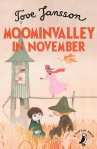
  • Title: Moominvalley in November
    (Moomins #9)
    Author: Tove Jansson
    (Translated by Kingsley Hart)
    Year: 1970
    Country: Finland

    Format: E-book
    Pages: 160
    Read: 11 – 19 January 2026
    First reading

    Moominvalley in November is the final book in Tove Jansson’s Moomins series. The Moomin family themselves don’t actually appear, having moved suddenly in the previous book to a remote lighthouse. Instead this book follows a disparate group of visitors who are disappointed to find the Moomin family home abandoned. The visitors (including Moomintroll’s mercurial bestie Snufkin) stay for a while, hoping for the family to return, while gradually learning how to be comfortable with each other… and with themselves.

    Snufkin padded along calmly, the forest closed round him and it began to rain. The rain fell on his green hat and on his raincoat, which was also green, it pittered and pattered everywhere and the forest wrapped him in a gentle and exquisite loneliness.

    The Moomins books always did have a streak of melancholy, but in this one it’s more pronounced than ever; most likely influenced by Tove Jansson’s grief at the loss of her mother. The Moomin family’s absence is keenly felt, especially by the young orphan Toft, a storyteller who yearns to be adopted by Moominmamma. Then there’s Grampa-Grumble, who has decided to make the most of his dementia by deliberately forgetting his family; and Fillyjonk, who struggles with anxiety after a near-death experience.

    These are troubled characters—and they don’t always understand, or openly express, their troubles. The whole book (apart from its quietly hopeful ending) is shrouded in sadness, loneliness, and unspoken loss. I can’t guess how younger readers would react to such a book, but my melancholic inner child (and my equally melancholic adult self) found it a moving and absorbing read. I love that Tove Jansson never patronises her readers. She trusts them to understand what remains unspoken.

    I’m sad to have reached the end of the Moomins series, but it certainly ended on a high note—albeit in a minor key. I still plan to circle back and read the very first book, so my personal journey through Moominvalley isn’t quite finished. (And the comic book series is starting to look mighty tempting too!) Ever since I read Comet in Moominland back in April of ’25, I’ve fallen completely in love with the Moomins. I fully expect to reread the whole series in the coming years.