Tag: crime fiction

  • Title: Strangers on a Train
    Author: Patricia Highsmith
    Year: 1950
    Country: USA

    Format: Paperback
    Pages: 256
    Read: 20 – 28 March 2026
    Reread
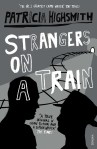
    Two strangers, up-and-coming architect Guy Haines and wealthy drunkard Charles Anthony Bruno, meet by chance on a train. As the two men talk it becomes clear that Bruno is obsessed with murder. He outlines his plan for the perfect murder, or rather the perfect pair of murders. Each man would do the other’s dirty work, ensuring there’s no motive connecting him to his respective crime. Bruno even proposes the ideal victims: His father, and Guy’s estranged wife Miriam. Guy protests he’s not the type to commit murder. But Bruno insists there is no “type”, that any man can kill given the right circumstances. And when Bruno goes ahead and strangles Miriam for Guy, it sets in motion a series of events which lead inexorably to Guy fulfilling his half of the bargain.

    I first read Strangers on a Train just over a decade ago. Back then I found it faintly underwhelming, perhaps because the fun and thrilling Hitchcock film was fresh in my memory—as was Highsmith’s excellent book, The Talented Mr Ripley. Honestly I’m not really sure what I was thinking. This time I was able to better appreciate Strangers on a Train for what it is… and I loved every second!

    This is a remarkable debut novel, much deeper and darker than the film it inspired. It’s a study of the ugliest recesses of the human psyche, exposing how a perfectly ordinary man can be driven to kill. “What else do you think keeps the totalitarian states going?” Highsmith paints both Guy and Bruno vividly, with disturbing insight. Their thought processes are laid out in detail; every paranoid spiral, every hateful and violent impulse. It may lack some of the action set-pieces of Hitchcock’s adaptation*, but it had me constantly gripped by the guts.

    The story also has a strong homoerotic subtext. Guy and Bruno share a profound connection, one that must be repressed and hidden at all costs—yet they can’t keep away from each other. Bruno even plies Guy with gifts, desperately seeking his approval. These are compelling, queer, obsessive themes that Highsmith would revisit throughout her career.

    I’m not sure why I drifted away from Patricia Highsmith, having initially been so thrilled to discover her. Revisiting Strangers on a Train has suddenly reignited my enthusiasm in a big way. I’m excited to explore more of her books in the future, rereading the ones I remember fondly and trying some new ones too. My reading schedule is already looking pretty full, but I really hope to make time for more Highsmith this year.

    *Interestingly, the climactic merry-go-round scene in the Hitchcock film was taken, uncredited, from an entirely different book: The Moving Toyshop by Edmund Crispin.
  • Title: Maigret Sets a Trap
    (Maigret #48)
    Author: Georges Simenon
    (Translated by Siân Reynolds)
    Year: 1955
    Country: Belgium

    Format: E-book
    Pages: 176
    Read: 9 – 16 March 2026
    First reading

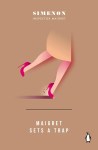
    There’s a serial killer on the loose. Once a month or so he strikes in the Montmartre area of Paris, randomly stabbing a woman to death. DCI Maigret hatches a plan to lure the killer out of hiding. He stages a fake arrest and interrogation, tricking the local reporters into declaring the killer caught. Now, with plainclothes WPCs walking the streets of Montmartre as bait, Maigret hopes the killer’s next victim will be one who can defend herself. But will the plan work, or has he just sent an unwitting officer to her death?

    This is Georges Simenon’s 48th Maigret book but my very first. I’ve been meaning to try Simenon for a while but he’s so absurdly prolific, I never knew where to start. Luckily the decision was made for me when I found this ebook on sale for 99p—and I really lucked out! Turns out this is one of the most popular Maigret books, subject of multiple screen and radio adaptations. And I can see why.

    Maigret Sets a Trap is a gripping story of the hunt for a serial killer, and a psychological study of what drives him to kill. Ultimately it’s a portrait of toxic masculinity—of a weak, pathetic man trying to reassert himself by lashing out at women. If I had read this in my teens I might have dismissed it as outdated. Now, with the rise of the Manosphere, it feels disturbingly timely.

    Simenon’s writing style is simple, spare, but vivid. He captures his characters and their surroundings in three dimensions. It’s a quick, unpretentious read, but far from a shallow one. I’ll definitely be reading more Maigret.

  • Title: Cards on the Table
    (Poirot #13)
    Author: Agatha Christie
    Year: 1936
    Country: UK

    Format: E-book
    Pages: 259
    Read: 1 – 9 February 2026
    Reread

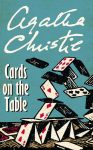
    Mr Shaitana, a renowned collector of morbid curiosities, invites Hercule Poirot to an evening of dinner and bridge. Poirot is joined by three more sleuths: Superintendent Battle, Colonel Race, and mystery novelist Ariadne Oliver. There are four more guests; each one is, according to Shaitana, a murderer—each having successfully evaded detection. The party was intended merely to show off his “collection” of killers, his way of celebrating the Art of Murder. But when Shaitana himself is found dead, stabbed with a stiletto from his own collection, it’s up to Poirot and his fellow sleuths to figure out which of the four suspects is the culprit. Each of them had both motive and opportunity, but which of them actually did it?

    Cards on the Table is Christie at her streamlined best. On the surface all four suspects seem like unlikely killers, yet each one apparently got away with murder once before. Poirot’s approach is to build a psychological profile of each suspect, aided in part by a study of their bridge scores. (Side note: I’ve never played bridge and don’t know the rules, but that didn’t spoil my enjoyment of the story.) With such a small ensemble of suspects, Christie still manages to spin a gripping story full of red herrings and surprises. And there’s a pleasingly metafictional element in Christie’s self-caricature, Ariadne Oliver, providing intuitive “insights” into who would’ve dunnit if she were writing the book. Overall I’d say this is top tier Christie.