Title: The Wee Free Men
(Discworld #30, Tiffany Aching #1)
Author: Terry Pratchett
Year: 2003
Country: UK
Format: Hardback
Pages: 310
Read: 10 – 16 February 2026
Reread
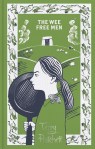
Nine-year-old Tiffany Aching lives with her parents on a farm. Her duties include making the cheese and looking after her perpetually sticky little brother Wentworth. Also she’s a witch… or at least hopes to be someday, just like Granny Aching before her. One day Tiffany’s quiet, peaceful life is threatened by nightmarish creatures from another realm. Using Wentworth as bait, she fights off the first monster with nothing but an iron frying pan and righteous fury. But bigger, scarier things are coming, things too powerful for Tiffany to handle alone. Luckily she has help from a witch called Miss Tick, a talking frog that may once have been human, and a clan of tiny blue pictsies called the Nac Mac Feegle—the titular Wee Free Men. (Imagine, if you will, Braveheart crossed with Smurfs.)
“Ye ken how to be strong, do ye?”
“Yes, I think so.”
“Good. D’ye ken how to be weak? Can ye bow to the gale, can ye bend to the storm?“
This is the thirtieth Discworld book overall, the first in the Tiffany Aching sub-series aimed at younger readers. As such it’s shorter than a standard Discworld book, the humour is moderately less bawdy (though there are still some references for Mum and Dad to stifle a smirk over), it follows a child protagonist, and it’s divided helpfully into chapters. But for me, as someone who first read it well into adulthood, it still ticks all my Discworld boxes.
That was how it worked. No magic at all. But that time it had been magic. And it didn’t stop being magic just because you found out how it was done.
In fact it’s one of my favourite Pratchett books! The Wee Free Men is a delightful, magical adventure told with Pratchett’s signature humour and keen insight. In some ways it’s very silly. Tiffany enters a whimsical world of dreams and, like Alice before her, finds it very annoying indeed. The Feegles—a clan of walking, talking (not to mention stealin’, fightin’ and drinkin’) Scottish stereotypes—constantly make me laugh, especially the scenes with No’-as-big-as-Medium-Sized-Jock-but-bigger-than-Wee-Jock-Jock. But the passages where Tiffany reminisces about her late Granny, trying to learn from her example as she comes into her own power as a witch, are some of the most touching moments in any Discworld book. And for longtime fans there are excellent cameos from Granny Weatherwax and Nanny Ogg, stars of the original Discworld Witches books.
“The thing about witchcraft,” said Mistress Weatherwax, “is that it’s not like school at all. First you get the test, and then afterwards you spend years findin’ out how you passed it. It’s a bit like life in that respect.”
My First Sight told me this book was wonderful. My Second Thoughts have since confirmed it. Crivens, it’s a bonnie wee book!
 A Genteel Black Hole