Tag: films

  • Day 39 of Project Glowing Rectangle, in which I try to divert some of my daily doomscrolling time back towards a more nourishing oblong: Cinema.
    Title: Flying Down to Rio
    Director: Thornton Freeland
    Writer: Cyril Hume, H.W. Hanemann, Erwin Gelsey
    Year: 1933
    Country: USA

    Format: DVD
    Length: 89 minutes
    Seen: 22 February 2026
    Rewatch

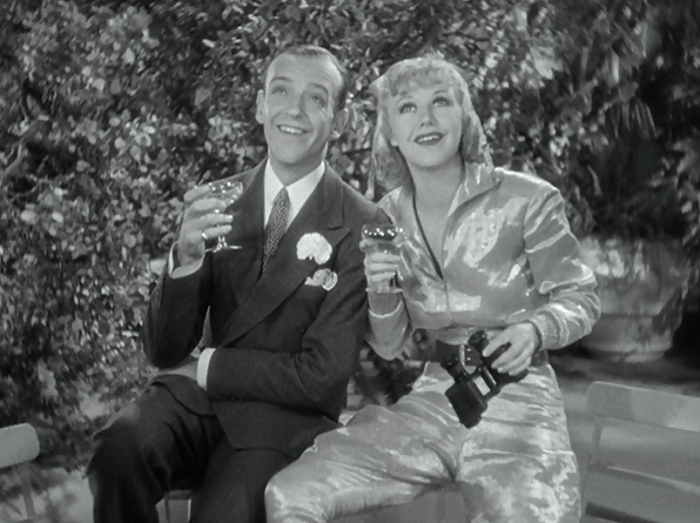
    Roger Bond (Gene Raymond) is an orchestra leader with a habit of getting fired from venues for canoodling with the customers. Despite warnings from his bandmate Fred (Fred Astaire), Roger falls for the flirtatious Brazilian heiress Belinha De Rezende (Dolores del Rio) and gets everyone fired yet again. He manages to book a new gig in Rio de Janeiro, planning to track down Belinha and continue their courtship. But the course of true love never did run smooth, and Roger discovers that Belinha is already engaged to his best friend Julio (Paul Roulien).

    Flying Down to Rio secured its place in film history by introducing the immortal pairing of Fred Astaire and Ginger Rogers. Honestly it’s not got much else going for it! There’s some fun song and dance numbers (I particularly like Ginger’s song ‘Music Makes Me’) but those are few and far between. Most of the runtime is taken up by the rather dull, chemistry-free romance between Raymond and del Rio. There’s also some vintage casual racism and misogyny—which, while not exactly surprising, is especially hard to overlook when the actual plot is so boring. I’d only recommend this for dedicated Fred and Ginger completists!

  • Day 38 of Project Glowing Rectangle, in which I try to divert some of my daily doomscrolling time back towards a more nourishing oblong: Cinema.

    Title: The Apartment
    Director: Billy Wilder
    Writer: Billy Wilder, I. A. L. Diamond
    Year: 1960
    Country: USA

    Format: 4K Blu-ray
    Length: 125 minutes
    Seen: 18 February 2026
    Rewatch

    Kubelik: Some people take, some people get took. And they know they’re getting took and there’s nothing they can do about it.

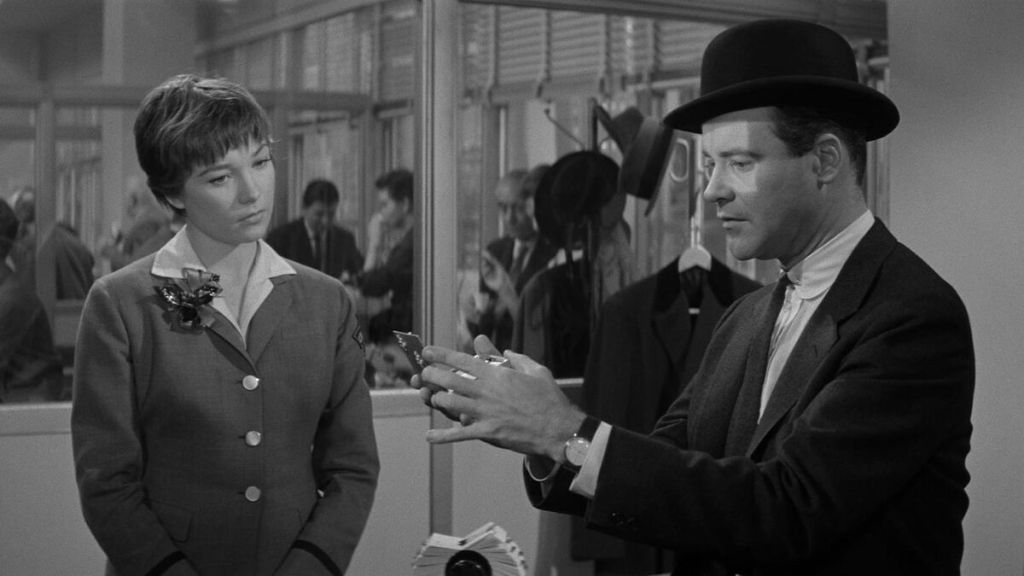
    C. C. Baxter (Jack Lemmon), aka Buddy Boy, is one of those people who gets took. He works in a huge office building as an insurance clerk, his head stuffed with numbers and statistics. Baxter often works late, not out of dedication to his job but because, despite living alone, his apartment is rarely empty. His key gets passed around the office, his apartment serving as a discreet place for married men to take their girlfriends. In return, Baxter’s superiors recommend him for promotions. When he agrees to lend the key to Mr Sheldrake (Fred MacMurray), director of personnel, Baxter finds himself quickly ascending the corporate ladder. Meanwhile he harbours a crush on Miss Kubelik (Shirley MacLaine), an elevator operator at the office. Little does he know she’s already been to his apartment…

    Baxter: The mirror… it’s broken.
    Kubelik: Yes, I know. I like it that way. Makes me look the way I feel.

    It’s safe to say The Apartment is my favourite film of all time. My band’s debut album, The Way It Crumbles, was named after a quote from the film. I rewatched it today to celebrate my 40th birthday and it made me smile, laugh and blub as much as ever! It’s a beautiful film about loneliness, human connection, and the importance of growing a spine and doing the right thing—or, as Baxter’s neighbour Dr Dreyfuss (Jack Kruschen) puts it, being a mensch.

    Jack Lemmon and Shirley MacLaine are fantastic as Baxter and Kubelik, and the screenplay by Billy Wilder and I. A. L. Diamond is a well-oiled machine of setups and payoffs. Baxter has a habit of quoting all the other characters, picking up their verbal tics and mannerisms. This leads to so many running gags and references throughout the film, each one gaining new significance over time. Nobody quotes Baxter in return, at least not at first. But eventually Miss Kubelik starts to pick up Baxterisms and the two are drawn together, romance-wise. It’s a rather chaste romance, one that ends not with a passionate kiss but a game of cards. It feels to me like a very neurodivergent-coded romcom. I love it deeply.

  • Day 37 of Project Glowing Rectangle, in which I try to divert some of my daily doomscrolling time back towards a more nourishing oblong: Cinema.

    Title: Sinners
    Director: Ryan Coogler
    Writer: Ryan Coogler
    Year: 2025
    Country: USA

    Format: 4K Blu-ray
    Length: 138 minutes
    Seen: 13 February 2026
    First viewing

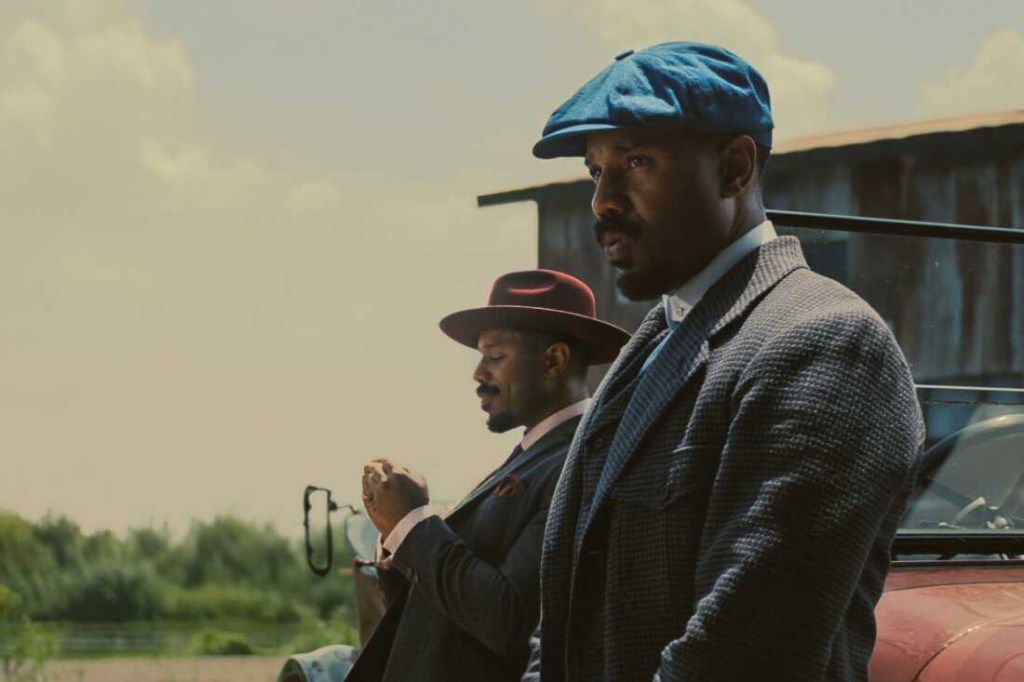
    This afternoon’s film was Sinners (2025), starring Michael B Jordan and Michael B Jordan. (Yes, sometimes I watch modern films!) Set in 1932, it follows the Smokestack twins, ‘Smoke’ and ‘Stack’, as they return home to Mississippi after seven years in Chicago. Using money stolen from the mob, the twins buy a sawmill to start a juke joint. But opening night takes a bloody turn when the transcendent power of music pierces the veil between worlds, summoning a trio of vampires.

    This is a solid piece of filmmaking. Michael B Jordan gives two excellent performances as identical twins. The scenes where he shares the screen with himself are perfectly realised; after a few minutes I stopped even thinking about what a technical feat it is. It just works! The supporting cast is also great, particularly newcomer Miles Caton as Sammie, the blues musician whose transcendent singing causes all that supernatural trouble.

    But for me the film wasn’t transcendent. Very good, yes, but I didn’t adore it like I hoped. (Also I found the alternating aspect ratios a little distracting. Do the IMAX scenes have more impact on the big screen?) Maybe I’ll get more out of it on rewatching, but my first viewing didn’t quite sink its fangs in.

  • Day 36 of Project Glowing Rectangle, in which I try to divert some of my daily doomscrolling time back towards a more nourishing oblong: Cinema.

    Title: Late Autumn
    Director: Yasujiro Ozu
    Writer: Kogo Noda, Yasujiro Ozu
    Year: 1960
    Country: Japan

    Format: Blu-ray
    Length: 128 minutes
    Seen: 10 February 2026

    First viewing

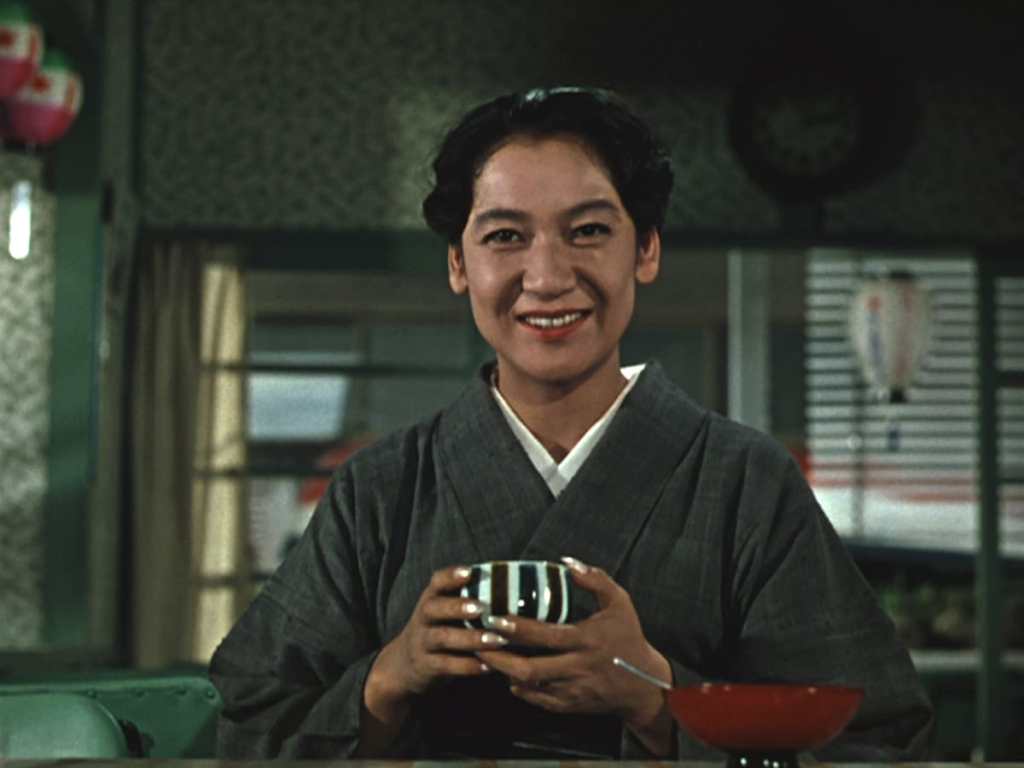
    Late Autumn is one of Yasujiro Ozu’s last films. Setsuko Hara stars as Akiko Miwa, a widow living alone with her daughter Ayako (Yoko Tsukasa). Three old friends of the late Mr Miwa take it upon themselves to find Ayako a match, but she is hesitant to marry and leave her mother alone. Maybe the three meddling friends can solve that problem by finding a match for Akiko too…

    This feels almost like a remake of Ozu’s 1949 film Late Spring: In that film Setsuko Hara played the marriageable daughter, but here she’s the widowed parent. (Chishu Ryu, her father in the earlier film, here plays her brother.) The film balances humour, sadness and social commentary, all in Ozu’s typical, quiet and delicate style—and starring many of his favourite actors. If you’re not already an Ozu devotee, I wouldn’t necessarily recommend this one as an introduction to his work. But if you’re already sold on Ozu, Late Autumn will certainly scratch that itch.

  • Day 35 of Project Glowing Rectangle, in which I try to divert some of my daily doomscrolling time back towards a more nourishing oblong: Cinema.

    Title: Only Angels Have Wings
    Director: Howard Hawks
    Writer: Jules Furthman
    Year: 1939
    Country: USA

    Format: Blu-ray
    Length: 121 minutes
    Seen: 8 February 2026
    Rewatch

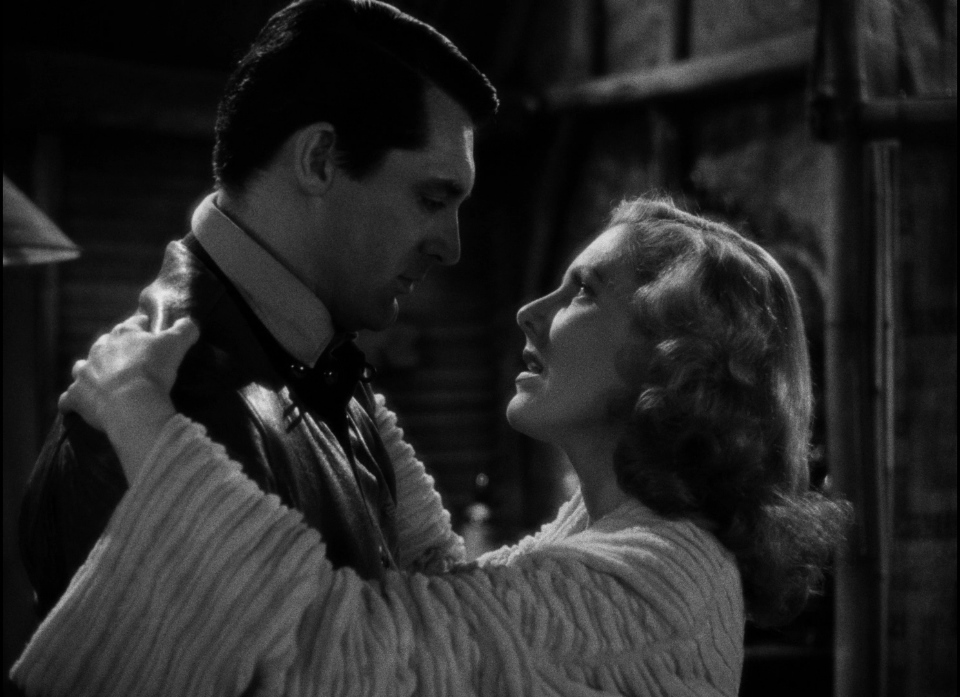
    This afternoon’s film was Only Angels Have Wings (1939), a romantic drama directed by Howard Hawks. Cary Grant stars as Geoff Carter, chief pilot of a South American airmail company. The mail route is extremely risky; pilots are frequently killed, which gives the survivors a rather jaded, fatalistic attitude. But when visiting pianist Bonnie Lee (Jean Arthur) falls for Geoff, his determination not to be tied down is put to the test.

    “I’m hard to get, Geoff. All you have to do is ask me.”

    This film didn’t make a big impression on me when I first saw it about eight years ago. But this time around I was completely sold! The cast is great, especially the central performances by Arthur and Grant. I got fully wrapped up in the will-they-won’t-they romance between Geoff and Bonnie, as well as the fates of the various pilots. The gripping aviation scenes reminded me heavily of Antoine de Saint-Exupéry’s 1939 memoir Wind, Sand & Stars. And there’s a prominent supporting role for a young Rita Hayworth as the woman who once broke Geoff’s heart. Yep, this is good stuff!

  • Day 34 of Project Glowing Rectangle, in which I try to divert some of my daily doomscrolling time back towards a more nourishing oblong: Cinema.

    Title: 42nd Street
    Director: Lloyd Bacon
    Writer: Rian James, James Seymour
    (Based on the novel by Bradford Ropes)
    Year: 1933
    Country: USA

    Format: DVD
    Length: 89 minutes
    Seen: 5 February 2026
    Rewatch

    42nd Street (1933) is a backstage musical following the cast and crew of ‘Pretty Lady’, a new show preparing to open on Broadway. The leading lady, Dorothy Brock (Bebe Daniels), is having an affair with the show’s financial backer (Guy Kibbee) whilst continuing to see her old vaudeville partner (George Brent) behind his back. And despite a string of successes, director Julian Marsh (Warner Baxter) is bankrupt thanks to the Great Depression, so he’s staking everything on ‘Pretty Lady’ being a hit. Into this high-pressure environment comes Peggy Sawyer (Ruby Keeler), a wide-eyed ingenue looking for her big break.

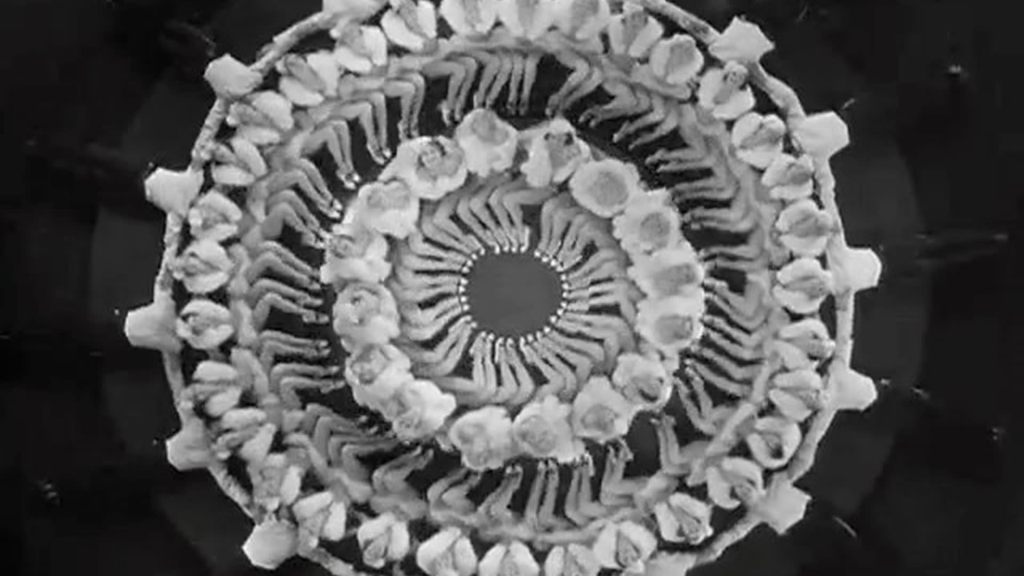
    But the real star of the show is the legendary Hollywood choreographer Busby Berkeley. He’s responsible for the spectacular, kaleidoscopic dance routines that make 42nd Street so memorable. The musical numbers in the ‘Pretty Lady’ show-within-a-show don’t seem to make much sense or tell any kind of cohesive story… but they’re exactly the kind of spectacle I came to see.

    Also there’s legs—lots of legs—a surfeit of legs! “After three weeks, a leg ain’t nothing to me but something to stand on.” Add a wisecracking supporting role from a pre-stardom Ginger Rogers and 42nd Street is a damn good time… despite most of the songs being utterly forgettable!

  • Day 33 of Project Glowing Rectangle, in which I try to divert some of my daily doomscrolling time back towards a more nourishing oblong: Cinema.

    Title: Almost Famous (The ‘Untitled’ Cut)
    Director: Cameron Crowe
    Writer: Cameron Crowe
    Year: 2000
    Country: USA

    Format: 4K Blu-ray
    Length: 161 minutes
    Seen: 3 February 2026
    Rewatch

    Almost Famous (2000) follows fifteen-year-old William Miller (Patrick Fugit), an aspiring rock journalist who goes on tour with the fictional band Stillwater. William befriends band members, roadies, and fans alike—including the famed “band aide” Penny Lane (Kate Hudson)—and witnesses firsthand their decadent rock and roll lifestyle. Meanwhile William’s strait-laced mother (Frances McDormand) grows increasingly concerned as she waits for him to come home.

    This film is a heartfelt tribute to the music of Cameron Crowe’s youth, inspired by his own experiences as a teenage rock journalist. It’s a film powered by nostalgia; and it was a huge favourite of my teenage self, meaning I now have my own nostalgia for it. I first saw it when I was around William’s age, and probably just as wide-eyed as he was. Rewatching it today was a potent emotional experience. My favourite scenes still hit deep: ‘Tiny Dancer’ had me in floods of tears just like it did 25 years ago. And I love the scenes with Philip Seymour Hoffman as William’s mentor, Lester Bangs.

    “The only true currency in this bankrupt world is what we share with someone else when we’re uncool.”

    Is it a perfect film? Probably not. Did I love every second? Absolutely!

    (Fun fact: I once watched Almost Famous as an in-flight movie. Considering the climactic electrical storm scene, this was probably not a great idea…)

  • Day 32 of Project Glowing Rectangle, in which I try to divert some of my daily doomscrolling time back towards a more nourishing oblong: Cinema.

    Title: The Life of Oharu
    Director: Kenji Mizoguchi
    Writer: Kenji Mizoguchi, Yoshikata Yoda
    (based on stories by Saikaku Ihara)
    Year: 1952
    Country: Japan

    Format: Blu-ray
    Length: 136 minutes
    Seen: 29 January 2026
    First viewing

    It’s been a disruptive few weeks, but things have finally settled down enough for me to watch a film: The Life of Oharu (1952), a period drama directed by Kenji Mizoguchi. Kinuyo Tanaka stars as the eponymous Oharu, whose life is one of ever-increasing misery. We are introduced to her as a fiftysomething prostitute, walking the streets and struggling to find a client. She takes shelter in a Buddhist temple where the statues’ faces remind her of figures from her past. What follows is the heartrending story of how she fell from a life of nobility to one of such hardship.

    First an affair with a lowly retainer (Toshiro Mifune) ends with her lover executed and her family banished. Then her father sells her, first to a Lord as a mistress to bear him a child, and later to a pleasure district as a courtesan. From there things only get worse for Oharu, almost always due to circumstances beyond her control. But the film does end with the faintest glimmer of hope… at least if you subscribe to Buddhist philosophy.

    You’re bought and paid for. You’re no different from a fish on a chopping board. We can serve you up any way we like.

    This was my second Mizoguchi film: Ugetsu (also starring Tanaka) was a highlight of last year. Both films are beautifully directed, very gripping, and intensely emotional. But while Ugetsu is a spine-tingling, supernatural tale, The Life of Oharu is horribly realistic. Oharu’s suffering comes not from personal hubris or ghostly tricks, but from the cruel treatment of other people—mainly men. Throughout the whole film I found myself bristling at the sheer injustice of it all.

    Kinuyo Tanaka is brilliant in the title role. I’ve seen her in several films recently, each one displaying a different facet of her talent. (She was also one of Japan’s first female directors, so I’m excited to explore that side of her work too.) As far as Mizoguchi goes I definitely preferred Ugetsu, but I can’t deny this film’s power—it left my heart feeling, like a fish on a chopping board, rather battered!

  • Day 31 of Project Glowing Rectangle, in which I try to divert some of my daily doomscrolling time back towards a more nourishing oblong: Cinema.

    Title: The Flavour of Green Tea Over Rice
    Director: Yasujiro Ozu
    Writer: Kogo Noda, Yasujiro Ozu
    Year: 1952
    Country: Japan

    Format: Blu-ray
    Length: 115 minutes
    Seen: 7 January 2026
    First viewing

    Today’s film was The Flavour of Green Tea Over Rice (1952)—yep, it’s another Ozu family drama! He was my most-watched director of 2025, and I fully expect him to be somewhere near the top of the list this year too. I just can’t get enough of this stuff.

    Shin Saburi and Michiyo Kogure star as Taeko and Mokichi, a middle-aged couple in a loveless marriage. Mokichi resents her husband’s apparent simplicity, referring to him among friends as Mr Bonehead. She assumes that he doesn’t call out her frequent lies because he’s too stupid to even notice. Their relationship is on the brink of dissolution, but will they confront and reconcile their differences? Meanwhile their niece Setsuko (Keiko Tsushima) tries to avoid an arranged marriage, not wanting to follow the example of her unhappy aunt and uncle.

    This film has a reputation as A Lesser Ozu, but I bloody loved it all the same! The scene where the couple reconcile over a late night meal of green tea over rice, Mokichi suddenly coming to appreciate Taeko’s simple, unpretentious ways, brought a happy tear to my eye. It’s a bittersweet, heartwarming story told in Ozu’s typically quiet, subtle, complex way. Just what I needed today.

    (Also, I had a good chuckle when the characters visited a restaurant called Calorie Hut!)

  • Day 30 of Project Glowing Rectangle, in which I try to divert some of my daily doomscrolling time back towards a more nourishing oblong: Cinema.

    Title: Les Parapluies de Cherbourg
    (The Umbrellas of Cherbourg)
    Director: Jacques Demy
    Writer: Jacques Demy
    Year: 1964
    Country: France

    Format: Blu-ray
    Length: 91 minutes
    Seen: 3 January 2026
    First viewing

    Today’s film was The Umbrellas of Cherbourg (1964), a musical by French New Wave director Jacques Demy, with songs by Michel Legrand. It’s a beautiful, bittersweet story of lost love and missed opportunities. Catherine Deneuve and Nino Castelnuovo star as giddy young lovers, Geneviève and Guy, whose dreams of marriage are suddenly derailed when Guy is drafted into the army.

    I spent much of this film trying to decide exactly how I felt about it. The whole thing, though performed with non-operatic voices, is sung-through like an opera. There’s even a playful line where one of Guy’s work colleagues says—or rather sings—that he hates opera and prefers movies. Well, I’m not a fan of opera myself, nor am I traditionally a fan of movies from the French New Wave. At first I wasn’t sure if The Umbrellas of Cherbourg was going to win me over.

    But win me over it did! So much so, the final scene had me in floods of tears. The moment Geneviève’s car pulled up at the petrol station, I was gone.

    This was my first film of 2026, so the year is off to a good start. And I look forward to revisiting The Umbrellas of Cherbourg in the future, now I’ve made my mind up about it.