Day 32 of Project Glowing Rectangle, in which I try to divert some of my daily doomscrolling time back towards a more nourishing oblong: Cinema.
Title: The Life of Oharu
Director: Kenji Mizoguchi
Writer: Kenji Mizoguchi, Yoshikata Yoda
(based on stories by Saikaku Ihara)
Year: 1952
Country: Japan
Format: Blu-ray
Length: 136 minutes
Seen: 29 January 2026
First viewing
It’s been a disruptive few weeks, but things have finally settled down enough for me to watch a film: The Life of Oharu (1952), a period drama directed by Kenji Mizoguchi. Kinuyo Tanaka stars as the eponymous Oharu, whose life is one of ever-increasing misery. We are introduced to her as a fiftysomething prostitute, walking the streets and struggling to find a client. She takes shelter in a Buddhist temple where the statues’ faces remind her of figures from her past. What follows is the heartrending story of how she fell from a life of nobility to one of such hardship.
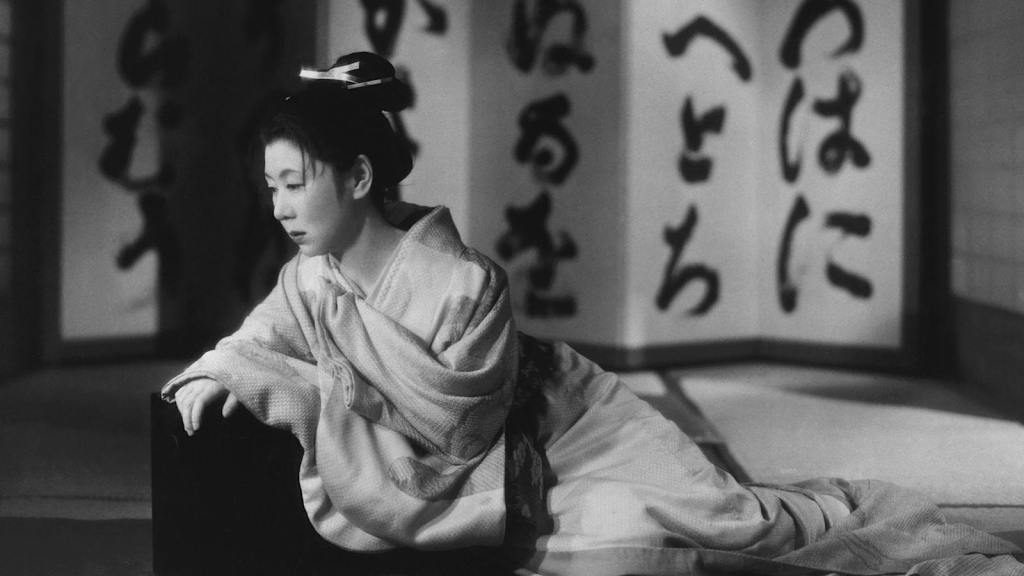
First an affair with a lowly retainer (Toshiro Mifune) ends with her lover executed and her family banished. Then her father sells her, first to a Lord as a mistress to bear him a child, and later to a pleasure district as a courtesan. From there things only get worse for Oharu, almost always due to circumstances beyond her control. But the film does end with the faintest glimmer of hope… at least if you subscribe to Buddhist philosophy.
You’re bought and paid for. You’re no different from a fish on a chopping board. We can serve you up any way we like.
This was my second Mizoguchi film: Ugetsu (also starring Tanaka) was a highlight of last year. Both films are beautifully directed, very gripping, and intensely emotional. But while Ugetsu is a spine-tingling, supernatural tale, The Life of Oharu is horribly realistic. Oharu’s suffering comes not from personal hubris or ghostly tricks, but from the cruel treatment of other people—mainly men. Throughout the whole film I found myself bristling at the sheer injustice of it all.
Kinuyo Tanaka is brilliant in the title role. I’ve seen her in several films recently, each one displaying a different facet of her talent. (She was also one of Japan’s first female directors, so I’m excited to explore that side of her work too.) As far as Mizoguchi goes I definitely preferred Ugetsu, but I can’t deny this film’s power—it left my heart feeling, like a fish on a chopping board, rather battered!
 A Genteel Black Hole