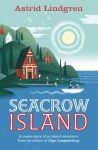
Title: Seacrow Island (Seacrow Island #1) Author: Astrid Lindgren (Translated by Evelyn Ramsden) Year: 1964 Country: Sweden
Format: E-book Pages: 274 Read: 17 – 29 March 2026 First reading
Melker Melkerson is a widowed father with an impulsive, childlike nature. He rents a cottage for the summer, sight unseen, just because he likes the name of the location: Seacrow Island. When Melker and his four children arrive on the island, they’re distressed to find the cottage cold, leaky and dilapidated. But over the summer they befriend the residents of Seacrow Island, grow to love the cottage, and gradually come to think of the place as home. Wouldn’t it be nice to live there all year round?
I liked Seacrow Island well enough, I suppose: I read the whole thing… but it just didn’t sing to me. Perhaps I was hoping for too much. I found it in a list of recommendations for Moomin fans. Having recently finished the entire Moomin series, I was looking for something else to scratch that itch. Seacrow Island… didn’t. If there is another fictional family like the Moomins, the Melkersons ain’t it!
They’re a sweet enough bunch of characters—especially the youngest brother Pelle, a devoted animal lover. But I found it hard to care much about the Melkersons’ adventures on Seacrow Island. The whole thing felt quite predictable to me. I could tell from the first chapter they would grow to love the island and decide to move there permanently. Watching that inevitable story unfold didn’t strike me as particularly compelling.
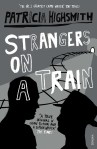
Two strangers, up-and-coming architect Guy Haines and wealthy drunkard Charles Anthony Bruno, meet by chance on a train. As the two men talk it becomes clear that Bruno is obsessed with murder. He outlines his plan for the perfect murder, or rather the perfect pair of murders. Each man would do the other’s dirty work, ensuring there’s no motive connecting him to his respective crime. Bruno even proposes the ideal victims: His father, and Guy’s estranged wife Miriam. Guy protests he’s not the type to commit murder. But Bruno insists there is no “type”, that any man can kill given the right circumstances. And when Bruno goes ahead and strangles Miriam for Guy, it sets in motion a series of events which lead inexorably to Guy fulfilling his half of the bargain.
I first read Strangers on a Train just over a decade ago. Back then I found it faintly underwhelming, perhaps because the fun and thrilling Hitchcock film was fresh in my memory—as was Highsmith’s excellent book, The Talented Mr Ripley. Honestly I’m not really sure what I was thinking. This time I was able to better appreciate Strangers on a Train for what it is… and I loved every second!
This is a remarkable debut novel, much deeper and darker than the film it inspired. It’s a study of the ugliest recesses of the human psyche, exposing how a perfectly ordinary man can be driven to kill. “What else do you think keeps the totalitarian states going?” Highsmith paints both Guy and Bruno vividly, with disturbing insight. Their thought processes are laid out in detail; every paranoid spiral, every hateful and violent impulse. It may lack some of the action set-pieces of Hitchcock’s adaptation*, but it had me constantly gripped by the guts.
The story also has a strong homoerotic subtext. Guy and Bruno share a profound connection, one that must be repressed and hidden at all costs—yet they can’t keep away from each other. Bruno even plies Guy with gifts, desperately seeking his approval. These are compelling, queer, obsessive themes that Highsmith would revisit throughout her career.
I’m not sure why I drifted away from Patricia Highsmith, having initially been so thrilled to discover her. Revisiting Strangers on a Train has suddenly reignited my enthusiasm in a big way. I’m excited to explore more of her books in the future, rereading the ones I remember fondly and trying some new ones too. My reading schedule is already looking pretty full, but I really hope to make time for more Highsmith this year.
*Interestingly, the climactic merry-go-round scene in the Hitchcock film was taken, uncredited, from an entirely different book: The Moving Toyshop by Edmund Crispin.
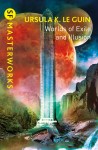
My Hainish series read-through continues with City of Illusions, first published in 1967. (You can also read my reviews of the first two books: Rocannon’s World and Planet of Exile.)
An exhausted, terrified stranger emerges from the forest. His eyes are yellow, cat-like and alien, his memory a complete blank. The forest people take him in, teaching him their language and naming him Falk. He lives happily with them for six years, coming to think of the place as home, but questions of his past still linger. Who was this man before he was Falk? Where is his forgotten home and how did he arrive on Earth? Who erased his memories and why? Falk sets out westward to rediscover his true self, taking him gradually towards a mysterious city inhabited by an elusive, powerful people known as the Shing.
City of Illusions is Ursula K. Le Guin’s third novel, the third part of her Hainish series, and for me it’s the strongest of the three. Le Guin continues to hone her skills, crafting more memorable characters and more evocative prose than before. (The first sentence is only two words long and I found it a more intriguing opening than either of the first two books.) The mysteries of Falk and the Shing kept me engaged throughout, and I enjoyed seeing the connections gradually emerge between the first three Hainish books. It’s a satisfying read that also strengthens what came before it.
Le Guin herself, in her foreword to a later reprinting of the novel, expressed dissatisfaction with the Shing as obvious, uninteresting villains—a character type she generally avoided in her work, preferring to explore more complex themes than hackneyed ol’ Good vs Evil. I can see what she means, but I still enjoyed the book on its own terms, unencumbered as I am by the author’s own artistic vision. Yes, Le Guin would soon go on to better, deeper things, but that doesn’t make this book an artistic failure. I really enjoyed my time with it. City of Illusions may not be Le Guin’s finest work but it certainly set the stage for it.
And, once again, my enjoyment was enhanced by the group reading experience hosted by Gareth (Books Songs and Other Magic). So far I think we’ve all agreed that City of Illusions is the best of Le Guin’s first three books—but everyone seems even more excited for the next entry in the series: The Left Hand of Darkness.
But before that, keep an eye on Gareth’s channel for a livestream discussion of the first three Hainish books.
Title: Maigret Sets a Trap (Maigret #48) Author: Georges Simenon (Translated by Siân Reynolds) Year: 1955 Country: Belgium
Format: E-book Pages: 176 Read: 9 – 16 March 2026 First reading
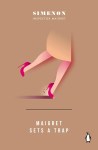
There’s a serial killer on the loose. Once a month or so he strikes in the Montmartre area of Paris, randomly stabbing a woman to death. DCI Maigret hatches a plan to lure the killer out of hiding. He stages a fake arrest and interrogation, tricking the local reporters into declaring the killer caught. Now, with plainclothes WPCs walking the streets of Montmartre as bait, Maigret hopes the killer’s next victim will be one who can defend herself. But will the plan work, or has he just sent an unwitting officer to her death?
This is Georges Simenon’s 48th Maigret book but my very first. I’ve been meaning to try Simenon for a while but he’s so absurdly prolific, I never knew where to start. Luckily the decision was made for me when I found this ebook on sale for 99p—and I really lucked out! Turns out this is one of the most popular Maigret books, subject of multiple screen and radio adaptations. And I can see why.
Maigret Sets a Trap is a gripping story of the hunt for a serial killer, and a psychological study of what drives him to kill. Ultimately it’s a portrait of toxic masculinity—of a weak, pathetic man trying to reassert himself by lashing out at women. If I had read this in my teens I might have dismissed it as outdated. Now, with the rise of the Manosphere, it feels disturbingly timely.
Simenon’s writing style is simple, spare, but vivid. He captures his characters and their surroundings in three dimensions. It’s a quick, unpretentious read, but far from a shallow one. I’ll definitely be reading more Maigret.
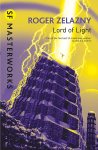
Title: Lord of Light Author: Roger Zelazny Year: 1967 Country: USA
Format: Paperback Pages: 284 Read: 1 – 11 March 2026 First reading
An alien world is ruled over by the Lords of Karma, Hindu gods with legendary names: Brahma, Kali, Vishnu, Krishna. But they’re not the true gods. In fact they are the First—human settlers who have colonised the planet. Their technology, so advanced it looks like magic, imbues them with the power and immortality of gods. The Lords of Karma abuse this power to reinstate the old caste system, placing themselves at the top, and imposing upon the planet a perpetual Dark Age. At every turn they are opposed by Sam, a fellow First who has rejected godhood. Sam assumes the role of the Buddha and, in various reincarnations across the centuries, spreads his message, slowly and patiently building a resistance movement. But is it enough to defeat these ruthless self-made gods?
I was excited to read Lord of Light, having recently fallen in love with Roger Zelazny’s short stories. But Zelazny is a literary chameleon, his writing style ever shifting to fit the story, and Lord of Light is one that just didn’t click with me. On the surface it’s a religious myth, an epic tale of cruel and capricious gods. But that mythic tone is an ornate veil, concealing behind it a more rational, more “sci-fi” explanation. At first I was enjoying the process of peeking behind the veil, trying to glimpse the real story. But about halfway through I started to tire of it, and my enthusiasm never really recovered.
For one thing, it’s hard to keep track of characters’ identities. Colonists often get reincarnated, taking on the mantle of different gods in different chapters. This made the whole thing feel quite disjointed to me, something compounded by the overall structure: Every chapter feels like an individual short story, each one centuries apart. (Two chapters were actually first published as short stories.) I love both novels and short stories, but for me “a series of interconnected short stories” is a hard sell. I had similar problems with A Canticle for Leibowitz—another beloved sci-fi classic with religious overtones.
While I do appreciate ambiguous storytelling, Lord of Light is a dense text with very little space for interpretation. It felt more like something written in code, its one true meaning stubbornly obfuscated by Zelazny’s ornate, mythic prose—for “metal lotus” read satellite dish, etc. I found it an oppressive experience, and ultimately an exhausting one.
That said, I do look forward to recording a discussion video with my friend Gavin from Genre Books. We buddy-read this as part of Gavin’s Century of Sci-fi project, in which he’s reading a sci-fi novel for every year of the last century. I get the impression he liked the book more than I did, so maybe he’ll be able to show me some of what I’m missing.
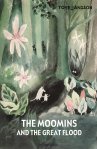
Title: The Moomins and the Great Flood (Moomins #1) Author: Tove Jansson (Translated by David McDuff) Year: 1945 Country: Finland
Format: E-book Pages: 52 Read: 21 – 24 February 2026 First reading
Moominmamma and her son Moomintroll are looking for Moominpappa, who hasn’t come back from his latest adventure. Their search takes them through forests, swamps and mountains, meeting various weird and wonderful people along the way. A heavy rainstorm almost spells disaster, but Moominmamma and Moomintroll survive the flood and eventually find Moominpappa—and a new place to call home.
The Moomins and the Great Flood was Finland’s introduction to the Moomins, first published in 1945—but only translated into English in 2005. It was the last Moomins novel I read, and to me it feels very different from the rest of the series. For one thing it’s a much shorter book. It’s also less coherent, flitting from scene to scene without pause, like a small child breathlessly telling you a story: “And then this happened, and then this happened, and then this happened…” Tove Jansson’s illustrations are (as always) utterly charming, and there’s a faint glimmer of the magic that would come in later books. But this is easily my least favourite Moomins novel of the bunch, and certainly not one I’d recommend as an introduction. Much better skip ahead to the magnificent second book, Comet in Moominland.
The edition I read did include some interesting bonus material though. There’s a nice foreword from the current Children’s Laureate, Frank Cottrell-Boyce, providing some historical context for the story. There’s also excerpts from Tove Jansson’s own notes about her characters, originally written to help prospective writers and directors of Moomins adaptations. So, while the novel itself was pretty disappointing, reading it still enhanced my apprecation for the other books in a series I’ve grown to adore.
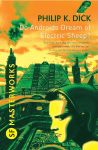
Rick Deckard, proud owner of an electric sheep, is a bounty hunter for the San Francisco police. His targets are androids, escaped slaves who have killed their human owners on Mars and fled to this bleak, post-apocalyptic Earth. Deckard must track down the androids, using the Voigt-Kampff empathy test to discern android from human, and “retire” them. But is Deckard a match for these superhuman androids? And just how reliable is the empathy test anyway?
I first read Do Androids Dream of Electric Sheep? in my early teens, having first seen the film adaptation, Blade Runner. I adored the film and watched it repeatedly. I remember being surprised by just how different the novel was. Revisiting it for the first time in all those years, I am once again surprised. This is a book stuffed with interesting philosophical and sociopolitical ideas, most of which were only hinted at (or outright ignored) by the makers of Blade Runner. I found it a fascinating, thought-provoking read.
The setting is a future Earth, one where animals are all but extinct; owning a real, live animal is prohibitively expensive and therefore a status symbol. Failing that, one can keep up with the Joneses by purchasing a realistic electric animal, such as Deckard’s fake sheep. Deckard and his wife maintain the facade that their sheep is real, but they cannot care about it as deeply as a real creature. It simply doesn’t provoke the same empathic response. Similarly, Deckard feels no compunction about “retiring” androids. After all, they don’t count as people… do they?
The Voigt-Kampff test (like in the film) measures a subject’s empathic responses to a set of hypothetical situations. Those who lack the proper response are revealed to be androids. But this is a poisoned Earth where humans are prone to developing cognitive disabilities. Such people are labelled “specials”—marginalised, banned from emigrating to Mars, despised and abused by humans and androids alike. And there’s a risk that a special could fail the Voigt-Kampff test and be mistakenly murdered by Deckard or his colleagues. Ultimately specials are seen as subhuman, just as unworthy of empathy as the androids Deckard is hunting. As a disabled reader myself, I found that theme particularly engaging.
The novel’s dominant religion is Mercerism, in which humans can merge electronically with a martyr figure called Mercer and literally experience his suffering. But when Mercer’s authenticity is called into question, so is the validity of that experience. People can also use a machine to dial in the emotion of their choosing—including the desire to use the machine itself. If something so patently artificial can provoke real emotional responses, does that lend it a certain legitimacy after all? In our current age of chatbot therapy and AI-generated “art”, it’s increasingly clear that the answer is no!
My only gripe with the book is a few moments of Male Author Syndrome: Women’s bodies, whether human or android, are frequently described in a little too much detail. Otherwise this is a fantastic novel. It’s a gripping, engaging, thought-provoking read. It works both as a hardboiled detective thriller and a piece of deeply philosophical sci-fi. I’m eager to read more Philip K. Dick in the coming months.
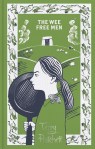
Nine-year-old Tiffany Aching lives with her parents on a farm. Her duties include making the cheese and looking after her perpetually sticky little brother Wentworth. Also she’s a witch… or at least hopes to be someday, just like Granny Aching before her. One day Tiffany’s quiet, peaceful life is threatened by nightmarish creatures from another realm. Using Wentworth as bait, she fights off the first monster with nothing but an iron frying pan and righteous fury. But bigger, scarier things are coming, things too powerful for Tiffany to handle alone. Luckily she has help from a witch called Miss Tick, a talking frog that may once have been human, and a clan of tiny blue pictsies called the Nac Mac Feegle—the titular Wee Free Men. (Imagine, if you will, Braveheart crossed with Smurfs.)
“Ye ken how to be strong, do ye?” “Yes, I think so.” “Good. D’ye ken how to be weak? Can ye bow to the gale, can ye bend to the storm?“
This is the thirtieth Discworld book overall, the first in the Tiffany Aching sub-series aimed at younger readers. As such it’s shorter than a standard Discworld book, the humour is moderately less bawdy (though there are still some references for Mum and Dad to stifle a smirk over), it follows a child protagonist, and it’s divided helpfully into chapters. But for me, as someone who first read it well into adulthood, it still ticks all my Discworld boxes.
That was how it worked. No magic at all. But that time it had been magic. And it didn’t stop being magic just because you found out how it was done.
In fact it’s one of my favourite Pratchett books! The Wee Free Men is a delightful, magical adventure told with Pratchett’s signature humour and keen insight. In some ways it’s very silly. Tiffany enters a whimsical world of dreams and, like Alice before her, finds it very annoying indeed. The Feegles—a clan of walking, talking (not to mention stealin’, fightin’ and drinkin’) Scottish stereotypes—constantly make me laugh, especially the scenes with No’-as-big-as-Medium-Sized-Jock-but-bigger-than-Wee-Jock-Jock. But the passages where Tiffany reminisces about her late Granny, trying to learn from her example as she comes into her own power as a witch, are some of the most touching moments in any Discworld book. And for longtime fans there are excellent cameos from Granny Weatherwax and Nanny Ogg, stars of the original Discworld Witches books.
“The thing about witchcraft,” said Mistress Weatherwax, “is that it’s not like school at all. First you get the test, and then afterwards you spend years findin’ out how you passed it. It’s a bit like life in that respect.”
My First Sight told me this book was wonderful. My Second Thoughts have since confirmed it. Crivens, it’s a bonnie wee book!
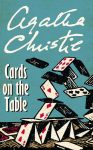
Mr Shaitana, a renowned collector of morbid curiosities, invites Hercule Poirot to an evening of dinner and bridge. Poirot is joined by three more sleuths: Superintendent Battle, Colonel Race, and mystery novelist Ariadne Oliver. There are four more guests; each one is, according to Shaitana, a murderer—each having successfully evaded detection. The party was intended merely to show off his “collection” of killers, his way of celebrating the Art of Murder. But when Shaitana himself is found dead, stabbed with a stiletto from his own collection, it’s up to Poirot and his fellow sleuths to figure out which of the four suspects is the culprit. Each of them had both motive and opportunity, but which of them actually did it?
Cards on the Table is Christie at her streamlined best. On the surface all four suspects seem like unlikely killers, yet each one apparently got away with murder once before. Poirot’s approach is to build a psychological profile of each suspect, aided in part by a study of their bridge scores. (Side note: I’ve never played bridge and don’t know the rules, but that didn’t spoil my enjoyment of the story.) With such a small ensemble of suspects, Christie still manages to spin a gripping story full of red herrings and surprises. And there’s a pleasingly metafictional element in Christie’s self-caricature, Ariadne Oliver, providing intuitive “insights” into who would’ve dunnit if she were writing the book. Overall I’d say this is top tier Christie.
Title: Arcadia Author: Tom Stoppard Year: 1993 Country: UK
Format: Paperback Pages: 128 Read: 6 – 9 February 2026 First reading
Tom Stoppard’s Arcadia is a dazzlingly clever play with a deeply emotional core. The setting is one room in a stately home called Sidley Park. Scenes alternate between two time periods: the early 1800s and the present. The modern scenes feature rival academics delving into Sidley Park’s history while, in the ‘period’ scenes, that very history is played out for us—often spotlighting the researchers’ misconceptions.
The historical scenes follow Septimus Hodge, a friend of Lord Byron, as he tutors the precocious young daughter of the house, Thomasina Coverly. Thomasina’s gift for mathematics exceeds that of her tutor, or indeed any of her contemporaries, and she begins to intuit scientific theories far in advance of her era. Septimus must also dodge the wrath of visiting poet Ezra Chater, having been caught in “carnal embrace” with Mrs Chater. Meanwhile Thomasina’s mother, Lady Croom, is in talks with a landscape architect who plans to redesign the Arcadian gardens of Sidley Park in the newfangled Gothic style, complete with hermitage.
The modern day scenes centre on the academic rivalry of Hannah Jarvis and Bernard Nightingale. Hannah is trying to uncover the identity of the mysterious Sidley Park hermit, while Bernard aims to prove his pet theory that Lord Byron fled the country after apparently killing Ezra Chater in a duel. As Hannah and Bernard research the Sidley Park archives together, aided by members of the Coverly family, unlikely relationships start to emerge.
Thomasina: When you stir your rice pudding, Septimus, the spoonful of jam spreads itself round making red trails like the picture of a meteor in my astronomical atlas. But if you stir backwards, the jam will not come together again. Indeed, the pudding does not notice and continues to turn pink just as before. Do you think this is odd?
My first reading barely scratched the surface of Arcadia. I loved it, but I can sense that I will love it more and understand it better when I reread it. (I had that experience recently with Stoppard’s Rosencrantz & Guildenstern Are Dead.) This is a play bristling with ideas on many subjects: History, mathematics, time, love… It’s about how much of the past is lost to us, just as our age will be to future generations. It’s an existentialist play about certain death, not of just us personally but of the universe itself; the ultimate tragedy of entropy. One day all this will be gone. But, in the end, it says we must enjoy life while we’re in it. The planets won’t keep waltzing forever but, while they are, we too must dance.
 A Genteel Black Hole