Tag: writing

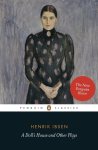
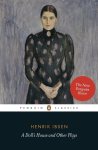
  • Title: A Doll’s House
    Author: Henrik Ibsen
    (Translated by Deborah Dawkin and Erik Skuggevik)
    Year: 1879
    Country: Norway

    Format: Paperback
    Pages: 84
    Read: 14 – 16 April 2026
    First reading

    The Helmers have a seemingly idyllic marriage. Nora is a devoted housewife and mother, and Torvald has just been promoted at work. But Nora has a secret that threatens to destroy their relationship. Years ago Torvald had a breakdown, requiring a rest cure in Italy. Nora let Torvald believe that her late father bequeathed the money that paid for the trip. In fact she borrowed the money illegally by forging signatures. Ever since she has been squirrelling away money, trying to pay off the debt without her husband finding out. But now the moneylender, Krogstad—an employee at Torvald’s bank—is determined to secure a promotion for himself by blackmailing Nora, threatening to reveal the truth.

    A Doll’s House is the play that made Ibsen’s name around the world. It was radical in its time and the ending still packs a punch today. The play concerns Nora Helmer’s liberation, her demand for personhood. She realises that the men in her life—first her father, then her husband—have always treated her as their plaything, nothing but a doll to display in their doll’s house. Nora demands a life of her own and the right to make her own mistakes. Her character resonated deeply with me. I too, as a disabled person, have felt marginalised and infantilised—not exactly like Nora, but not dissimilar.

    Torvald: You are first and foremost a wife and mother.
    Nora: I don’t believe that any more. I believe I am first and foremost a human being, I, just as much as you – or at least, that I must try to become one. I know, of course, that most people would say you’re right, Torvald, and that something of the sort is written in books. But I can no longer allow myself to be satisfied with what most people say and what’s written in books. I have to think these things through for myself and see to it I get an understanding of them.

    Nora Helmer is one of the greatest ‘classic’ stage roles for women; maybe not as challenging and mercurial as Ibsen’s Hedda Gabler, but a fascinating character at the centre of a powerful, triumphant play. The off-stage sound of Nora slamming the door on her old life still echoes through the ages. I’m so glad the echo finally reached my ear.

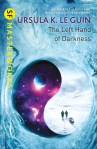
  • Title: The Left Hand of Darkness
    (Hainish #4)
    Author: Ursula K. Le Guin
    Year: 1969
    Country: USA

    Format: Paperback
    Pages: 300
    Read: 2 – 13 April 2026
    Reread

    Genly Ai is an Envoy for the Ekumen, a sort of interplanetary United Nations. He is sent to the ice planet Gethen (aka Winter) to persuade its constituent countries‚ starting with the nation of Karhide, to join the Ekumen. To Genly the Gethenians are utterly alien: For one thing, they have no concept of gender. Most of the time they are androgynous and asexual, developing the drive and capacity for sex only in the part of their monthly cycle known as kemmer—during which they could become either father or mother to a child. (To them Genly is in permanent kemmer, which they consider a perversion.) Karhidish society is also dictated by shifgrethor, an intricate set of unspoken social rules that Genly finds impossible to understand. So when Prime Minister Estraven, Genly’s chief supporter, is exiled as a traitor, the Envoy finds himself in an increasingly precarious position. Will he find the neighbouring country of Orgoreyn more welcoming?

    The Left Hand of Darkness was Ursula K. Le Guin’s breakout hit, winning her first Hugo award and putting her name on the sci-fi map. (Or should I say star chart?) It’s easy to see why: This is a much bolder, more self-assured piece of writing than any of the first three Hainish novels. Le Guin explores her themes with a newfound depth and maturity, asking some big, searching questions about sex, gender, otherness, patriotism and nationalism.

    “Hate Orgoreyn? No, how should I? How does one hate a country, or love one? Tibe talks about it; I lack the trick of it. I know people, I know towns, farms, hills and rivers and rocks, I know how the sun at sunset in autumn falls on the side of a certain plowland in the hills; but what is the sense of giving a boundary to all that, of giving it a name and ceasing to love where the name ceases to apply? What is love of one’s country; is it hate of one’s uncountry? Then it’s not a good thing. Is it simply self-love? That’s a good thing, but one mustn’t make a virtue of it, or a profession… Insofar as I love life, I love the hills of the Domain of Estre, but that sort of love does not have a boundary-line of hate. And beyond that, I am ignorant, I hope.”

    This is a story of two halves—quite apt for a book with a yin-yang symbol on the cover. I find the first half extremely dense. Genly’s field notes explain Gethenian biology, sociology and folklore in meticulous detail, to the point that it honestly threatens to give me a headache. Genly, due to the baffling rules of shifgrethor, doesn’t understand much of what happens to him on Gethen, and I feel similarly out of my depth as a reader. (I had hoped to understand it better on second reading… alas not!) Once Genly and Estraven join forces for an arduous trek across the ice, however, the story finally coalesces. Le Guin narrows her focus to the relationship between two people from different worlds, alternating narrators to let us see their unique perspectives on each other. Only then does it become a deeply emotional story, and one that I ended up loving.

    In the first chapter, Genly attends a keystone ceremony. King Argaven places the keystone, the final piece that turns two separate structures into one complete thing: an arch. This is one of the key images of the whole book. Gethen is an isolated planet on its way to joining the Ekumen, becoming part of something bigger than itself; and on a personal level, Genly and Estraven are two aliens gradually finding common ground, forging a deep connection with one another. The more intimate aspect is the one that really captivates me, but both parts are necessary for the story to work. By the end, those two halves have become one complete thing.

    The group reading project, hosted by Gareth (Books Songs and Other Magic) continues to be a very rewarding experience. I think we all agreed that The Left Hand of Darkness is our favourite Hainish novel so far, and we’re looking forward to a livestream discussion on Gareth’s channel soon. I’m also excited for the next book in the series: The Word for World is Forest, which I remember being my favourite of the Hainish books I’ve read. After that, the rest of the series will be entirely new to me!

  • Day 5 of Century of Cinema. Also day 48 of Project Glowing Rectangle, in which I try to divert some of my daily doomscrolling time back towards a more nourishing oblong: Cinema.

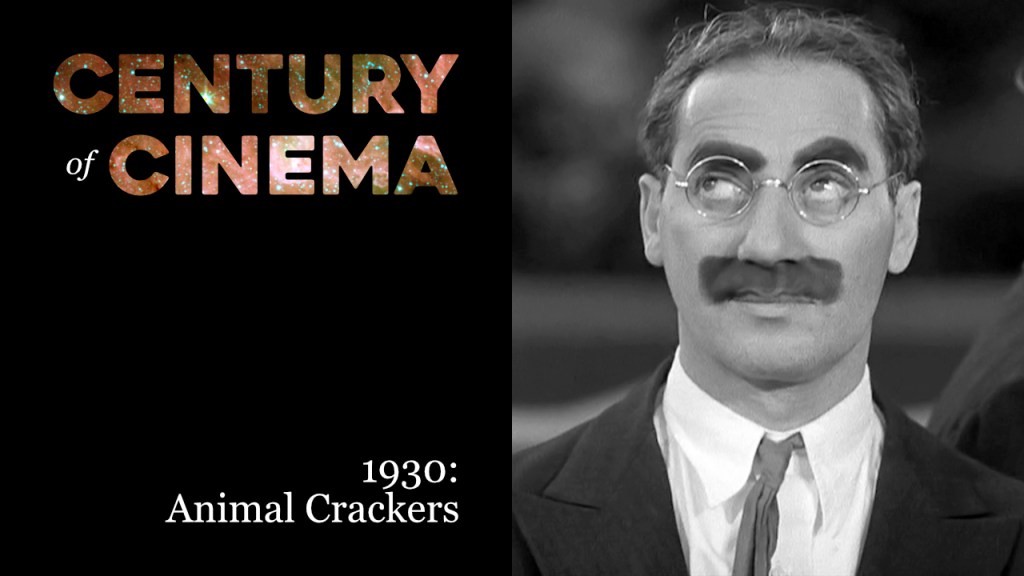
    Title: Animal Crackers
    Director: Victor Heerman
    Writer: Morrie Ryskind
    Year: 1930
    Country: USA

    Format: Blu-ray
    Length: 99 minutes
    Seen: 22 April 2026
    Rewatch

    I haven’t made much time for films this past month, but today I finally resumed my Century of Cinema project with Animal Crackers (1930), a Marx Brothers musical comedy directed by Victor Heerman. The first full talkie of the project!

    As with most Marx Brothers films, the plot is largely irrelephant. The action takes place at a high society party, hosted by Mrs Rittenhouse (Margaret Dumont), to celebrate the return of the famous explorer Captain Jeffrey T. Spaulding (Groucho)—the T. stands for Edgar. Also at the party are Signor Emanuel Ravelli (Chico) and the Professor (Harpo), a pair of musicians and petty criminals. The two of them get involved in a scheme to steal a valuable painting and replace it with a fake. But when some other guests hit upon a similar plan, all three paintings go missing and chaos ensues.

    Captain Spaulding: One morning I shot an elephant in my pajamas. How he got in my pajamas, I don’t know.

    Is Animal Crackers a perfect film? No. Did I have a great time watching it? Yes! The Marx Brothers’ madcap antics never fail to delight me. Groucho’s quickfire quips come at a dizzying pace, complemented perfectly by Chico’s malapropisms and Harpo’s silent slapstick. (Zeppo is also there.) Margaret Dumont is the perfect ‘straight man’ amid all the chaos: the stern and stately authority figure for all the Marxes (Groucho especially) to undermine. Then there’s the musical interludes. Chico’s fancy fingerwork on the piano always makes me grin, as does Harpo’s harping. It’s a welcome respite from the otherwise constant madcap energy.

    Animal Crackers, being an early talkie and an adaptation of a stage play, has a certain ‘stagey’ quality that might put off some viewers. It took me a few minutes to tune back into that frequency myself. But once I got there, the smile never left my face.

    ~

    On a personal note: I plan to continue blogging Century of Cinema, but I will probably do less blogging of my general film-viewing. The self-imposed pressure of blogging every film I watch has discouraged me from actually watching films, which is supposed to be a relaxing activity to re-centre myself. So from now on I plan to reclaim films as a leisure activity.

  • Title: Pillars of the Community
    Author: Henrik Ibsen
    (Translated by Deborah Dawkin and Erik Skuggevik)
    Year: 1877
    Country: Norway

    Format: Paperback
    Pages: 104
    Read: 29 March – 1 April 2026
    First reading

    Norwegian businessman Karsten Bernick is a well respected man about town, a pillar of the community. His shipbuilding business provides most of the jobs in his small coastal town. Plans for a new railway look set to grow his fortune even further. But his business and his public image are built on a lie. Fifteen years ago his friend Johan took the blame for a scandal that was really Karsten’s doing. In the intervening years the scandal has ballooned thanks to small-town gossip, which Karsten has turned all to his advantage. So when Johan returns from his exile in America, determined to clear his name, it looks like Karsten’s past is about to catch up with him.

    Pillars of the Community (more traditionally titled The Pillars of Society) exposes the lie that many prestigious careers are built on. Karsten is involved in insider trading—buying up cheap land, then campaigning in favour of a new railway that will vastly increase the value of said land. He’s a hypocrite, plain and simple. He uses his elevated reputation to justify his unethical actions: it’s okay if he does it, because he creates jobs for the community. The fact that the scheme will also make him unfathomably wealthy is just a happy accident. And as long as he maintains his spotless reputation, the community is bound to agree.

    Speaking up for truth is Lona, an unapologetic feminist who is famed in the town for cutting her hair short and wearing (gasp) men’s boots! She was once in love with Karsten, and loved by him, but he rejected her for a marriage of convenience that would advance his career. Lona then followed Johan to America and became his surrogate mother. She returns to Norway with Johan to become the voice of reason, to save Karsten’s soul from his own lies. Like many of Ibsen’s heroines she stands for truth, progress, emancipation, and freedom of spirit. Later he would write deeper, more well-rounded examples of this character type, but Lona is a great early example. She’s easily my favourite character in the play.

    This is the earliest of the eight Ibsen plays I’ve read so far. It deals with many of Ibsen’s recurring themes: people haunted by secrets from their past; unearned privilege; lies and hypocrisy; women’s place in modern society; the evils of capitalism; and the tension between tradition and progress. He would tackle all these topics with greater depth and nuance in later plays, but this is still a very enjoyable play in its own right. However the sudden happy ending, where Karsten undergoes a Scrooge-like metamorphosis, feels quite implausible and unearned. Overall, Pillars of the Community is an interesting and engaging play but, in my eyes, not a truly great one.

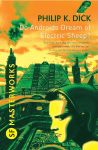
  • Title: Do Androids Dream of Electric Sheep?
    Author: Philip K. Dick
    Year: 1968
    Country: USA

    Format: E-book
    Pages: 208
    Read: 10 – 21 February 2026
    Reread

    Rick Deckard, proud owner of an electric sheep, is a bounty hunter for the San Francisco police. His targets are androids, escaped slaves who have killed their human owners on Mars and fled to this bleak, post-apocalyptic Earth. Deckard must track down the androids, using the Voigt-Kampff empathy test to discern android from human, and “retire” them. But is Deckard a match for these superhuman androids? And just how reliable is the empathy test anyway?

    I first read Do Androids Dream of Electric Sheep? in my early teens, having first seen the film adaptation, Blade Runner. I adored the film and watched it repeatedly. I remember being surprised by just how different the novel was. Revisiting it for the first time in all those years, I am once again surprised. This is a book stuffed with interesting philosophical and sociopolitical ideas, most of which were only hinted at (or outright ignored) by the makers of Blade Runner. I found it a fascinating, thought-provoking read.

    The setting is a future Earth, one where animals are all but extinct; owning a real, live animal is prohibitively expensive and therefore a status symbol. Failing that, one can keep up with the Joneses by purchasing a realistic electric animal, such as Deckard’s fake sheep. Deckard and his wife maintain the facade that their sheep is real, but they cannot care about it as deeply as a real creature. It simply doesn’t provoke the same empathic response. Similarly, Deckard feels no compunction about “retiring” androids. After all, they don’t count as people… do they?

    The Voigt-Kampff test (like in the film) measures a subject’s empathic responses to a set of hypothetical situations. Those who lack the proper response are revealed to be androids. But this is a poisoned Earth where humans are prone to developing cognitive disabilities. Such people are labelled “specials”—marginalised, banned from emigrating to Mars, despised and abused by humans and androids alike. And there’s a risk that a special could fail the Voigt-Kampff test and be mistakenly murdered by Deckard or his colleagues. Ultimately specials are seen as subhuman, just as unworthy of empathy as the androids Deckard is hunting. As a disabled reader myself, I found that theme particularly engaging.

    The novel’s dominant religion is Mercerism, in which humans can merge electronically with a martyr figure called Mercer and literally experience his suffering. But when Mercer’s authenticity is called into question, so is the validity of that experience. People can also use a machine to dial in the emotion of their choosing—including the desire to use the machine itself. If something so patently artificial can provoke real emotional responses, does that lend it a certain legitimacy after all? In our current age of chatbot therapy and AI-generated “art”, it’s increasingly clear that the answer is no!

    My only gripe with the book is a few moments of Male Author Syndrome: Women’s bodies, whether human or android, are frequently described in a little too much detail. Otherwise this is a fantastic novel. It’s a gripping, engaging, thought-provoking read. It works both as a hardboiled detective thriller and a piece of deeply philosophical sci-fi. I’m eager to read more Philip K. Dick in the coming months.

  • Title: Arcadia
    Author: Tom Stoppard
    Year: 1993
    Country: UK

    Format: Paperback
    Pages: 128
    Read: 6 – 9 February 2026
    First reading

    Tom Stoppard’s Arcadia is a dazzlingly clever play with a deeply emotional core. The setting is one room in a stately home called Sidley Park. Scenes alternate between two time periods: the early 1800s and the present. The modern scenes feature rival academics delving into Sidley Park’s history while, in the ‘period’ scenes, that very history is played out for us—often spotlighting the researchers’ misconceptions.

    The historical scenes follow Septimus Hodge, a friend of Lord Byron, as he tutors the precocious young daughter of the house, Thomasina Coverly. Thomasina’s gift for mathematics exceeds that of her tutor, or indeed any of her contemporaries, and she begins to intuit scientific theories far in advance of her era. Septimus must also dodge the wrath of visiting poet Ezra Chater, having been caught in “carnal embrace” with Mrs Chater. Meanwhile Thomasina’s mother, Lady Croom, is in talks with a landscape architect who plans to redesign the Arcadian gardens of Sidley Park in the newfangled Gothic style, complete with hermitage.

    The modern day scenes centre on the academic rivalry of Hannah Jarvis and Bernard Nightingale. Hannah is trying to uncover the identity of the mysterious Sidley Park hermit, while Bernard aims to prove his pet theory that Lord Byron fled the country after apparently killing Ezra Chater in a duel. As Hannah and Bernard research the Sidley Park archives together, aided by members of the Coverly family, unlikely relationships start to emerge.

    Thomasina: When you stir your rice pudding, Septimus, the spoonful of jam spreads itself round making red trails like the picture of a meteor in my astronomical atlas. But if you stir backwards, the jam will not come together again. Indeed, the pudding does not notice and continues to turn pink just as before. Do you think this is odd?

    My first reading barely scratched the surface of Arcadia. I loved it, but I can sense that I will love it more and understand it better when I reread it. (I had that experience recently with Stoppard’s Rosencrantz & Guildenstern Are Dead.) This is a play bristling with ideas on many subjects: History, mathematics, time, love… It’s about how much of the past is lost to us, just as our age will be to future generations. It’s an existentialist play about certain death, not of just us personally but of the universe itself; the ultimate tragedy of entropy. One day all this will be gone. But, in the end, it says we must enjoy life while we’re in it. The planets won’t keep waltzing forever but, while they are, we too must dance.

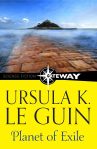
  • Title: Planet of Exile
    (Hainish #2)
    Author: Ursula K. Le Guin
    Year: 1966
    Country: USA

    Format: Paperback
    Pages: 100
    Read: 1 – 5 February 2026
    Reread

    My Hainish series read-through continues with Planet of Exile, first published in 1966—the same year as its predecessor, Rocannon’s World. (You can read my review of Rocannon’s World here.)

    The story takes place on Werel, a planet with a decades-long season cycle. Jakob Agat leads a group of human colonists who, centuries ago, were exiled to Werel by the League of All Worlds. Jakob and his people, despite having never seen their long-forgotten homeworld, remain staunchly separate from the local indigenous tribe, the primitive Tevarans. As a harsh, fifteen-year winter approaches—bringing with it a horde of ruthless nomadic warriors called the Gaal—cooperation between human and Tevaran camps may be their only chance of survival. But things are complicated when Jakob breaks taboo with Rolery, daughter of the Tevaran chief.

    Planet of Exile, while not yet Peak Le Guin, is a marked improvement from Rocannon’s World. Both books attempt to blend sci-fi and fantasy, but the second book succeeds where the first fails. My friend Pat (Book Chat With Pat) shared a quote in our Hainish group chat where Le Guin describes her debut novel with a colour analogy: If sci-fi is blue and fantasy is red, Rocannon’s World is purple. I would argue that Rocannon’s World doesn’t successfully blend its colours; it’s a book of blue and red stripes, awkwardly clashing. Planet of Exile, on the other hand, is properly purple.

    Le Guin’s prose here is more focused and more evocative than in her debut. The cast of characters is also more streamlined—there are just three races to keep track of, and the tension between human and Tevaran tribes is made tangible by the star-crossed romance of Jakob and Rolery. I sincerely enjoyed Planet of Exile. And it’s exciting to see Le Guin’s progression as a writer, especially knowing just how much farther she would go from here.

    The group reading experience, hosted by Gareth (Books Songs and Other Magic) also continues to delight. These past two months we’ve had some fascinating discussions, and I’m eager to continue them as we work through the rest of the Hainish series together.

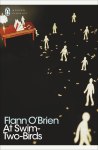
  • Title: At Swim-Two-Birds
    Author: Flann O’Brien
    Year: 1939
    Country: Ireland

    Format: Paperback
    Pages: 228
    Read: 4 – 13 January 2026
    First reading

    At Swim-Two-Birds, the debut novel by Flann O’Brien, is actually three books within a book within a book. (Eat your heart out, Charlie Kaufman!) At the outermost layer it follows the beer-soaked, puke-stained exploits of its nameless narrator, an indolent student. The Student lives in Dublin with his uncle, whom he despises.

    Description of my uncle: Red faced, bead eyed, ball bellied. Fleshy about the shoulders with long swinging arms giving ape-like effect to gait. Large moustache. Holder of Guinness clerkship the third class.

    The Student spends most of his time either drinking and bantering with friends, or lazing in his bedroom. But he’s also working on a book; a surreal work of modernist metafiction in which an author, Dermot Trellis, loses control of his characters. Trellis’s characters, plundered from disparate sources—Irish folklore, Western novels, Dublin pubs—spring to life spontaneously in his reality as he writes them. These characters start to disobey Trellis, living their own lives whenever he’s asleep. Eventually they conspire to rewrite Trellis’s manuscript, torturing him with his own creation.

    I found this an extremely challenging read. Last year I enjoyed Flann O’Brien’s The Third Policeman, itself a bizarre and disorienting book, but At Swim-Two-Birds is even weirder. Luckily I buddy-read it with my friend Mark, who was able to explain some of the more “aggressively Irish” aspects. I found the sections about the folk hero Finn MacCool especially hard-going, full of aggravating repetition and droning lists of made-up birds. Maybe it’s funnier if you were brought up with those folk tales, but for me it was a slog!

    However I did appreciate the book for its surrealism, its bawdy humour, and the sheer inventiveness of the metafictional story. In places it struck me as an unlikely hybrid of Duck Amuck and James Joyce. (Or at least my impression of James Joyce, who I must admit I’ve yet to read. Dubliners is going straight on my wishlist after this.)

    At Swim-Two-Birds is an enigmatic book; the meaning of the story doesn’t make itself immediately apparent. The different layers of fictional reality start to influence each other, gradually revealing some truths about the Student’s life… if you read between the lines. This is where buddy-reading really came into its own. Discussing the book with Mark helped us both get a handle on it, and our chats were sometimes more fun than the actual book—certainly the Finn MacCool bits!

    In fact, we plan to have a video chat about our ‘Flannuary’ experience later this month on Mark’s YouTube channel. We hope to see you there, perhaps with pint in hand. A pint of plain is your only man!

  • At the start of 2025 I set myself a challenge to write a haiku every Friday for the whole year. The rule: They don’t have to be good, they just have to be done.

    And today is the last Friday of 2025. I completed the challenge, with only one skipped week (extreme fatigue) and a few belated haiku (forgetfulness) along the way. Overall I’m proud of how the project went. I achieved what I set out to do, and probably improved my haiku-writing skills along the way.

    But I don’t intend to carry the project over into 2026. Towards the end of the year it just stopped being fun. It was mandatory creativity to a deadline — too much like homework.

    To mark the end of the Friday Haiku project, here are all fifty haiku:

    ~

    January

    ~

    1 — January 3rd:

    Lingering malaise.
    Bartók on headphones, eyes closed —
    Time to recover.

    2 — January 10th:

    An old favourite show:
    Never used to watch alone —
    Blindsided by grief.

    3 — January 17th:

    Hollow red chamber
    Invaded by silver blade —
    Slicing a pepper.

    4 – January 24th:

    Victory is mine
    Until the blue shell descends:
    Mario Karted!

    5 – January 31st:

    When writing haiku,
    Please don't use ChatGPT:
    Suck on your own terms.

    ~

    February

    ~

    6 – February 7th:

    Glistening tarmac
    Glimpsed through a clouded window —
    Staying in today.

    7 – February 14th:

    I love you too much 
    For seventeen syllables 
    Ever to encompass.

    8 – February 21st:

    Cool air fills my lungs,
    I feel myself expanding —
    New CPAP machine.

    9 – February 28th:

    Daylight stretching out,
    Feeding my animal self:
    Winter retreating.

    ~

    March

    ~

    10 – March 7th:

    Vibrating, a string 
    Agitates air molecules:
    To the ear, music. 

    11 – March 14th:

    Squinting at pixels —
    "Is this better, d'you think?" 
    Editing thumbnails.

    12 – March 21st:

    Curious kitty
    Sniffing at my open door
    Beats a quick retreat!

    13 – March 28th:

    A Sondheim earworm
    Rolling merrily through my head:
    Who's like him? Damn few.

    ~

    April

    ~

    14 — 4th April:

    Mottled evening sky —
    Red kite pitches and rolls past,
    Sailing secret waves.

    15 — 11th April:

    Spate of sleepless nights
    Depleting my battery: 
    Can't even write a

    16 — 18th April:

    Inscrutable words
    Decorate the evening air —
    Language of the birds.

    17 — 25th April:

    The birdies have sung,
    Our modern dance is ended:
    Farewell, Pere Ubu.

    [In memory of David Thomas.]

    ~

    May

    ~

    18 — 2nd May:

    Opportunities
    Like speeding taxis recede
    Into might-have-been.

    19 — 11th May (ahem):

    Totally on time,
    It's my regular haiku:
    Please ignore the date.

    20 — 16th May:

    Watching Taskmaster:
    Mathew Baynton's tiny shorts,
    Judiciously blurred. 

    21 — 23rd May:

    Pearly gates open:
    Angelic chorus cheers, "Norm!"
    So that's where George went.

    [In memory of George Wendt.]

    22 — 30th May:

    Razor blade in hand,
    You Fantastic! musicians
    Thwart the precedent.

    [Inspired by the experimental band, You Fantastic!]

    ~

    June

    ~

    23 — 6th June:

    Reading Titus Groan:
    Gormenghast's grim labyrinth
    Haunting my mind's eye. 

    24 — 13th June:

    In my room, surf's up:
    There's a riot goin' on —
    Dance to the music!

    [In memory of Brian Wilson and Sly Stone.]

    24 — 20th June:

    Window yawning wide,
    Curtains dancing in the breeze…
    Still too bloody hot.

    25 — 27th June:

    Hope is mere kindling:
    If you want there to be fire,
    You must strike the match.

    ~

    July

    ~

    26 — 4th July:

    White cassette, red sleeve,
    Blaring in my preteen ears:
    You really got me.

    [Inspired by The Kinks.]

    27 — 11th July:

    Mortification:
    The reeking fertiliser
    Through which our souls grow. 

    28 — 18th July:

    My waterbody:
    Where veins are tributaries
    Flowing with life force.

    [Inspired by Robert Macfarlane’s book, Is A River Alive?]

    29 — 25th July:

    The Prince of Darkness
    Unfurls his leathery wings,
    Soars into the void.

    [In memory of Ozzy Osbourne.]

    ~

    August

    ~

    30 — 1st August:

    Round the corner, leaves
    Beckon in a gentle breeze:
    Befriending a tree.

    31 — 8th August:

    Iambic music
    Waking up my sleeping ear,
    Measure by measure.

    32 — 15th August:

    .hindsight in Revealed
    contexts and meanings Hidden
    :reverse in Story

    [Inspired by series 9 of John Finnemore’s Souvenir Programme.]

    33 — 22nd August:

    A witness wonders,
    Why do they send five coppers
    To arrest one man?

    34 — 29th August:

    Watching Enterprise —
    The only Star Trek series
    With a shit theme tune.

    ~

    September

    ~

    35 — 5th September:

    Glowing in darkness,
    Twenty four flickering frames
    Help me find myself.

    [Inspired by my project to get back into watching films.]

    36 — 12th September:

    Most radiant smile,
    Transcending time and language:
    Setsuko Hara.

    37 — 19th September:

    Made my lovely eyes
    Sad, leaky, wet and wincey: 
    Petals float to earth.

    [Inspired by the long-awaited new Cardiacs album.]

    26th September:

    (No haiku. Too fatigued to write.)

    ~

    October

    ~

    38 — 3rd October:

    Golden leaves dancing —
    Watched through rain-streaked windowpane
    And a foggy brain.

    39 — 10th October:

    Pearly grey expanse
    Dotted with darting black birds,
    Flitting between trees.

    40 — 17th October:

    Malfunctioning brain:
    Called the mental mechanic —
    Time for a tune-up.

    41 — 24th October:

    Silver kintsugi:
    Break my heart and glue the shards,
    Tokyo Story.

    42 — 31st October:

    Hearing old music
    Made by a forgotten self:
    Time to remember.

    ~

    November

    ~

    43 — 7th November:

    Red and golden leaves
    Strewn upon the grey below:
    Autumn's casualties.

    44 — 14th November:

    Insatiable night
    Feasts upon the daylight hours,
    Tipping the balance.

    45 — 21st November:

    Late afternoon rays
    From a low, cold winter sun
    Catch the bare branches.

    46 — 28th November:

    Waxing crescent moon
    Floating in pale blue evening:
    A cut fingernail.

    ~

    December

    ~

    47 — 5th December:

    My Telecaster
    Beckons from its dusty case:
    Soon I'll play again.

    48 — 12th December:

    Christmas approaches
    But merriness can't be found:
    I'll try to make some.

    49 — 19th December:

    Saying “Oh, hiya!”
    Lubricates the social wheels, 
    Or so says Ozu. 

    [Inspired by the film Good Morning, the original Japanese title of which is Ohayo.]

    50 — 26th December:

    Slump across the line
    With a huge, exhausted sigh:
    Fiftieth haiku!