Tag: fantasy

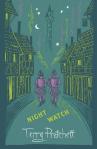
  • Title: Night Watch
    (Discworld #29)
    Author: Terry Pratchett
    Year: 2002
    Country: UK

    Format: Hardback
    Pages: 475
    Read: 21-30 December 2025
    Reread

    Night Watch is the twenty-ninth Discworld book, and the sixth starring Sam Vimes and the Ankh Morpork City Watch. Vimes is on the trail of Carcer, a vicious and unrepentant killer, when a freak accident transports them both back in time. Vimes finds himself stuck in the Ankh-Morpork of his youth, right as the Glorious Revolution of the Twenty-Fifth of May is about to kick off. But Vimes and Carcer’s arrival has changed history: John Keel, the man Vimes once knew as his mentor, is dead before his time. Vimes is forced to take Keel’s place and mentor his younger self, at least long enough for the History Monks to patch up history and send him back to the future.

    ‘I mean, doesn’t it change history even if you just tread on an ant?’
    ‘For the ant, certainly,’ said Qu.

    This is certainly one of the most dramatic Discworld books. Pratchett’s work is never completely devoid of humour, but in Night Watch the scales are tipped more towards tension, drama, and righteous anger. Pratchett incorporates themes of civil unrest, police brutality and torture, social inequality, nostalgia, grief, and corrupt politics, all within the framework of a fantastical time travel romp. It’s definitely Pratchett at the height of his powers.

    ‘They attacked the other Houses, and what’s the Night Watch ever done to hurt them?’
    ‘Nothing,’ said Vimes.
    ‘There you are, then.’
    ‘I mean the Watch did nothing, and that’s what hurt them,’ said Vimes.

    In fact, Night Watch seems to have a reputation among my fellow Terryvangelists as The Best Discworld Book. When I first read it, my expectations were high—perhaps too high, so I ended up faintly disappointed. But even then, I had a feeling it would improve on rereading. And it did! This time round, I absolutely loved it. This is a powerful book with a lot to say, and it manages to say it between—or sometimes with—silly puns and dirty jokes. Well, if it’s good enough for Shakespeare…

    And the foreshadowing was much more effective when, like the older and wiser Vimes, I already understood the full significance of the Twenty-Fifth of May and its lilacs.

    How do they rise up?

  • It’s that time of year when I fall down the Rabbit Hole of Introspection. Okay, maybe that’s just where I live! But at least the new year gives some structure to my musings.

    It’s been a strange year in a lot of ways. I started 2025 with a lot of big ambitions to read big books—chunky classics like David Copperfield and Anna Karenina… both of which I ended up DNFing! Not because I disliked them, I hasten to add. They both seemed great. But I didn’t approach them with the focus and dedication such hefy tomes demand. Seduced by other books, I let Dickens and Tolstoy linger on the shelf, unread, for so long that I lost motivation to pick them up again. If I do attempt either of them again, I’ll have to go back to the start.

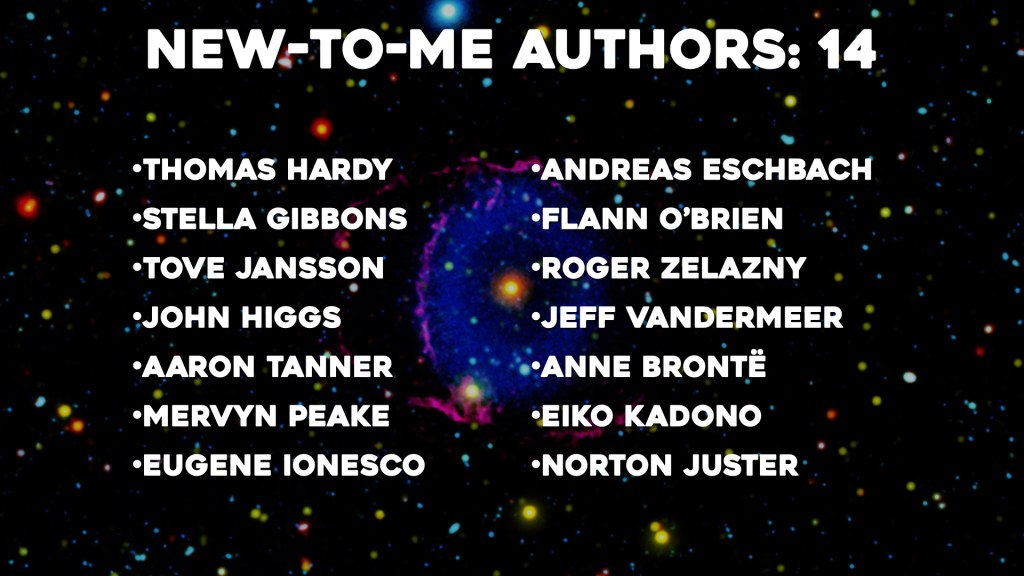
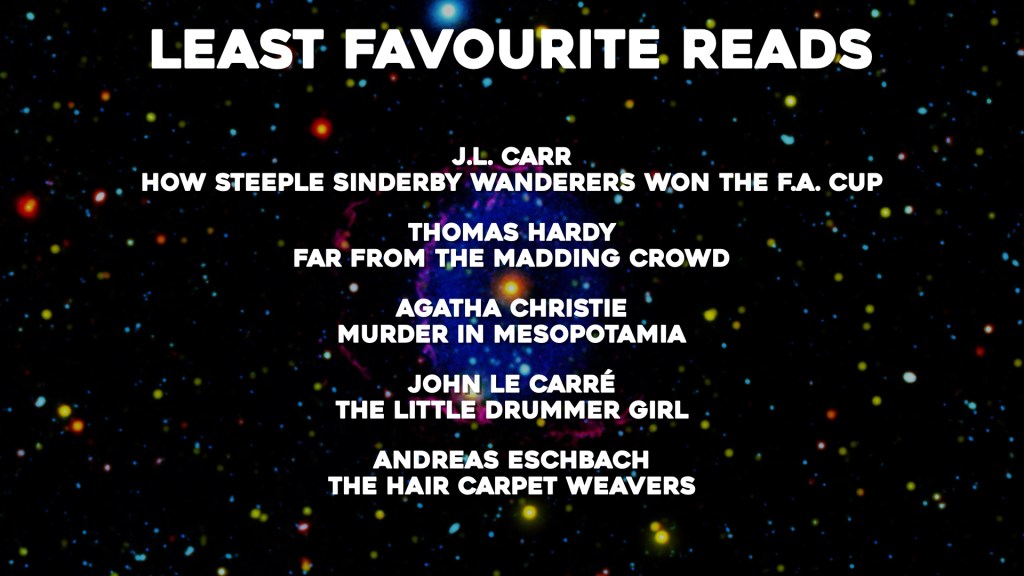
    In fact I had bad luck with ‘classics’ in general. My first experience of Thomas Hardy was not a happy one! My first Anne Brontë, Agnes Grey, was… just fine. And worst of all, I ended up losing interest and DNFing A Passage to India. I had really hoped to enjoy that one, considering E.M Forster’s A Room with a View was my favourite read of 2024. Very disappointing!

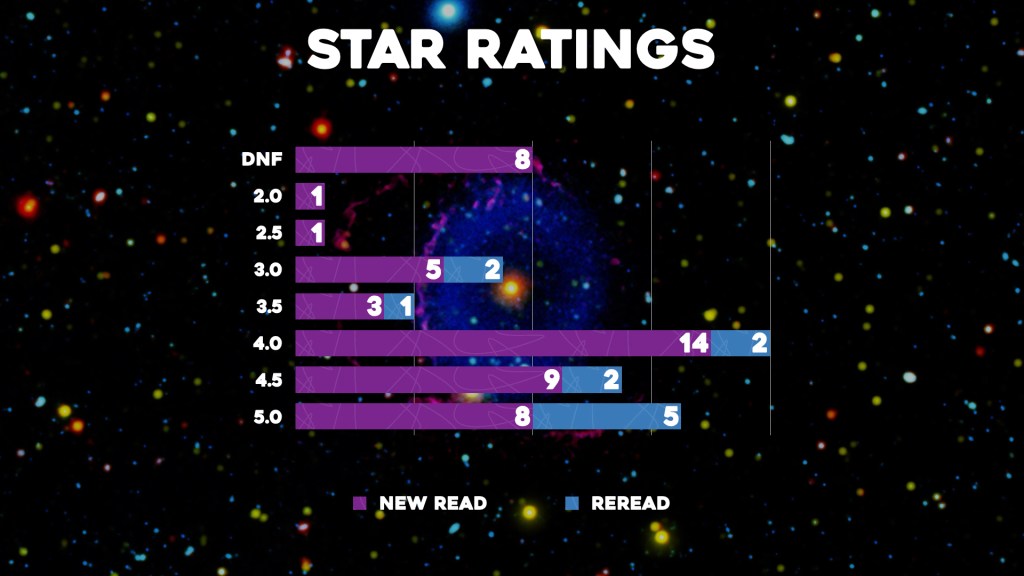
    I struggled with my health, both mental and physical, through much of summer and into autumn. Long story short: My GP recommended some iron and vitamin supplements, which are slowly improving my energy levels. And I will soon be starting therapy to see if I can get my wonky brain back in shape too. Anyway, these issues evidently affected my reading, both in terms of how many books I read and how much I enjoyed them.

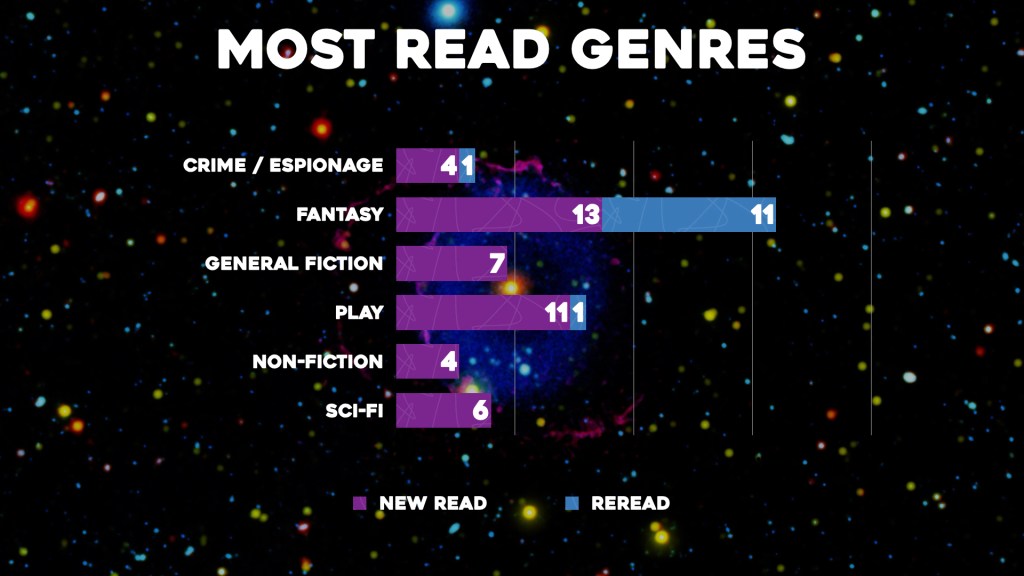
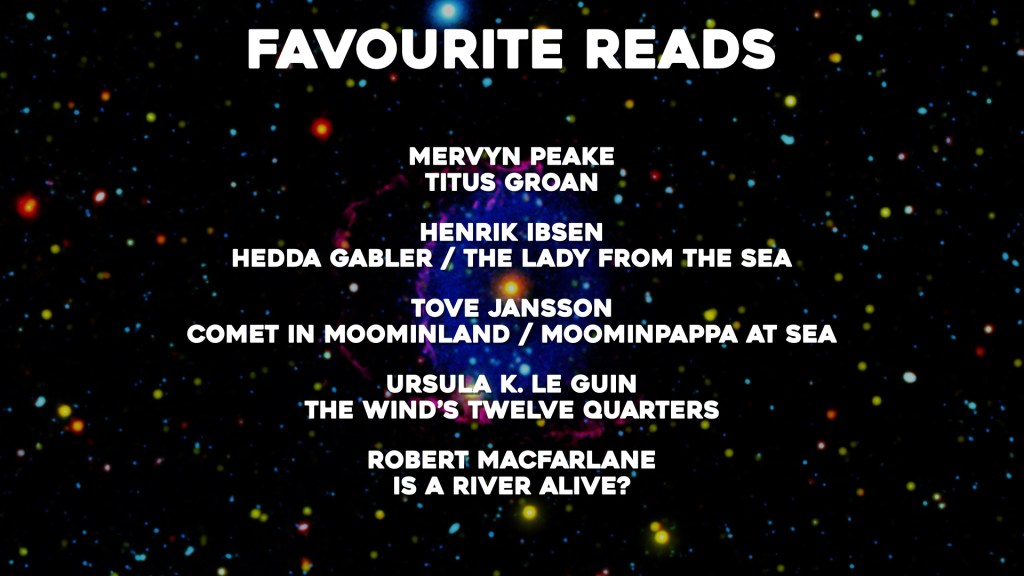
    But it’s not all doom and gloom! After accepting that chunky classic novels weren’t working for me, I pivoted towards shorter books. I read a lot of classic plays, falling deeper in love with the work of Henrik Ibsen. I also reignited my dormant love of sci-fi, reading excellent short story collections by Ursula K. Le Guin and Roger Zelazny. And I read plenty of delightful children’s fiction, falling deeply in love with Tove Jansson’s Moomins.

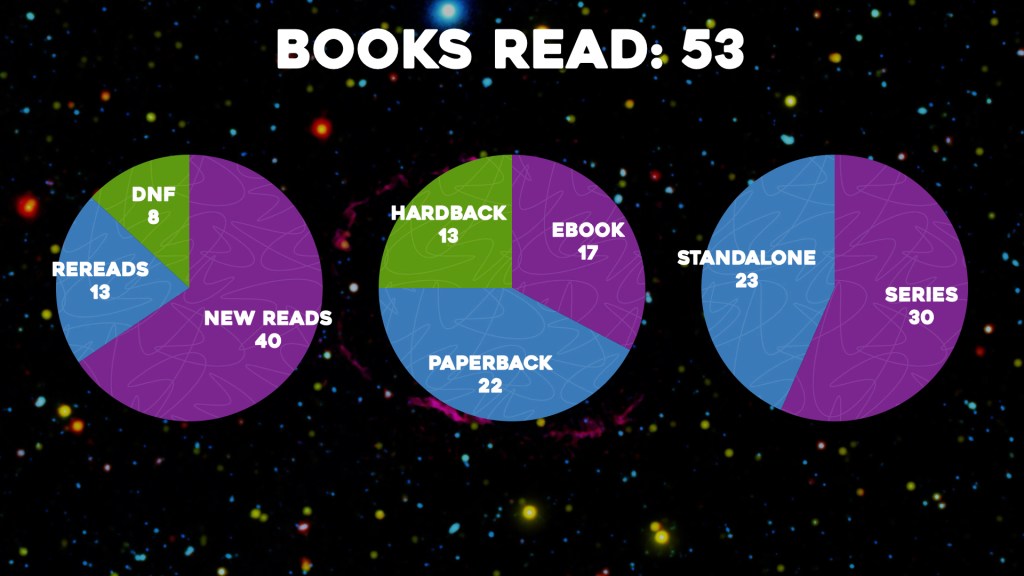
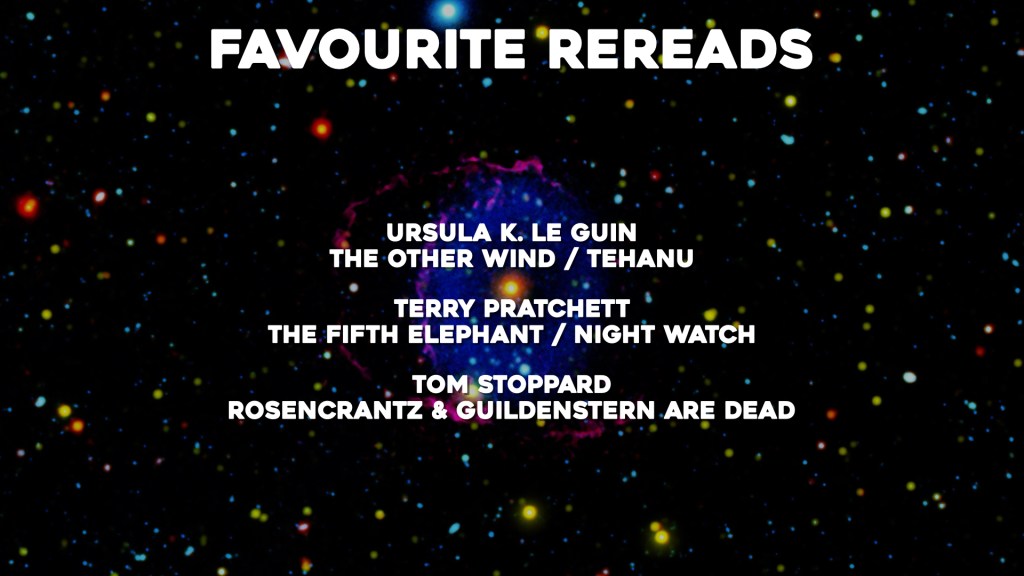
    Terry Pratchett remains my most reliable go-to author. I’ve had a great time going through the Discworld series in order. Most of those books are rereads for me. In fact I’ve filled in almost all the gaps now: I’ve read 40 of the 41 Discworld books. All that remains is the final book, The Shepherd’s Crown, which I’ll probably get to in 2027 at this rate. I plan to take my time and enjoy the journey.

    I also finished rereading Le Guin’s Earthsea series, which I can now confidently say is my favourite fantasy series ever. My admiration for Le Guin continues to grow all the time. I’m excited to explore more of her work outside of Earthsea.

    And one chunky book that didn’t let me down was Mervyn Peake’s Titus Groan. That book was a revelation. A bizarre, bewitching fictional world described in such obsessive detail, it felt more like visiting in person than merely reading about it.

    December saw a big uptick in my reading. I recently bought a phone-sized e-reader, which allows me to read comfortably while lying down at bedtime. It’s much less overstimulating than my actual phone, so bedtime reading has become a viable option again. I mostly read children’s books at night. It’s a good way to unwind at the end of the day. But whatever my bedtime read is, it’s helpful to have that extra variety in my book diet. (Watching more films in 2025 also helped with that. Whatever I’m not getting from my morning read, I can supplement with films, short stories, and bedtime books.) This past month I feel like I’ve enjoyed more of what I read, and I’m feeling optimistic about the year ahead.

    And now—drum roll please—it’s time for graphs, charts, and lists!