Tag: Henrik Ibsen

  • Title: A Doll’s House
    Author: Henrik Ibsen
    (Translated by Deborah Dawkin and Erik Skuggevik)
    Year: 1879
    Country: Norway

    Format: Paperback
    Pages: 84
    Read: 14 – 16 April 2026
    First reading

    The Helmers have a seemingly idyllic marriage. Nora is a devoted housewife and mother, and Torvald has just been promoted at work. But Nora has a secret that threatens to destroy their relationship. Years ago Torvald had a breakdown, requiring a rest cure in Italy. Nora let Torvald believe that her late father bequeathed the money that paid for the trip. In fact she borrowed the money illegally by forging signatures. Ever since she has been squirrelling away money, trying to pay off the debt without her husband finding out. But now the moneylender, Krogstad—an employee at Torvald’s bank—is determined to secure a promotion for himself by blackmailing Nora, threatening to reveal the truth.

    A Doll’s House is the play that made Ibsen’s name around the world. It was radical in its time and the ending still packs a punch today. The play concerns Nora Helmer’s liberation, her demand for personhood. She realises that the men in her life—first her father, then her husband—have always treated her as their plaything, nothing but a doll to display in their doll’s house. Nora demands a life of her own and the right to make her own mistakes. Her character resonated deeply with me. I too, as a disabled person, have felt marginalised and infantilised—not exactly like Nora, but not dissimilar.

    Torvald: You are first and foremost a wife and mother.
    Nora: I don’t believe that any more. I believe I am first and foremost a human being, I, just as much as you – or at least, that I must try to become one. I know, of course, that most people would say you’re right, Torvald, and that something of the sort is written in books. But I can no longer allow myself to be satisfied with what most people say and what’s written in books. I have to think these things through for myself and see to it I get an understanding of them.

    Nora Helmer is one of the greatest ‘classic’ stage roles for women; maybe not as challenging and mercurial as Ibsen’s Hedda Gabler, but a fascinating character at the centre of a powerful, triumphant play. The off-stage sound of Nora slamming the door on her old life still echoes through the ages. I’m so glad the echo finally reached my ear.

  • Title: Pillars of the Community
    Author: Henrik Ibsen
    (Translated by Deborah Dawkin and Erik Skuggevik)
    Year: 1877
    Country: Norway

    Format: Paperback
    Pages: 104
    Read: 29 March – 1 April 2026
    First reading

    Norwegian businessman Karsten Bernick is a well respected man about town, a pillar of the community. His shipbuilding business provides most of the jobs in his small coastal town. Plans for a new railway look set to grow his fortune even further. But his business and his public image are built on a lie. Fifteen years ago his friend Johan took the blame for a scandal that was really Karsten’s doing. In the intervening years the scandal has ballooned thanks to small-town gossip, which Karsten has turned all to his advantage. So when Johan returns from his exile in America, determined to clear his name, it looks like Karsten’s past is about to catch up with him.

    Pillars of the Community (more traditionally titled The Pillars of Society) exposes the lie that many prestigious careers are built on. Karsten is involved in insider trading—buying up cheap land, then campaigning in favour of a new railway that will vastly increase the value of said land. He’s a hypocrite, plain and simple. He uses his elevated reputation to justify his unethical actions: it’s okay if he does it, because he creates jobs for the community. The fact that the scheme will also make him unfathomably wealthy is just a happy accident. And as long as he maintains his spotless reputation, the community is bound to agree.

    Speaking up for truth is Lona, an unapologetic feminist who is famed in the town for cutting her hair short and wearing (gasp) men’s boots! She was once in love with Karsten, and loved by him, but he rejected her for a marriage of convenience that would advance his career. Lona then followed Johan to America and became his surrogate mother. She returns to Norway with Johan to become the voice of reason, to save Karsten’s soul from his own lies. Like many of Ibsen’s heroines she stands for truth, progress, emancipation, and freedom of spirit. Later he would write deeper, more well-rounded examples of this character type, but Lona is a great early example. She’s easily my favourite character in the play.

    This is the earliest of the eight Ibsen plays I’ve read so far. It deals with many of Ibsen’s recurring themes: people haunted by secrets from their past; unearned privilege; lies and hypocrisy; women’s place in modern society; the evils of capitalism; and the tension between tradition and progress. He would tackle all these topics with greater depth and nuance in later plays, but this is still a very enjoyable play in its own right. However the sudden happy ending, where Karsten undergoes a Scrooge-like metamorphosis, feels quite implausible and unearned. Overall, Pillars of the Community is an interesting and engaging play but, in my eyes, not a truly great one.

  • It’s that time of year when I fall down the Rabbit Hole of Introspection. Okay, maybe that’s just where I live! But at least the new year gives some structure to my musings.

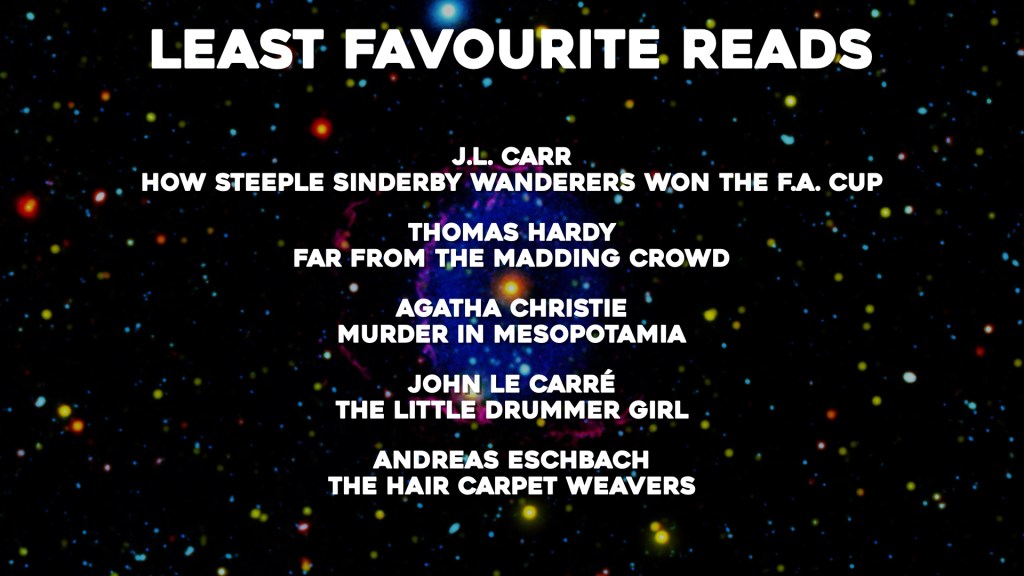
    It’s been a strange year in a lot of ways. I started 2025 with a lot of big ambitions to read big books—chunky classics like David Copperfield and Anna Karenina… both of which I ended up DNFing! Not because I disliked them, I hasten to add. They both seemed great. But I didn’t approach them with the focus and dedication such hefy tomes demand. Seduced by other books, I let Dickens and Tolstoy linger on the shelf, unread, for so long that I lost motivation to pick them up again. If I do attempt either of them again, I’ll have to go back to the start.

    In fact I had bad luck with ‘classics’ in general. My first experience of Thomas Hardy was not a happy one! My first Anne Brontë, Agnes Grey, was… just fine. And worst of all, I ended up losing interest and DNFing A Passage to India. I had really hoped to enjoy that one, considering E.M Forster’s A Room with a View was my favourite read of 2024. Very disappointing!

    I struggled with my health, both mental and physical, through much of summer and into autumn. Long story short: My GP recommended some iron and vitamin supplements, which are slowly improving my energy levels. And I will soon be starting therapy to see if I can get my wonky brain back in shape too. Anyway, these issues evidently affected my reading, both in terms of how many books I read and how much I enjoyed them.

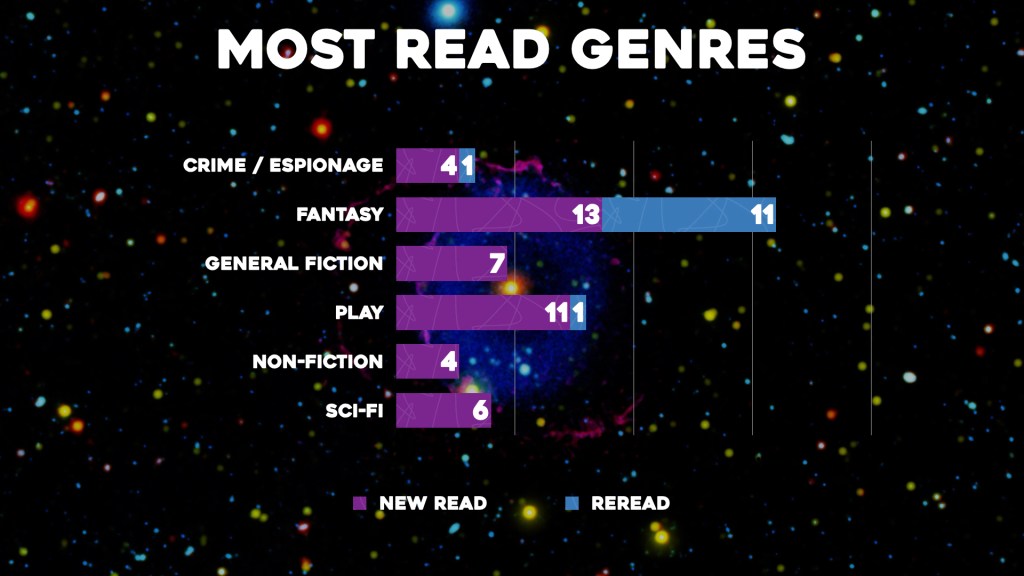
    But it’s not all doom and gloom! After accepting that chunky classic novels weren’t working for me, I pivoted towards shorter books. I read a lot of classic plays, falling deeper in love with the work of Henrik Ibsen. I also reignited my dormant love of sci-fi, reading excellent short story collections by Ursula K. Le Guin and Roger Zelazny. And I read plenty of delightful children’s fiction, falling deeply in love with Tove Jansson’s Moomins.

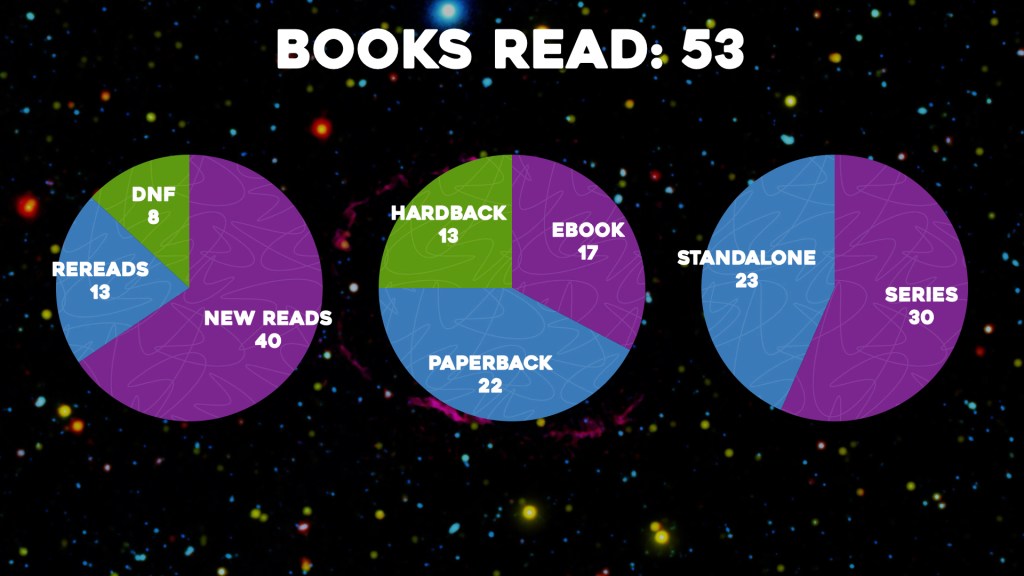
    Terry Pratchett remains my most reliable go-to author. I’ve had a great time going through the Discworld series in order. Most of those books are rereads for me. In fact I’ve filled in almost all the gaps now: I’ve read 40 of the 41 Discworld books. All that remains is the final book, The Shepherd’s Crown, which I’ll probably get to in 2027 at this rate. I plan to take my time and enjoy the journey.

    I also finished rereading Le Guin’s Earthsea series, which I can now confidently say is my favourite fantasy series ever. My admiration for Le Guin continues to grow all the time. I’m excited to explore more of her work outside of Earthsea.

    And one chunky book that didn’t let me down was Mervyn Peake’s Titus Groan. That book was a revelation. A bizarre, bewitching fictional world described in such obsessive detail, it felt more like visiting in person than merely reading about it.

    December saw a big uptick in my reading. I recently bought a phone-sized e-reader, which allows me to read comfortably while lying down at bedtime. It’s much less overstimulating than my actual phone, so bedtime reading has become a viable option again. I mostly read children’s books at night. It’s a good way to unwind at the end of the day. But whatever my bedtime read is, it’s helpful to have that extra variety in my book diet. (Watching more films in 2025 also helped with that. Whatever I’m not getting from my morning read, I can supplement with films, short stories, and bedtime books.) This past month I feel like I’ve enjoyed more of what I read, and I’m feeling optimistic about the year ahead.

    And now—drum roll please—it’s time for graphs, charts, and lists!