Tag: science fiction

  • Title: Do Androids Dream of Electric Sheep?
    Author: Philip K. Dick
    Year: 1968
    Country: USA

    Format: E-book
    Pages: 208
    Read: 10 – 21 February 2026
    Reread
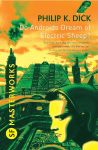
    Rick Deckard, proud owner of an electric sheep, is a bounty hunter for the San Francisco police. His targets are androids, escaped slaves who have killed their human owners on Mars and fled to this bleak, post-apocalyptic Earth. Deckard must track down the androids, using the Voigt-Kampff empathy test to discern android from human, and “retire” them. But is Deckard a match for these superhuman androids? And just how reliable is the empathy test anyway?

    I first read Do Androids Dream of Electric Sheep? in my early teens, having first seen the film adaptation, Blade Runner. I adored the film and watched it repeatedly. I remember being surprised by just how different the novel was. Revisiting it for the first time in all those years, I am once again surprised. This is a book stuffed with interesting philosophical and sociopolitical ideas, most of which were only hinted at (or outright ignored) by the makers of Blade Runner. I found it a fascinating, thought-provoking read.

    The setting is a future Earth, one where animals are all but extinct; owning a real, live animal is prohibitively expensive and therefore a status symbol. Failing that, one can keep up with the Joneses by purchasing a realistic electric animal, such as Deckard’s fake sheep. Deckard and his wife maintain the facade that their sheep is real, but they cannot care about it as deeply as a real creature. It simply doesn’t provoke the same empathic response. Similarly, Deckard feels no compunction about “retiring” androids. After all, they don’t count as people… do they?

    The Voigt-Kampff test (like in the film) measures a subject’s empathic responses to a set of hypothetical situations. Those who lack the proper response are revealed to be androids. But this is a poisoned Earth where humans are prone to developing cognitive disabilities. Such people are labelled “specials”—marginalised, banned from emigrating to Mars, despised and abused by humans and androids alike. And there’s a risk that a special could fail the Voigt-Kampff test and be mistakenly murdered by Deckard or his colleagues. Ultimately specials are seen as subhuman, just as unworthy of empathy as the androids Deckard is hunting. As a disabled reader myself, I found that theme particularly engaging.

    The novel’s dominant religion is Mercerism, in which humans can merge electronically with a martyr figure called Mercer and literally experience his suffering. But when Mercer’s authenticity is called into question, so is the validity of that experience. People can also use a machine to dial in the emotion of their choosing—including the desire to use the machine itself. If something so patently artificial can provoke real emotional responses, does that lend it a certain legitimacy after all? In our current age of chatbot therapy and AI-generated “art”, it’s increasingly clear that the answer is no!

    My only gripe with the book is a few moments of Male Author Syndrome: Women’s bodies, whether human or android, are frequently described in a little too much detail. Otherwise this is a fantastic novel. It’s a gripping, engaging, thought-provoking read. It works both as a hardboiled detective thriller and a piece of deeply philosophical sci-fi. I’m eager to read more Philip K. Dick in the coming months.


  • Title: Planet of Exile
    (Hainish #2)
    Author: Ursula K. Le Guin
    Year: 1966
    Country: USA

    Format: Paperback
    Pages: 100
    Read: 1 – 5 February 2026
    Reread

    My Hainish series read-through continues with Planet of Exile, first published in 1966—the same year as its predecessor, Rocannon’s World. (You can read my review of Rocannon’s World here.)

    The story takes place on Werel, a planet with a decades-long season cycle. Jakob Agat leads a group of human colonists who, centuries ago, were exiled to Werel by the League of All Worlds. Jakob and his people, despite having never seen their long-forgotten homeworld, remain staunchly separate from the local indigenous tribe, the primitive Tevarans. As a harsh, fifteen-year winter approaches—bringing with it a horde of ruthless nomadic warriors called the Gaal—cooperation between human and Tevaran camps may be their only chance of survival. But things are complicated when Jakob breaks taboo with Rolery, daughter of the Tevaran chief.

    Planet of Exile, while not yet Peak Le Guin, is a marked improvement from Rocannon’s World. Both books attempt to blend sci-fi and fantasy, but the second book succeeds where the first fails. My friend Pat (Book Chat With Pat) shared a quote in our Hainish group chat where Le Guin describes her debut novel with a colour analogy: If sci-fi is blue and fantasy is red, Rocannon’s World is purple. I would argue that Rocannon’s World doesn’t successfully blend its colours; it’s a book of blue and red stripes, awkwardly clashing. Planet of Exile, on the other hand, is properly purple.

    Le Guin’s prose here is more focused and more evocative than in her debut. The cast of characters is also more streamlined—there are just three races to keep track of, and the tension between human and Tevaran tribes is made tangible by the star-crossed romance of Jakob and Rolery. I sincerely enjoyed Planet of Exile. And it’s exciting to see Le Guin’s progression as a writer, especially knowing just how much farther she would go from here.

    The group reading experience, hosted by Gareth (Books Songs and Other Magic) also continues to delight. These past two months we’ve had some fascinating discussions, and I’m eager to continue them as we work through the rest of the Hainish series together.

  • Title: Rocannon’s World
    (Hainish #1)
    Author: Ursula K. Le Guin
    Year: 1966
    Country: USA

    Format: Paperback
    Pages: 112
    Read: 11 – 18 January 2026
    Reread

    Rocannon’s World is Ursula K. Le Guin’s debut novel and the first in her loosely-connected Hainish series. It follows Gaveral Rocannon, an ethnographer for the League of All Worlds. When anti-League rebels attack and destroy his ship, Rocannon is stranded on the alien planet of Fomalhaut II. The planet is home to multiple intelligent (but technologically primitive) species, each with their own unique social structures and customs. Rocannon, aided by a diverse group of Fomalhaut natives, goes on a dangerous quest to contact the League and end the rebellion.

    Rocannon’s World is ostensibly a sci-fi novel, but the whole thing is steeped in fantasy. Rocannon comes from a hi-tech world of interstellar travel, ansible communication, and weapons of mass destruction; but he’s stuck on a planet of feudal lords and heroic quests. I’m not opposed to such a blend of genres, but I don’t think Le Guin quite pulls it off here. The book establishes many of her enduring themes, but with little of her best work’s profundity or poetic brilliance. It didn’t take her too long to hone her skills, but Rocannon’s World is very much A First Attempt. As an established fan, I enjoyed it the same way I enjoy listening to early demos by my favourite bands: It’s interesting in context, but I wouldn’t recommend it for first-time readers of Le Guin.

    My favourite part of the book is the prologue, which was first published as a separate short story. In fact the story, Semley’s Necklace, was included in Le Guin’s anthology The Wind’s Twelve Quarters, which I read just a few months ago. It was fascinating to read the story both as its own thing and the introduction to a longer work. That gave me some insight into Le Guin’s creative process—glimpsing the seeds from which she grew an entire universe.

    I read Rocannon’s World as part of a group reading project led by my BookTube friend Gareth (Books Songs and Other Magic). We’ll be reading all of Le Guin’s Hainish books during the year, discussing them in the group chat as we go. It’s been a great experience so far—my fellow readers have shared some valuable insights into the book and Le Guin’s career as a whole. Gareth also plans to host live-chat videos about each book, so be sure to tune your ansible devices accordingly!

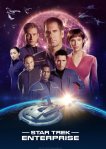
  • Title: Star Trek: Enterprise
    Year: 2001-05
    Country: USA

    Format: Blu-ray
    Seasons: 4
    Episodes: 98
    Seen: 9 August 2025 – 16 January 2026
    First viewing (mostly)

    Captain’s Blog: Back in August of ’25, a few weeks before I started Project Glowing Rectangle, I also started a months-long telly-watching project. On days when I don’t have the time, energy or inclination to watch a film but I still need something to lure me away from doomscrolling, my main Thing To Watch has been Star Trek: Enterprise. It has seen me through some rough times and big changes these past five months. And yesterday I watched the final three episodes.

    I had seen a handful of Enterprise eps when they originally aired—T’Pol made a big impression on my adolescent self! But this was my first time watching the entire series. Overall I enjoyed it… but it did play everything very safe. Maybe this is inevitable for a prequel series; it had to slot into the existing Star Trek continuity, so it could never take big swings. The riskiest aspect of the whole show was the theme tune, a godawful country power ballad that I ended up skipping for most of the run.

    The cast is decent but mostly pretty bland. Being something of an outsider myself—let me count the ways!—naturally I’m most drawn to Star Trek’s outsider characters. I was spoilt for choice with Deep Space Nine, but there’s slim pickings on Enterprise. Jonathan Archer (Scott Bakula), a dog dad and water polo fan, is easily the least interesting of all the pre-streaming Star Trek captains. The standouts for me are the two alien crew members, science officer T’Pol (Jolene Blalock) and Dr Phlox (John Billingsley), but even they don’t get to shine as often as I would like. I also enjoyed the recurring character Commander Shran (Jeffrey Combs), an Andorian who keeps trading favours with Archer. Jeffrey Combs’ many, many guest appearances were a highlight of DS9, so I was happy to see him again here.

    Enterprise has none of the truly atrocious episodes that make me yell at the telly, ‘WTF was that?!’ (I’m looking at you, Sub Rosa…) Equally there are none of the stunning, profoundly moving stories that make me rejoice to be a fan of Star Trek. There’s nothing here that approaches the level of Darmok, The Inner Light, The Visitor, or Far Beyond the Stars. But maybe it’s unfair to ask lightning to strike twice. Or even once!

    The high point for me was season 2, episode 2: Carbon Creek, in which a Vulcan crew—including T’Pol’s great-grandmother (also played by Jolene Blalock)—is stranded on 1950s Earth. It’s quite telling that the best episode was one that didn’t involve the regular crew at all, aside from the framing device of T’Pol relating the story over dinner. But if you watch only one episode of Enterprise, make it this one.

    I also enjoyed the third season, a completely serialised story about the Xindi plot to destroy Earth. This was something unique for pre-streaming Trek, and I think they pulled it off. After that, the final season reverted to more episodic storytelling; not in itself a bad thing, but a lot of these two- or three-part stories felt like desperate fan service. There’s a two-parter devoted to explaining why Original Series Klingons had smooth foreheads. Give me a break!

    The final episode, These Are the Voyages…, is notoriously detested by fans. The whole thing is a holodeck simulation run by Riker, taking place in the middle of a Next Generation episode. As a finale to Enterprise, it doesn’t really work. As a celebration of Star Trek in general, it… doesn’t really work either. I didn’t hate it like the fandom seems to, but I agree the preceding two-parter is a more fitting and emotionally resonant finale to Enterprise.

    So yeah… all in all, a pretty middling iteration of Star Trek. Not much I hated, but not much I really loved. It felt like a show that could never fully decide what it wanted to be. But it was nice to see some new-to-me Trek with a substantial number of episodes per season. Enterprise has been a good companion to me these past five months, for which I’m grateful.

    Up next, a rewatch of The Original Series.