Title: The Man in the High Castle
Author: Philip K. Dick
Year: 1962
Country: USA
Format: E-book
Pages: 256
Read: 17 – 27 April 2026
First reading
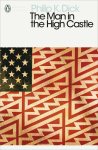
A disparate group of characters navigate life in 1960s San Francisco—now part of the Pacific States of America, following the Axis powers’ victory in the Second World War. Robert Childan is an antiques dealer, selling historical Americana to wealthy, prestigious Japanese clients whom he resents. One of Childan’s clients, a high-ranking Japanese official called Mr. Tagomi, needs a gift for a visiting Swedish industrialist called Baynes. Frank Frink, who must hide his Jewish heritage, works for a company that supplies the unsuspecting Childan with counterfeit Civil War antiques. Meanwhile Frank’s estranged wife Juliana, who lives in the neutral territory between America’s Japanese and German states, begins an affair with an Italian truck driver. Each of these characters’ lives are in some way touched by a controversial novel, Hawthorne Abendsen’s The Grasshopper Lies Heavy, which imagines an alternate history where the Allies won the war.
The Man in the High Castle asks plenty of intriguing questions. “What if the Axis powers won the war?” is the first and most obvious question. The answer is quite horrifying. We learn of the Nazis’ destruction of Africa, the ovens in New York, and their plans to betray their wartime allies. But Philip K. Dick uses this scenario to explore plenty of his other preoccupations. The plot about counterfeit antiques asks what counts as genuine anyway, and what therefore counts as fake. (Dick would investigate this idea more thoroughly in Do Androids Dream of Electric Sheep?) Objects have no memory and aren’t materially changed by their mere presence at historical events, so does it matter that Childan’s “antique” guns weren’t really used in the Civil War? Not especially… until someone asks the question.
Then there’s the I Ching, which various characters consult for advice and insight. This is one way in which Dick explores themes of cultural imperialism: the white American characters have Japanese culture imposed upon them, the same way actual America imposes its culture on the world. Dick also mentions the yin-yang cycle—light and dark, each giving birth to its opposite. The yin-yang symbol could be a diagram of this whole book. In reality, Philip K. Dick wrote a novel imagining the Axis powers won the war; in that novel, the fictional Hawthorne Abendsen wrote a book imagining the Allies won. The real and the imagined, each containing its opposite. When Juliana finally meets Abendsen, she discovers Grasshopper was written by consulting the I Ching. She interprets the Oracle’s message to mean that, in some way, the Axis powers really did lose the war. Does this mean that Dick’s own novel implies the reverse in our reality? Given our current situation, maybe he wasn’t far wrong. But the cycle will continue: darkness will again give way to light.
These are all thought-provoking concepts, I really enjoyed pondering them; but the book’s structure and pacing are all over the place. (My buddy-reader Mark found it even more confounding than me! You can see his review on YouTube.) For much of the first half it feels like Philip K. Dick is slowly, meticulously outlining this alternate history, drawing tenuous but intriguing connections between all the main characters. I found myself wondering, half excited and half impatient, where exactly the story was going. Then, for a couple of chapters, there’s a sudden burst of action… which is soon over, giving way to the previous, slow pace. The ending feels less like a crescendo than a fade-out, or a nonchalant shrug. “And things continue pretty much like that—you get it, right?” Ultimately the book gave me a lot to think about, but the actual reading experience was somewhat mixed.
That said, I’m still eager to read more Philip K. Dick.

