Tag: Tove Jansson

  • Title: The Moomins and the Great Flood
    (Moomins #1)
    Author: Tove Jansson
    (Translated by David McDuff)
    Year: 1945
    Country: Finland

    Format: E-book
    Pages: 52
    Read: 21 – 24 February 2026
    First reading
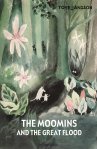
    Moominmamma and her son Moomintroll are looking for Moominpappa, who hasn’t come back from his latest adventure. Their search takes them through forests, swamps and mountains, meeting various weird and wonderful people along the way. A heavy rainstorm almost spells disaster, but Moominmamma and Moomintroll survive the flood and eventually find Moominpappa—and a new place to call home.

    The Moomins and the Great Flood was Finland’s introduction to the Moomins, first published in 1945—but only translated into English in 2005. It was the last Moomins novel I read, and to me it feels very different from the rest of the series. For one thing it’s a much shorter book. It’s also less coherent, flitting from scene to scene without pause, like a small child breathlessly telling you a story: “And then this happened, and then this happened, and then this happened…” Tove Jansson’s illustrations are (as always) utterly charming, and there’s a faint glimmer of the magic that would come in later books. But this is easily my least favourite Moomins novel of the bunch, and certainly not one I’d recommend as an introduction. Much better skip ahead to the magnificent second book, Comet in Moominland.

    The edition I read did include some interesting bonus material though. There’s a nice foreword from the current Children’s Laureate, Frank Cottrell-Boyce, providing some historical context for the story. There’s also excerpts from Tove Jansson’s own notes about her characters, originally written to help prospective writers and directors of Moomins adaptations. So, while the novel itself was pretty disappointing, reading it still enhanced my apprecation for the other books in a series I’ve grown to adore.
  • Title: Moominvalley in November
    (Moomins #9)
    Author: Tove Jansson
    (Translated by Kingsley Hart)
    Year: 1970
    Country: Finland

    Format: E-book
    Pages: 160
    Read: 11 – 19 January 2026
    First reading

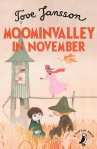
    Moominvalley in November is the final book in Tove Jansson’s Moomins series. The Moomin family themselves don’t actually appear, having moved suddenly in the previous book to a remote lighthouse. Instead this book follows a disparate group of visitors who are disappointed to find the Moomin family home abandoned. The visitors (including Moomintroll’s mercurial bestie Snufkin) stay for a while, hoping for the family to return, while gradually learning how to be comfortable with each other… and with themselves.

    Snufkin padded along calmly, the forest closed round him and it began to rain. The rain fell on his green hat and on his raincoat, which was also green, it pittered and pattered everywhere and the forest wrapped him in a gentle and exquisite loneliness.

    The Moomins books always did have a streak of melancholy, but in this one it’s more pronounced than ever; most likely influenced by Tove Jansson’s grief at the loss of her mother. The Moomin family’s absence is keenly felt, especially by the young orphan Toft, a storyteller who yearns to be adopted by Moominmamma. Then there’s Grampa-Grumble, who has decided to make the most of his dementia by deliberately forgetting his family; and Fillyjonk, who struggles with anxiety after a near-death experience.

    These are troubled characters—and they don’t always understand, or openly express, their troubles. The whole book (apart from its quietly hopeful ending) is shrouded in sadness, loneliness, and unspoken loss. I can’t guess how younger readers would react to such a book, but my melancholic inner child (and my equally melancholic adult self) found it a moving and absorbing read. I love that Tove Jansson never patronises her readers. She trusts them to understand what remains unspoken.

    I’m sad to have reached the end of the Moomins series, but it certainly ended on a high note—albeit in a minor key. I still plan to circle back and read the very first book, so my personal journey through Moominvalley isn’t quite finished. (And the comic book series is starting to look mighty tempting too!) Ever since I read Comet in Moominland back in April of ’25, I’ve fallen completely in love with the Moomins. I fully expect to reread the whole series in the coming years.

  • It’s that time of year when I fall down the Rabbit Hole of Introspection. Okay, maybe that’s just where I live! But at least the new year gives some structure to my musings.

    It’s been a strange year in a lot of ways. I started 2025 with a lot of big ambitions to read big books—chunky classics like David Copperfield and Anna Karenina… both of which I ended up DNFing! Not because I disliked them, I hasten to add. They both seemed great. But I didn’t approach them with the focus and dedication such hefy tomes demand. Seduced by other books, I let Dickens and Tolstoy linger on the shelf, unread, for so long that I lost motivation to pick them up again. If I do attempt either of them again, I’ll have to go back to the start.

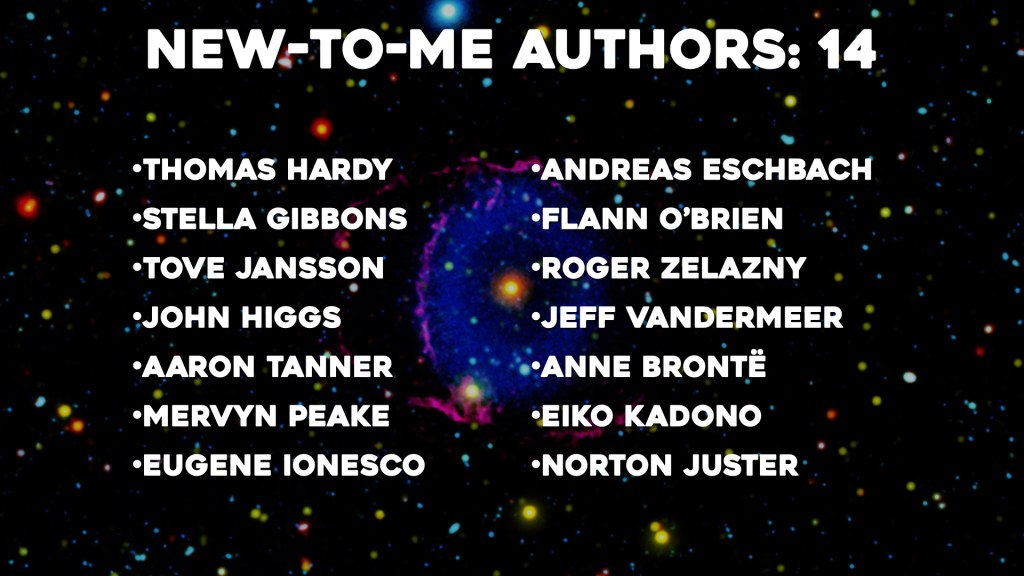
    In fact I had bad luck with ‘classics’ in general. My first experience of Thomas Hardy was not a happy one! My first Anne Brontë, Agnes Grey, was… just fine. And worst of all, I ended up losing interest and DNFing A Passage to India. I had really hoped to enjoy that one, considering E.M Forster’s A Room with a View was my favourite read of 2024. Very disappointing!

    I struggled with my health, both mental and physical, through much of summer and into autumn. Long story short: My GP recommended some iron and vitamin supplements, which are slowly improving my energy levels. And I will soon be starting therapy to see if I can get my wonky brain back in shape too. Anyway, these issues evidently affected my reading, both in terms of how many books I read and how much I enjoyed them.

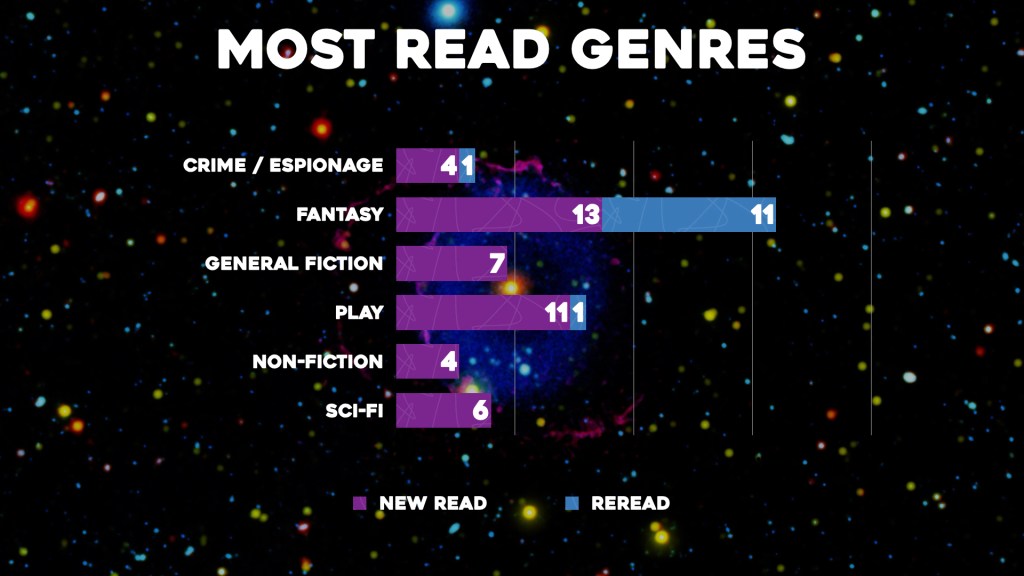
    But it’s not all doom and gloom! After accepting that chunky classic novels weren’t working for me, I pivoted towards shorter books. I read a lot of classic plays, falling deeper in love with the work of Henrik Ibsen. I also reignited my dormant love of sci-fi, reading excellent short story collections by Ursula K. Le Guin and Roger Zelazny. And I read plenty of delightful children’s fiction, falling deeply in love with Tove Jansson’s Moomins.

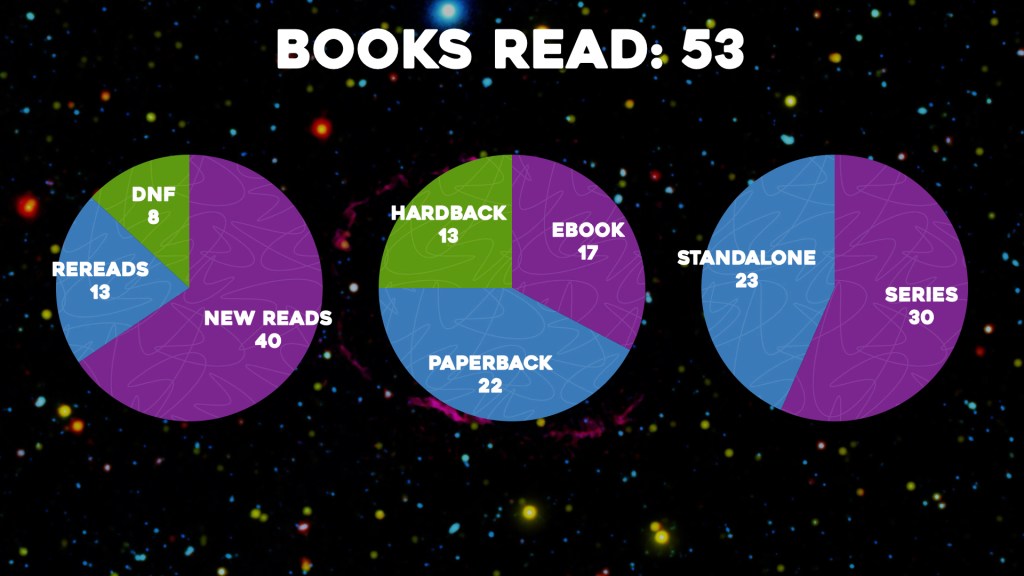
    Terry Pratchett remains my most reliable go-to author. I’ve had a great time going through the Discworld series in order. Most of those books are rereads for me. In fact I’ve filled in almost all the gaps now: I’ve read 40 of the 41 Discworld books. All that remains is the final book, The Shepherd’s Crown, which I’ll probably get to in 2027 at this rate. I plan to take my time and enjoy the journey.

    I also finished rereading Le Guin’s Earthsea series, which I can now confidently say is my favourite fantasy series ever. My admiration for Le Guin continues to grow all the time. I’m excited to explore more of her work outside of Earthsea.

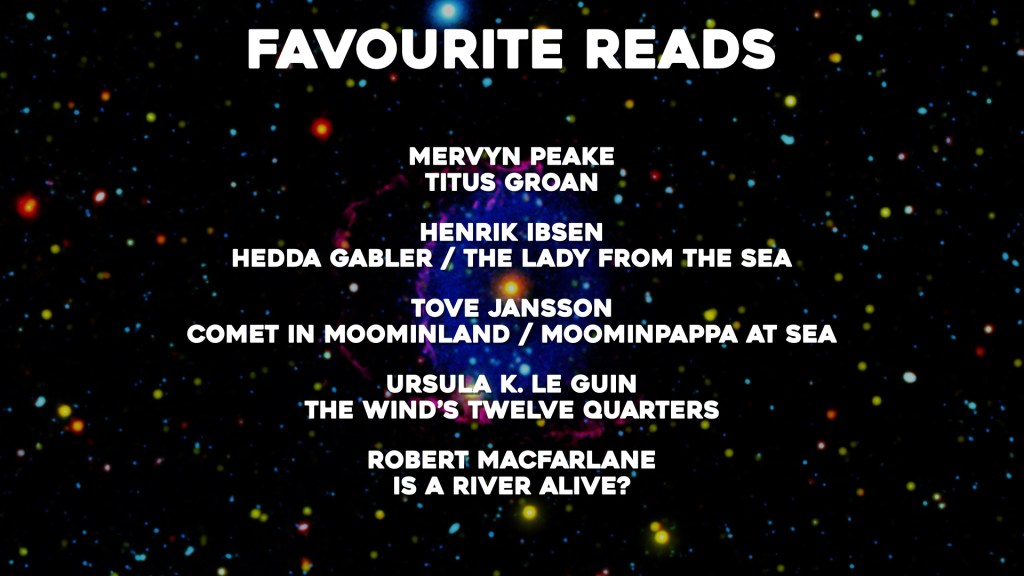
    And one chunky book that didn’t let me down was Mervyn Peake’s Titus Groan. That book was a revelation. A bizarre, bewitching fictional world described in such obsessive detail, it felt more like visiting in person than merely reading about it.

    December saw a big uptick in my reading. I recently bought a phone-sized e-reader, which allows me to read comfortably while lying down at bedtime. It’s much less overstimulating than my actual phone, so bedtime reading has become a viable option again. I mostly read children’s books at night. It’s a good way to unwind at the end of the day. But whatever my bedtime read is, it’s helpful to have that extra variety in my book diet. (Watching more films in 2025 also helped with that. Whatever I’m not getting from my morning read, I can supplement with films, short stories, and bedtime books.) This past month I feel like I’ve enjoyed more of what I read, and I’m feeling optimistic about the year ahead.

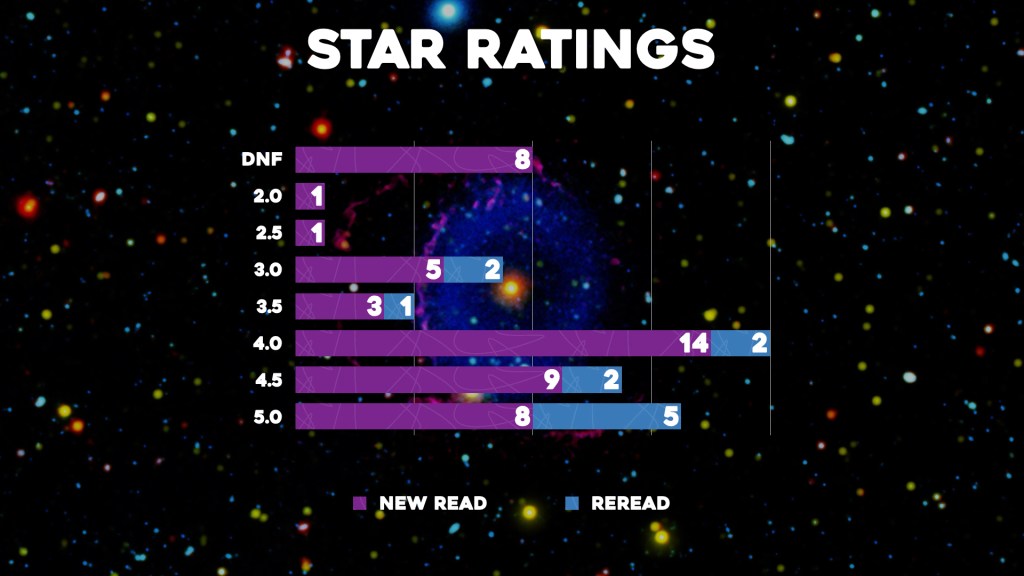
    And now—drum roll please—it’s time for graphs, charts, and lists!