Tag: writing

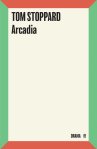
  • Title: Arcadia
    Author: Tom Stoppard
    Year: 1993
    Country: UK

    Format: Paperback
    Pages: 128
    Read: 6 – 9 February 2026
    First reading

    Tom Stoppard’s Arcadia is a dazzlingly clever play with a deeply emotional core. The setting is one room in a stately home called Sidley Park. Scenes alternate between two time periods: the early 1800s and the present. The modern scenes feature rival academics delving into Sidley Park’s history while, in the ‘period’ scenes, that very history is played out for us—often spotlighting the researchers’ misconceptions.

    The historical scenes follow Septimus Hodge, a friend of Lord Byron, as he tutors the precocious young daughter of the house, Thomasina Coverly. Thomasina’s gift for mathematics exceeds that of her tutor, or indeed any of her contemporaries, and she begins to intuit scientific theories far in advance of her era. Septimus must also dodge the wrath of visiting poet Ezra Chater, having been caught in “carnal embrace” with Mrs Chater. Meanwhile Thomasina’s mother, Lady Croom, is in talks with a landscape architect who plans to redesign the Arcadian gardens of Sidley Park in the newfangled Gothic style, complete with hermitage.

    The modern day scenes centre on the academic rivalry of Hannah Jarvis and Bernard Nightingale. Hannah is trying to uncover the identity of the mysterious Sidley Park hermit, while Bernard aims to prove his pet theory that Lord Byron fled the country after apparently killing Ezra Chater in a duel. As Hannah and Bernard research the Sidley Park archives together, aided by members of the Coverly family, unlikely relationships start to emerge.

    Thomasina: When you stir your rice pudding, Septimus, the spoonful of jam spreads itself round making red trails like the picture of a meteor in my astronomical atlas. But if you stir backwards, the jam will not come together again. Indeed, the pudding does not notice and continues to turn pink just as before. Do you think this is odd?

    My first reading barely scratched the surface of Arcadia. I loved it, but I can sense that I will love it more and understand it better when I reread it. (I had that experience recently with Stoppard’s Rosencrantz & Guildenstern Are Dead.) This is a play bristling with ideas on many subjects: History, mathematics, time, love… It’s about how much of the past is lost to us, just as our age will be to future generations. It’s an existentialist play about certain death, not of just us personally but of the universe itself; the ultimate tragedy of entropy. One day all this will be gone. But, in the end, it says we must enjoy life while we’re in it. The planets won’t keep waltzing forever but, while they are, we too must dance.

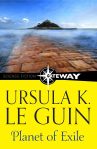
  • Title: Planet of Exile
    (Hainish #2)
    Author: Ursula K. Le Guin
    Year: 1966
    Country: USA

    Format: Paperback
    Pages: 100
    Read: 1 – 5 February 2026
    Reread

    My Hainish series read-through continues with Planet of Exile, first published in 1966—the same year as its predecessor, Rocannon’s World. (You can read my review of Rocannon’s World here.)

    The story takes place on Werel, a planet with a decades-long season cycle. Jakob Agat leads a group of human colonists who, centuries ago, were exiled to Werel by the League of All Worlds. Jakob and his people, despite having never seen their long-forgotten homeworld, remain staunchly separate from the local indigenous tribe, the primitive Tevarans. As a harsh, fifteen-year winter approaches—bringing with it a horde of ruthless nomadic warriors called the Gaal—cooperation between human and Tevaran camps may be their only chance of survival. But things are complicated when Jakob breaks taboo with Rolery, daughter of the Tevaran chief.

    Planet of Exile, while not yet Peak Le Guin, is a marked improvement from Rocannon’s World. Both books attempt to blend sci-fi and fantasy, but the second book succeeds where the first fails. My friend Pat (Book Chat With Pat) shared a quote in our Hainish group chat where Le Guin describes her debut novel with a colour analogy: If sci-fi is blue and fantasy is red, Rocannon’s World is purple. I would argue that Rocannon’s World doesn’t successfully blend its colours; it’s a book of blue and red stripes, awkwardly clashing. Planet of Exile, on the other hand, is properly purple.

    Le Guin’s prose here is more focused and more evocative than in her debut. The cast of characters is also more streamlined—there are just three races to keep track of, and the tension between human and Tevaran tribes is made tangible by the star-crossed romance of Jakob and Rolery. I sincerely enjoyed Planet of Exile. And it’s exciting to see Le Guin’s progression as a writer, especially knowing just how much farther she would go from here.

    The group reading experience, hosted by Gareth (Books Songs and Other Magic) also continues to delight. These past two months we’ve had some fascinating discussions, and I’m eager to continue them as we work through the rest of the Hainish series together.

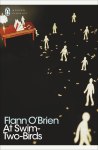
  • Title: At Swim-Two-Birds
    Author: Flann O’Brien
    Year: 1939
    Country: Ireland

    Format: Paperback
    Pages: 228
    Read: 4 – 13 January 2026
    First reading

    At Swim-Two-Birds, the debut novel by Flann O’Brien, is actually three books within a book within a book. (Eat your heart out, Charlie Kaufman!) At the outermost layer it follows the beer-soaked, puke-stained exploits of its nameless narrator, an indolent student. The Student lives in Dublin with his uncle, whom he despises.

    Description of my uncle: Red faced, bead eyed, ball bellied. Fleshy about the shoulders with long swinging arms giving ape-like effect to gait. Large moustache. Holder of Guinness clerkship the third class.

    The Student spends most of his time either drinking and bantering with friends, or lazing in his bedroom. But he’s also working on a book; a surreal work of modernist metafiction in which an author, Dermot Trellis, loses control of his characters. Trellis’s characters, plundered from disparate sources—Irish folklore, Western novels, Dublin pubs—spring to life spontaneously in his reality as he writes them. These characters start to disobey Trellis, living their own lives whenever he’s asleep. Eventually they conspire to rewrite Trellis’s manuscript, torturing him with his own creation.

    I found this an extremely challenging read. Last year I enjoyed Flann O’Brien’s The Third Policeman, itself a bizarre and disorienting book, but At Swim-Two-Birds is even weirder. Luckily I buddy-read it with my friend Mark, who was able to explain some of the more “aggressively Irish” aspects. I found the sections about the folk hero Finn MacCool especially hard-going, full of aggravating repetition and droning lists of made-up birds. Maybe it’s funnier if you were brought up with those folk tales, but for me it was a slog!

    However I did appreciate the book for its surrealism, its bawdy humour, and the sheer inventiveness of the metafictional story. In places it struck me as an unlikely hybrid of Duck Amuck and James Joyce. (Or at least my impression of James Joyce, who I must admit I’ve yet to read. Dubliners is going straight on my wishlist after this.)

    At Swim-Two-Birds is an enigmatic book; the meaning of the story doesn’t make itself immediately apparent. The different layers of fictional reality start to influence each other, gradually revealing some truths about the Student’s life… if you read between the lines. This is where buddy-reading really came into its own. Discussing the book with Mark helped us both get a handle on it, and our chats were sometimes more fun than the actual book—certainly the Finn MacCool bits!

    In fact, we plan to have a video chat about our ‘Flannuary’ experience later this month on Mark’s YouTube channel. We hope to see you there, perhaps with pint in hand. A pint of plain is your only man!

  • At the start of 2025 I set myself a challenge to write a haiku every Friday for the whole year. The rule: They don’t have to be good, they just have to be done.

    And today is the last Friday of 2025. I completed the challenge, with only one skipped week (extreme fatigue) and a few belated haiku (forgetfulness) along the way. Overall I’m proud of how the project went. I achieved what I set out to do, and probably improved my haiku-writing skills along the way.

    But I don’t intend to carry the project over into 2026. Towards the end of the year it just stopped being fun. It was mandatory creativity to a deadline — too much like homework.

    To mark the end of the Friday Haiku project, here are all fifty haiku:

    ~

    January

    ~

    1 — January 3rd:

    Lingering malaise.
    Bartók on headphones, eyes closed —
    Time to recover.

    2 — January 10th:

    An old favourite show:
    Never used to watch alone —
    Blindsided by grief.

    3 — January 17th:

    Hollow red chamber
    Invaded by silver blade —
    Slicing a pepper.

    4 – January 24th:

    Victory is mine
    Until the blue shell descends:
    Mario Karted!

    5 – January 31st:

    When writing haiku,
    Please don't use ChatGPT:
    Suck on your own terms.

    ~

    February

    ~

    6 – February 7th:

    Glistening tarmac
    Glimpsed through a clouded window —
    Staying in today.

    7 – February 14th:

    I love you too much 
    For seventeen syllables 
    Ever to encompass.

    8 – February 21st:

    Cool air fills my lungs,
    I feel myself expanding —
    New CPAP machine.

    9 – February 28th:

    Daylight stretching out,
    Feeding my animal self:
    Winter retreating.

    ~

    March

    ~

    10 – March 7th:

    Vibrating, a string 
    Agitates air molecules:
    To the ear, music. 

    11 – March 14th:

    Squinting at pixels —
    "Is this better, d'you think?" 
    Editing thumbnails.

    12 – March 21st:

    Curious kitty
    Sniffing at my open door
    Beats a quick retreat!

    13 – March 28th:

    A Sondheim earworm
    Rolling merrily through my head:
    Who's like him? Damn few.

    ~

    April

    ~

    14 — 4th April:

    Mottled evening sky —
    Red kite pitches and rolls past,
    Sailing secret waves.

    15 — 11th April:

    Spate of sleepless nights
    Depleting my battery: 
    Can't even write a

    16 — 18th April:

    Inscrutable words
    Decorate the evening air —
    Language of the birds.

    17 — 25th April:

    The birdies have sung,
    Our modern dance is ended:
    Farewell, Pere Ubu.

    [In memory of David Thomas.]

    ~

    May

    ~

    18 — 2nd May:

    Opportunities
    Like speeding taxis recede
    Into might-have-been.

    19 — 11th May (ahem):

    Totally on time,
    It's my regular haiku:
    Please ignore the date.

    20 — 16th May:

    Watching Taskmaster:
    Mathew Baynton's tiny shorts,
    Judiciously blurred. 

    21 — 23rd May:

    Pearly gates open:
    Angelic chorus cheers, "Norm!"
    So that's where George went.

    [In memory of George Wendt.]

    22 — 30th May:

    Razor blade in hand,
    You Fantastic! musicians
    Thwart the precedent.

    [Inspired by the experimental band, You Fantastic!]

    ~

    June

    ~

    23 — 6th June:

    Reading Titus Groan:
    Gormenghast's grim labyrinth
    Haunting my mind's eye. 

    24 — 13th June:

    In my room, surf's up:
    There's a riot goin' on —
    Dance to the music!

    [In memory of Brian Wilson and Sly Stone.]

    24 — 20th June:

    Window yawning wide,
    Curtains dancing in the breeze…
    Still too bloody hot.

    25 — 27th June:

    Hope is mere kindling:
    If you want there to be fire,
    You must strike the match.

    ~

    July

    ~

    26 — 4th July:

    White cassette, red sleeve,
    Blaring in my preteen ears:
    You really got me.

    [Inspired by The Kinks.]

    27 — 11th July:

    Mortification:
    The reeking fertiliser
    Through which our souls grow. 

    28 — 18th July:

    My waterbody:
    Where veins are tributaries
    Flowing with life force.

    [Inspired by Robert Macfarlane’s book, Is A River Alive?]

    29 — 25th July:

    The Prince of Darkness
    Unfurls his leathery wings,
    Soars into the void.

    [In memory of Ozzy Osbourne.]

    ~

    August

    ~

    30 — 1st August:

    Round the corner, leaves
    Beckon in a gentle breeze:
    Befriending a tree.

    31 — 8th August:

    Iambic music
    Waking up my sleeping ear,
    Measure by measure.

    32 — 15th August:

    .hindsight in Revealed
    contexts and meanings Hidden
    :reverse in Story

    [Inspired by series 9 of John Finnemore’s Souvenir Programme.]

    33 — 22nd August:

    A witness wonders,
    Why do they send five coppers
    To arrest one man?

    34 — 29th August:

    Watching Enterprise —
    The only Star Trek series
    With a shit theme tune.

    ~

    September

    ~

    35 — 5th September:

    Glowing in darkness,
    Twenty four flickering frames
    Help me find myself.

    [Inspired by my project to get back into watching films.]

    36 — 12th September:

    Most radiant smile,
    Transcending time and language:
    Setsuko Hara.

    37 — 19th September:

    Made my lovely eyes
    Sad, leaky, wet and wincey: 
    Petals float to earth.

    [Inspired by the long-awaited new Cardiacs album.]

    26th September:

    (No haiku. Too fatigued to write.)

    ~

    October

    ~

    38 — 3rd October:

    Golden leaves dancing —
    Watched through rain-streaked windowpane
    And a foggy brain.

    39 — 10th October:

    Pearly grey expanse
    Dotted with darting black birds,
    Flitting between trees.

    40 — 17th October:

    Malfunctioning brain:
    Called the mental mechanic —
    Time for a tune-up.

    41 — 24th October:

    Silver kintsugi:
    Break my heart and glue the shards,
    Tokyo Story.

    42 — 31st October:

    Hearing old music
    Made by a forgotten self:
    Time to remember.

    ~

    November

    ~

    43 — 7th November:

    Red and golden leaves
    Strewn upon the grey below:
    Autumn's casualties.

    44 — 14th November:

    Insatiable night
    Feasts upon the daylight hours,
    Tipping the balance.

    45 — 21st November:

    Late afternoon rays
    From a low, cold winter sun
    Catch the bare branches.

    46 — 28th November:

    Waxing crescent moon
    Floating in pale blue evening:
    A cut fingernail.

    ~

    December

    ~

    47 — 5th December:

    My Telecaster
    Beckons from its dusty case:
    Soon I'll play again.

    48 — 12th December:

    Christmas approaches
    But merriness can't be found:
    I'll try to make some.

    49 — 19th December:

    Saying “Oh, hiya!”
    Lubricates the social wheels, 
    Or so says Ozu. 

    [Inspired by the film Good Morning, the original Japanese title of which is Ohayo.]

    50 — 26th December:

    Slump across the line
    With a huge, exhausted sigh:
    Fiftieth haiku!