Tag: movie

  • Day 2 of Century of Cinema. Also day 42 of Project Glowing Rectangle, in which I try to divert some of my daily doomscrolling time back towards a more nourishing oblong: Cinema.
    Title: Sunrise: A Song of Two Humans
    Director: F.W. Murnau
    Writer: Carl Mayer
    Year: 1927
    Country: USA

    Format: Blu-ray
    Length: 95 minutes
    Seen: 6 March 2026
    Rewatch

    Picking a film for 1927 was tricky. This was the year that gave us the seminal sci-fi classic Metropolis, and the Oscars’ first Best Picture, Wings. But in the end I settled for the first American film by German Expressionist pioneer F.W. Murnau: Sunrise: A Song of Two Humans.

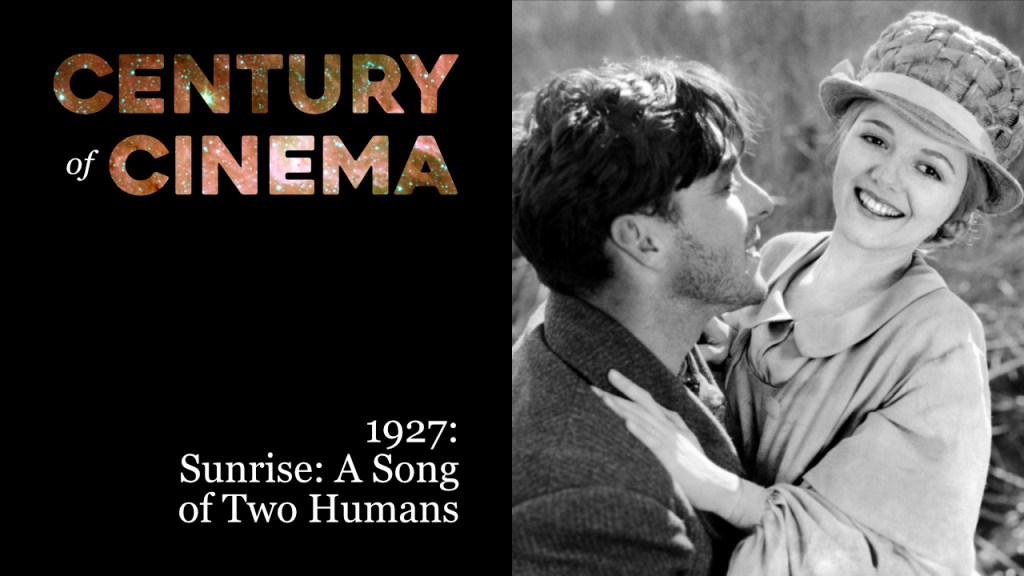
    A Man (George O’Brien) is seduced by a glamorous Woman From the City (Margaret Livingston), who persuades him to murder his Wife (Janet Gaynor). The Man takes his Wife out in a rowboat, planning to push her overboard. But as she cowers and pleads for mercy, he is stricken with guilt and cannot do the terrible deed. He begs her forgiveness, but can their fractured relationship be healed?

    Sunrise: A Song of Two Humans won three of the first ever Academy Awards. One was for cinematography, one for Janet Gaynor’s performance. Its third Oscar was in a category never since repeated: Unique and Artistic Picture. (I wish they’d bring that one back!) It’s almost a mirror image of another film I watched recently: Varieté. That film started with a man leaving his wife and ends in murder; this one starts with attempted murder and ends in reconciliation. I question whether reconciliation with a would-be murderer is really A Good Thing, but Sunrise is such a visually stunning piece of cinematic storytelling, I find myself swept along by it regardless.

    The film uses a variety of German Expressionist techniques to vividly evoke the characters’ emotional landscapes. There are too many enchanting images to count. I particularly love the shot of the Man surrounded by ghostly images of the Woman From the City, clinging to him seductively as he contemplates the murder of his Wife.

    Its use of sound is equally inventive. Despite being a “silent” film, it came with an early example of a synchronised soundtrack—no “talkie” dialogue, just music and occasional sounds effects. The music, like the imagery, overlaps different styles and tones to create complex sonic textures.

    Sunrise is an incredibly evocative film. Admittedly it has an uneven structure and a troubling central premise, but the sheer artistry of its construction kept me utterly beguiled.
  • Day 38 of Project Glowing Rectangle, in which I try to divert some of my daily doomscrolling time back towards a more nourishing oblong: Cinema.

    Title: The Apartment
    Director: Billy Wilder
    Writer: Billy Wilder, I. A. L. Diamond
    Year: 1960
    Country: USA

    Format: 4K Blu-ray
    Length: 125 minutes
    Seen: 18 February 2026
    Rewatch

    Kubelik: Some people take, some people get took. And they know they’re getting took and there’s nothing they can do about it.

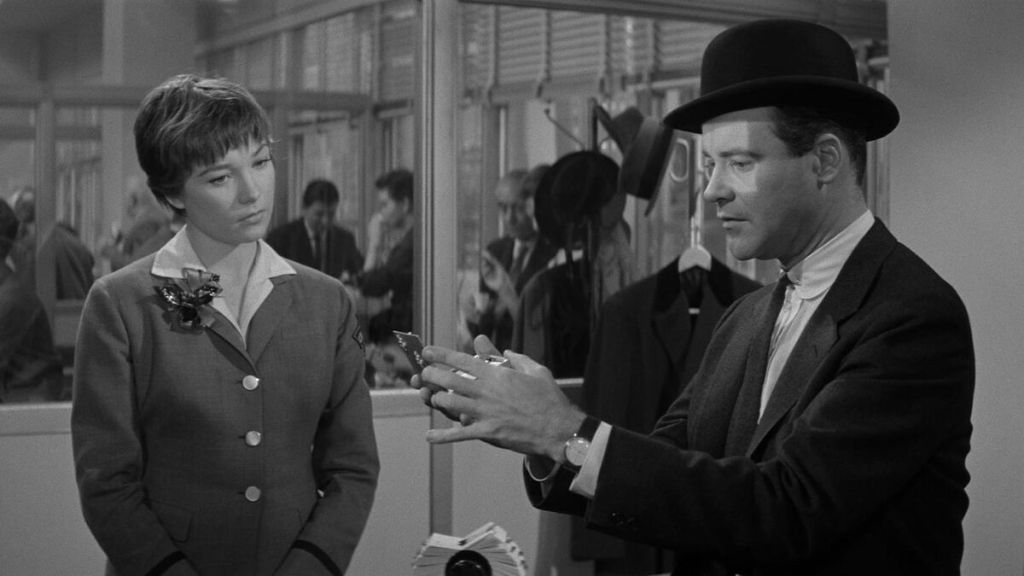
    C. C. Baxter (Jack Lemmon), aka Buddy Boy, is one of those people who gets took. He works in a huge office building as an insurance clerk, his head stuffed with numbers and statistics. Baxter often works late, not out of dedication to his job but because, despite living alone, his apartment is rarely empty. His key gets passed around the office, his apartment serving as a discreet place for married men to take their girlfriends. In return, Baxter’s superiors recommend him for promotions. When he agrees to lend the key to Mr Sheldrake (Fred MacMurray), director of personnel, Baxter finds himself quickly ascending the corporate ladder. Meanwhile he harbours a crush on Miss Kubelik (Shirley MacLaine), an elevator operator at the office. Little does he know she’s already been to his apartment…

    Baxter: The mirror… it’s broken.
    Kubelik: Yes, I know. I like it that way. Makes me look the way I feel.

    It’s safe to say The Apartment is my favourite film of all time. My band’s debut album, The Way It Crumbles, was named after a quote from the film. I rewatched it today to celebrate my 40th birthday and it made me smile, laugh and blub as much as ever! It’s a beautiful film about loneliness, human connection, and the importance of growing a spine and doing the right thing—or, as Baxter’s neighbour Dr Dreyfuss (Jack Kruschen) puts it, being a mensch.

    Jack Lemmon and Shirley MacLaine are fantastic as Baxter and Kubelik, and the screenplay by Billy Wilder and I. A. L. Diamond is a well-oiled machine of setups and payoffs. Baxter has a habit of quoting all the other characters, picking up their verbal tics and mannerisms. This leads to so many running gags and references throughout the film, each one gaining new significance over time. Nobody quotes Baxter in return, at least not at first. But eventually Miss Kubelik starts to pick up Baxterisms and the two are drawn together, romance-wise. It’s a rather chaste romance, one that ends not with a passionate kiss but a game of cards. It feels to me like a very neurodivergent-coded romcom. I love it deeply.

  • Day 37 of Project Glowing Rectangle, in which I try to divert some of my daily doomscrolling time back towards a more nourishing oblong: Cinema.

    Title: Sinners
    Director: Ryan Coogler
    Writer: Ryan Coogler
    Year: 2025
    Country: USA

    Format: 4K Blu-ray
    Length: 138 minutes
    Seen: 13 February 2026
    First viewing

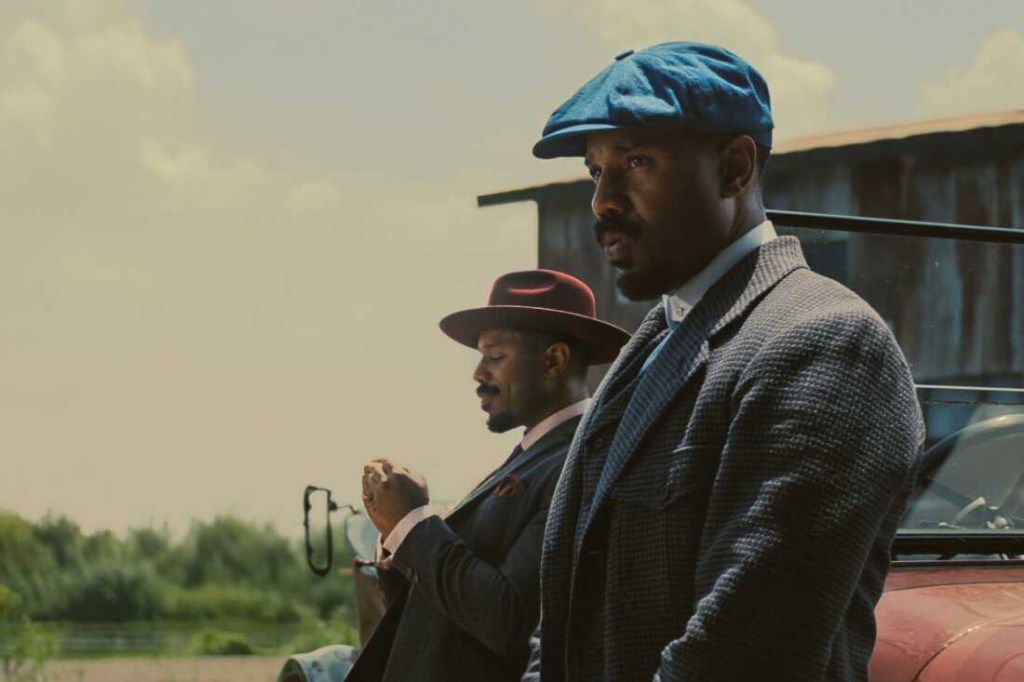
    This afternoon’s film was Sinners (2025), starring Michael B Jordan and Michael B Jordan. (Yes, sometimes I watch modern films!) Set in 1932, it follows the Smokestack twins, ‘Smoke’ and ‘Stack’, as they return home to Mississippi after seven years in Chicago. Using money stolen from the mob, the twins buy a sawmill to start a juke joint. But opening night takes a bloody turn when the transcendent power of music pierces the veil between worlds, summoning a trio of vampires.

    This is a solid piece of filmmaking. Michael B Jordan gives two excellent performances as identical twins. The scenes where he shares the screen with himself are perfectly realised; after a few minutes I stopped even thinking about what a technical feat it is. It just works! The supporting cast is also great, particularly newcomer Miles Caton as Sammie, the blues musician whose transcendent singing causes all that supernatural trouble.

    But for me the film wasn’t transcendent. Very good, yes, but I didn’t adore it like I hoped. (Also I found the alternating aspect ratios a little distracting. Do the IMAX scenes have more impact on the big screen?) Maybe I’ll get more out of it on rewatching, but my first viewing didn’t quite sink its fangs in.

  • Day 35 of Project Glowing Rectangle, in which I try to divert some of my daily doomscrolling time back towards a more nourishing oblong: Cinema.

    Title: Only Angels Have Wings
    Director: Howard Hawks
    Writer: Jules Furthman
    Year: 1939
    Country: USA

    Format: Blu-ray
    Length: 121 minutes
    Seen: 8 February 2026
    Rewatch

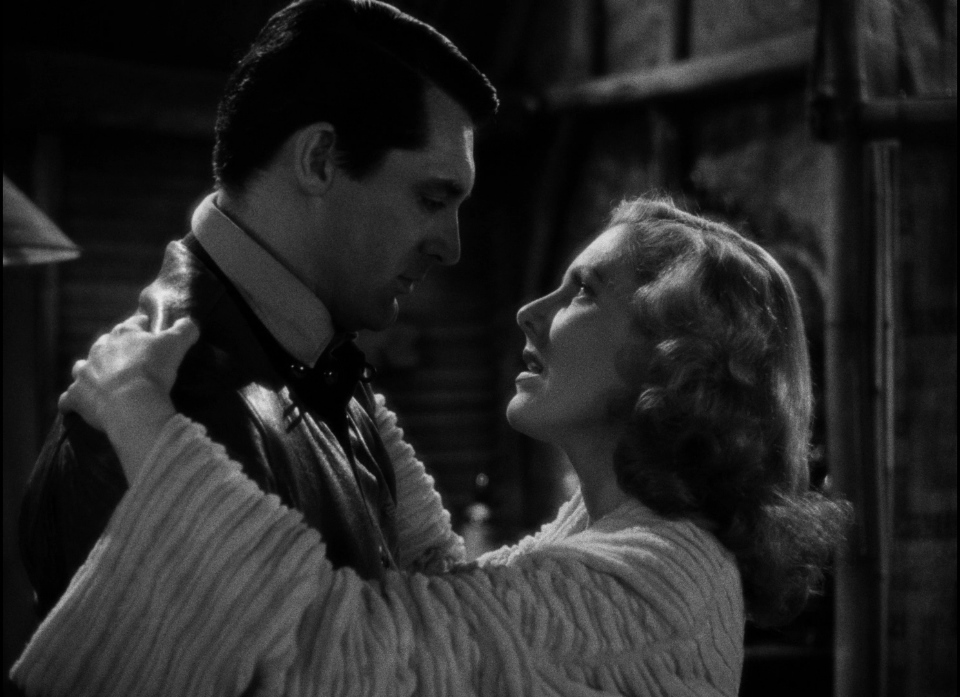
    This afternoon’s film was Only Angels Have Wings (1939), a romantic drama directed by Howard Hawks. Cary Grant stars as Geoff Carter, chief pilot of a South American airmail company. The mail route is extremely risky; pilots are frequently killed, which gives the survivors a rather jaded, fatalistic attitude. But when visiting pianist Bonnie Lee (Jean Arthur) falls for Geoff, his determination not to be tied down is put to the test.

    “I’m hard to get, Geoff. All you have to do is ask me.”

    This film didn’t make a big impression on me when I first saw it about eight years ago. But this time around I was completely sold! The cast is great, especially the central performances by Arthur and Grant. I got fully wrapped up in the will-they-won’t-they romance between Geoff and Bonnie, as well as the fates of the various pilots. The gripping aviation scenes reminded me heavily of Antoine de Saint-Exupéry’s 1939 memoir Wind, Sand & Stars. And there’s a prominent supporting role for a young Rita Hayworth as the woman who once broke Geoff’s heart. Yep, this is good stuff!

  • Day 33 of Project Glowing Rectangle, in which I try to divert some of my daily doomscrolling time back towards a more nourishing oblong: Cinema.

    Title: Almost Famous (The ‘Untitled’ Cut)
    Director: Cameron Crowe
    Writer: Cameron Crowe
    Year: 2000
    Country: USA

    Format: 4K Blu-ray
    Length: 161 minutes
    Seen: 3 February 2026
    Rewatch

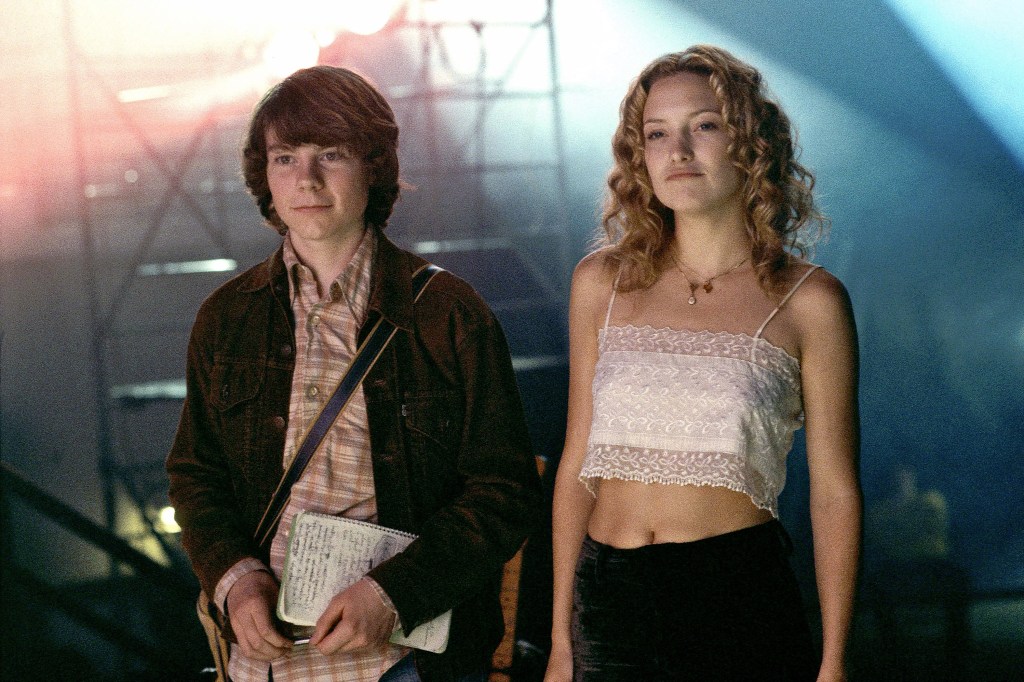
    Almost Famous (2000) follows fifteen-year-old William Miller (Patrick Fugit), an aspiring rock journalist who goes on tour with the fictional band Stillwater. William befriends band members, roadies, and fans alike—including the famed “band aide” Penny Lane (Kate Hudson)—and witnesses firsthand their decadent rock and roll lifestyle. Meanwhile William’s strait-laced mother (Frances McDormand) grows increasingly concerned as she waits for him to come home.

    This film is a heartfelt tribute to the music of Cameron Crowe’s youth, inspired by his own experiences as a teenage rock journalist. It’s a film powered by nostalgia; and it was a huge favourite of my teenage self, meaning I now have my own nostalgia for it. I first saw it when I was around William’s age, and probably just as wide-eyed as he was. Rewatching it today was a potent emotional experience. My favourite scenes still hit deep: ‘Tiny Dancer’ had me in floods of tears just like it did 25 years ago. And I love the scenes with Philip Seymour Hoffman as William’s mentor, Lester Bangs.

    “The only true currency in this bankrupt world is what we share with someone else when we’re uncool.”

    Is it a perfect film? Probably not. Did I love every second? Absolutely!

    (Fun fact: I once watched Almost Famous as an in-flight movie. Considering the climactic electrical storm scene, this was probably not a great idea…)