Tag: silent films

  • Day 3 of Century of Cinema. Also day 43 of Project Glowing Rectangle, in which I try to divert some of my daily doomscrolling time back towards a more nourishing oblong: Cinema.
    Title: Lonesome
    Director: Paul Fejös
    Writer: Tom Reed, Edward T. Lowe Jr
    Year: 1928
    Country: USA

    Format: Blu-ray
    Length: 65 minutes
    Seen: 12 March 2026
    Rewatch

    Picking my 1928 film wasn’t quite as tricky as 1927… but it still wasn’t easy. I could easily rule out two Buster Keaton films (Steamboat Bill Jr and The Cameraman), since I started this whole project with Buster. And I eliminated Fritz Lang’s Spione (Spies) because I wasn’t in the mood for such a long film today. That left me with two possibilities. I was tempted by Speedy, a Harold Lloyd vehicle I’ve only seen once before. But in the end I went for Lonesome (1928), a mostly-silent romance directed by Paul Fejös.

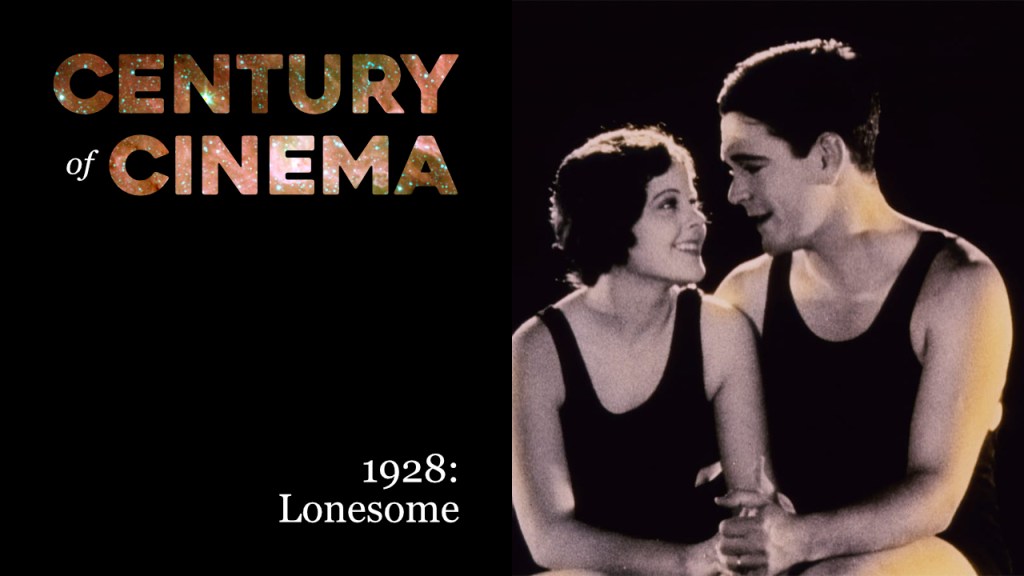
    Among the crowds of New York City, Mary (Barbara Kent) and Jim (Glenn Tryon) each live alone. Every morning they rush to work, then come home at night to empty apartments. When the two meet by chance at Coney Island, it’s love at first sight. They spend a whirlwind evening together at the funfair, quickly confessing their love for one another. But when the pair are separated just as suddenly as they met, can they ever find each other again?

    Lonesome is a very sweet little film about two lonely people finding love. Fejös finds some visually creative ways to evoke the stress and drudgery of their busy workdays, as well as the chaos of the crowded funfair at which they meet. Some scenes have hand-tinted colour, adding an extra visual ‘pop’. The two stars make a cute couple onscreen, I found myself rooting for them immediately. But things grind to a halt during the studio-mandated talkie scenes. The roving camera is suddenly locked to one angle, the actors forced into stilted vocal performances that can’t match the charm of their expressive silent faces. Talkies were still very new at this point—and it shows!

    In many ways this is a good companion to Sunrise: A Song of Two Humans. Both films were made during the last gasp of silent cinema, both are very visually creative, and both centre on the fate of a couple. But while Sunrise is about a married couple repairing their broken relationship, Lonesome is a much lighter, sweeter film about the first flushes of love. I’d say Sunrise is a better constructed, more compelling film, but Lonesome certainly has its charm.

    It’s just a shame about those clunky talkie scenes.
  • Day 2 of Century of Cinema. Also day 42 of Project Glowing Rectangle, in which I try to divert some of my daily doomscrolling time back towards a more nourishing oblong: Cinema.

    Title: Sunrise: A Song of Two Humans
    Director: F.W. Murnau
    Writer: Carl Mayer
    Year: 1927
    Country: USA

    Format: Blu-ray
    Length: 95 minutes
    Seen: 6 March 2026
    Rewatch

    Picking a film for 1927 was tricky. This was the year that gave us the seminal sci-fi classic Metropolis, and the Oscars’ first Best Picture, Wings. But in the end I settled for the first American film by German Expressionist pioneer F.W. Murnau: Sunrise: A Song of Two Humans.

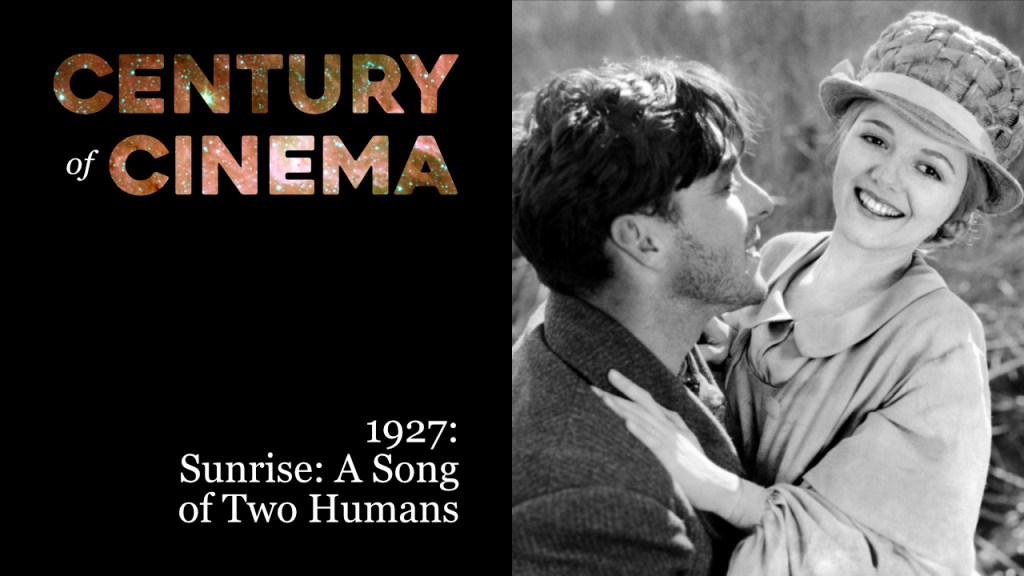
    A Man (George O’Brien) is seduced by a glamorous Woman From the City (Margaret Livingston), who persuades him to murder his Wife (Janet Gaynor). The Man takes his Wife out in a rowboat, planning to push her overboard. But as she cowers and pleads for mercy, he is stricken with guilt and cannot do the terrible deed. He begs her forgiveness, but can their fractured relationship be healed?

    Sunrise: A Song of Two Humans won three of the first ever Academy Awards. One was for cinematography, one for Janet Gaynor’s performance. Its third Oscar was in a category never since repeated: Unique and Artistic Picture. (I wish they’d bring that one back!) It’s almost a mirror image of another film I watched recently: Varieté. That film started with a man leaving his wife and ends in murder; this one starts with attempted murder and ends in reconciliation. I question whether reconciliation with a would-be murderer is really A Good Thing, but Sunrise is such a visually stunning piece of cinematic storytelling, I find myself swept along by it regardless.

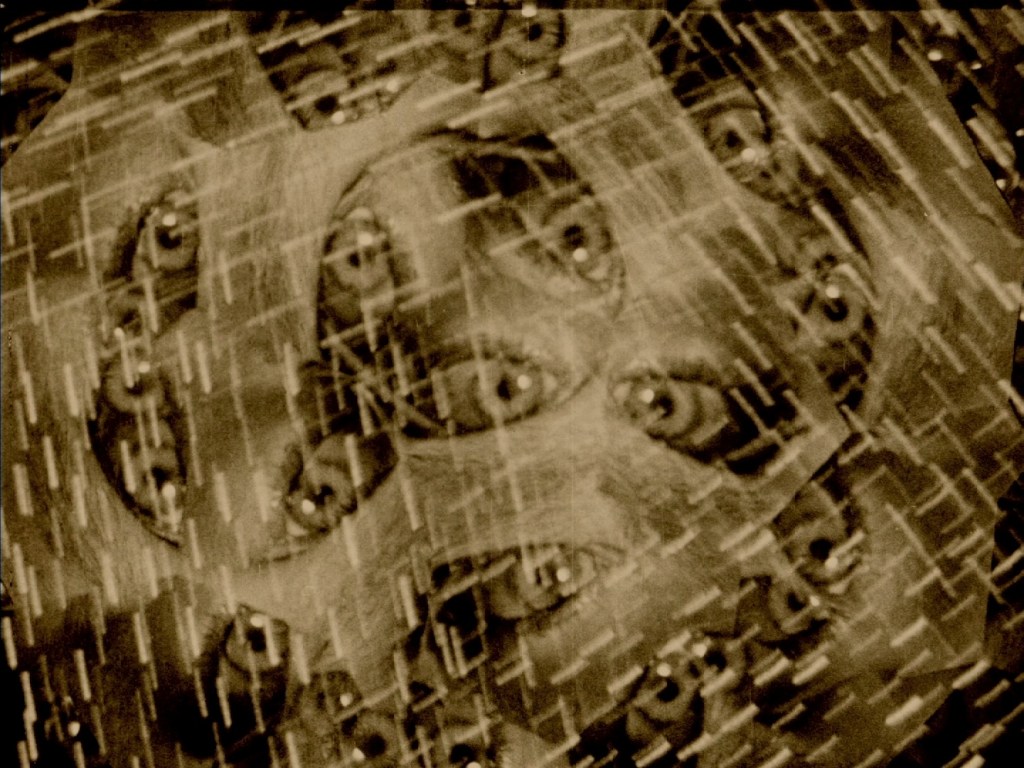
    The film uses a variety of German Expressionist techniques to vividly evoke the characters’ emotional landscapes. There are too many enchanting images to count. I particularly love the shot of the Man surrounded by ghostly images of the Woman From the City, clinging to him seductively as he contemplates the murder of his Wife.

    Its use of sound is equally inventive. Despite being a “silent” film, it came with an early example of a synchronised soundtrack—no “talkie” dialogue, just music and occasional sounds effects. The music, like the imagery, overlaps different styles and tones to create complex sonic textures.

    Sunrise is an incredibly evocative film. Admittedly it has an uneven structure and a troubling central premise, but the sheer artistry of its construction kept me utterly beguiled.

  • Day 1 of Century of Cinema. Also day 41 of Project Glowing Rectangle, in which I try to divert some of my daily doomscrolling time back towards a more nourishing oblong: Cinema.

    Title: The General
    Director: Buster Keaton, Clyde Bruckman
    Writer: Al Boasberg, Clyde Bruckman, Buster Keaton, Charles Smith
    Year: 1926
    Country: USA

    Format: Blu-ray
    Length: 75 minutes
    Seen: 4 March 2026
    Rewatch

    In a recent YouTube video I made an offhanded comment about maybe watching a Century of Cinema, inspired by my friend Gavin’s project to read a Century of Sci-fi. Having combed through my film collection and found almost every year accounted for (the only exceptions being 2020, ’22, and ’26), I’ve decided to take the idea more seriously. So here’s my mission statement:

    I aim to watch a Century of Cinema: One film for every year from 1926 to 2026. Some films will be new to me, others old favourites. In most cases they will already be part of my physical media collection. I won’t use this as an excuse to buy more films! There’s no deadline for the project, and I’m not promising to make blog posts or YouTube videos about it. It’s just a fun personal project of mine. I won’t announce the full list ahead of time, so I’ll have some wiggle room with my choices as I go along. And I’ll check in with myself every ten films to decide whether I want to continue with the project. If it stops being fun, I’ll stop.

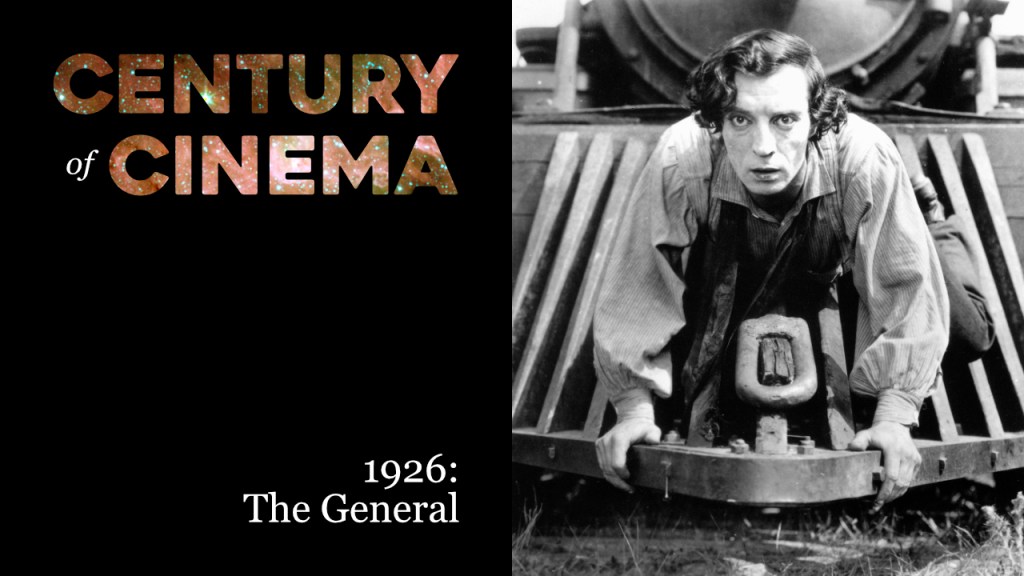
    With all that out of the way… Today’s film was The General (1926), the classic Buster Keaton comedy. Keaton stars as Johnnie Gray, a Confederate train engineer whose engine, the titular General, is hijacked by Union soldiers. Johnnie sets out to retrieve the train he loves, coincidentally rescuing the woman he loves (Marion Mack) along the way, and helping his side win the battle… if not, thankfully, the war!

    Buster Keaton’s deadpan screen persona makes him feel like the most modern of the legendary silent comedians, and his inventive use of the camera is surely the most cinematic of the bunch. I’m a huge fan, and The General was my introduction to his genius. It’s not my favourite of his films—not least because of the slightly uncomfortable Civil War aspect—but as a piece of cinema it’s incredible.

    Keaton’s daredevil stunts remain thrilling to this day. I feel a frisson every time I watch him use one railway sleeper to knock another off the tracks, all while perching perilously on the front of a moving train. A few years ago I was lucky enough to see the film on the big screen, with live musical accompaniment, and that moment still had the power to make an audience gasp, cheer and applaud. Rewatching it today didn’t quite match that magical big screen experience, but I still had a great time.

    An auspicious start to my Century of Cinema!

  • Day 40 of Project Glowing Rectangle, in which I try to divert some of my daily doomscrolling time back towards a more nourishing oblong: Cinema.

    Title: Varieté
    Director: E.A. Dupont
    Writer: E.A. Dupont, Leo Birinski
    Year: 1925
    Country: Germany

    Format: Blu-ray
    Length: 95 minutes
    Seen: 2 March 2026
    First viewing

    This afternoon’s film was Varieté (1925), a silent drama directed by E.A. Dupont. It stars Emil Jannings as a prisoner telling his tragic story to a warden. As his story begins, Jannings was a carnival boss and a retired trapeze artist. But when a young vamp (Lya de Putti) joins the carnival, her beauty tempts him away from his wife and daughter, back to highwire acrobatics. With Artinelli (Warwick Ward) they form a successful new trapeze trio—but the story inevitably ends in jealousy and tragedy.

    This is a fairly predictable tale of lust, infidelity and murderous revenge. But thanks to the inventive camerawork of Karl Freund (Metropolis, Dracula) and solid performances from the central cast, it’s surprisingly stirring. Not essential viewing but recommended if you’re in the mood for a lesser-known silent film.

    My copy came with a choice of three musical scores—which is just as well, because the first one I tried was so irritating, I restarted the film with different music after a couple of minutes! That first score was by the Tiger Lillies, featuring lyrics that narrate the plot, complete with spoilers. Thankfully the score by Stephen Horne was more traditional and less distracting.