Tag: silent cinema

  • Day 4 of Century of Cinema. Also day 46 of Project Glowing Rectangle, in which I try to divert some of my daily doomscrolling time back towards a more nourishing oblong: Cinema.
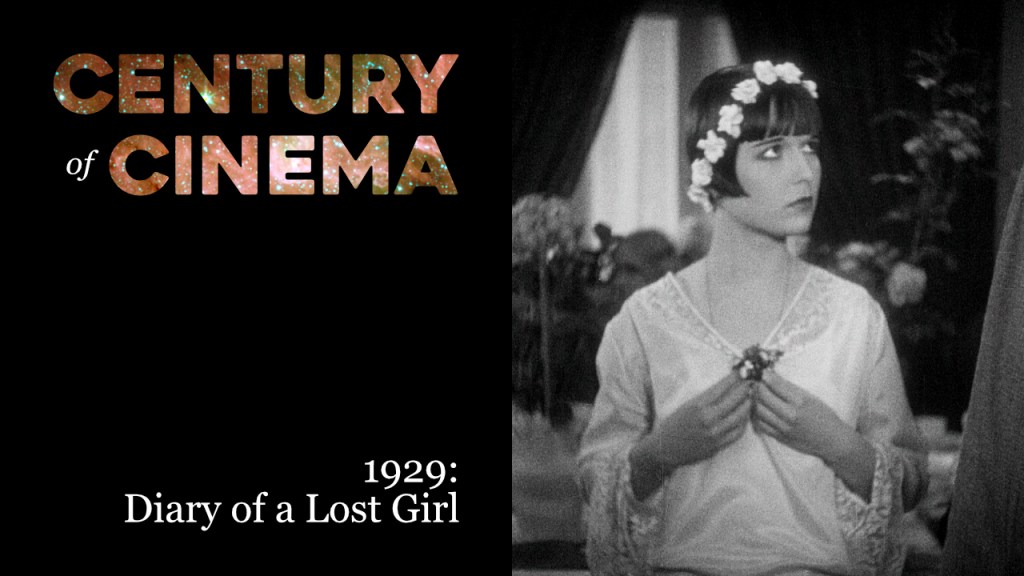
    Title: Diary of a Lost Girl
    Director: G.W. Pabst
    Writer: Rudolf Leonhard
    Year: 1929
    Country: Germany

    Format: Blu-ray
    Length: 113 minutes
    Seen: 23 March 2026
    Rewatch

    My collection doesn’t have many 1929 films, so today I had just three choices: Talkie comedy (the Marx Brothers’ debut film The Cocoanuts), silent sci-fi (Fritz Lang’s Frau im Mond), or silent drama. In the end, since it was the longest time since my last viewing, I picked the silent drama: Diary of a Lost Girl, directed by G.W. Pabst and starring Louise Brooks.

    Thymian (Brooks) is the young, naive daughter of a pharmacist (Josef Rovensky). When her father’s sleazy assistant (Fritz Rasp) gets her pregnant, Thymian is forced to give up her daughter. The family disowns young Thymian, sending her to a reformatory for wayward girls ruled by a sadistic matron (Valeska Gert).

    From then on the film is a relentless series of unfortunate events, a misery memoir with precious few joyful moments. Louise Brooks gives an understated, dignified performance that is never less than engaging—she obviously deserves her place in film history, and not just for her iconic style and bewitching beauty. But the film itself is just too grim for my taste. It sparks no joy and will soon be pruned from my collection!
  • Day 3 of Century of Cinema. Also day 43 of Project Glowing Rectangle, in which I try to divert some of my daily doomscrolling time back towards a more nourishing oblong: Cinema.

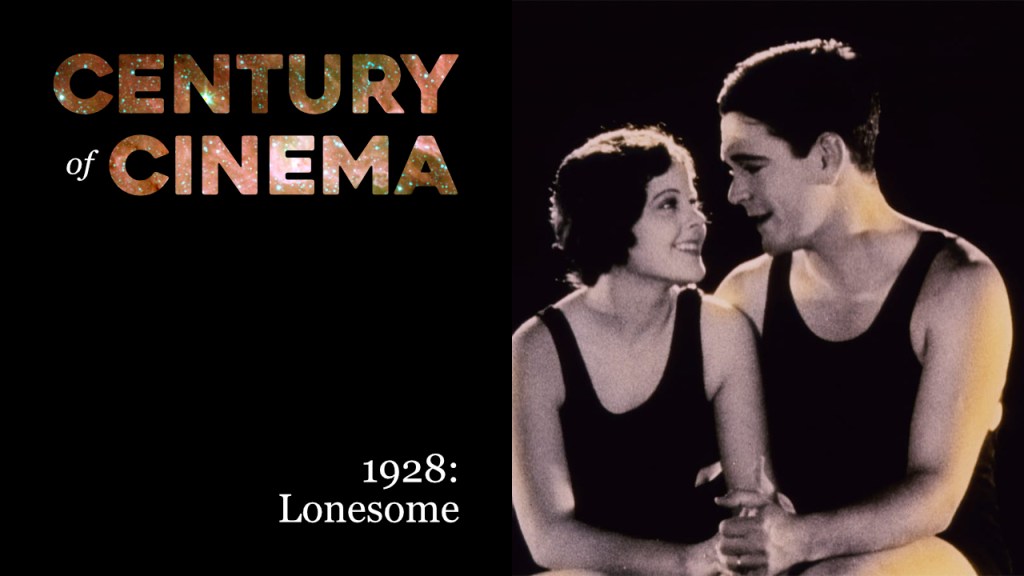
    Title: Lonesome
    Director: Paul Fejös
    Writer: Tom Reed, Edward T. Lowe Jr
    Year: 1928
    Country: USA

    Format: Blu-ray
    Length: 65 minutes
    Seen: 12 March 2026
    Rewatch

    Picking my 1928 film wasn’t quite as tricky as 1927… but it still wasn’t easy. I could easily rule out two Buster Keaton films (Steamboat Bill Jr and The Cameraman), since I started this whole project with Buster. And I eliminated Fritz Lang’s Spione (Spies) because I wasn’t in the mood for such a long film today. That left me with two possibilities. I was tempted by Speedy, a Harold Lloyd vehicle I’ve only seen once before. But in the end I went for Lonesome (1928), a mostly-silent romance directed by Paul Fejös.

    Among the crowds of New York City, Mary (Barbara Kent) and Jim (Glenn Tryon) each live alone. Every morning they rush to work, then come home at night to empty apartments. When the two meet by chance at Coney Island, it’s love at first sight. They spend a whirlwind evening together at the funfair, quickly confessing their love for one another. But when the pair are separated just as suddenly as they met, can they ever find each other again?

    Lonesome is a very sweet little film about two lonely people finding love. Fejös finds some visually creative ways to evoke the stress and drudgery of their busy workdays, as well as the chaos of the crowded funfair at which they meet. Some scenes have hand-tinted colour, adding an extra visual ‘pop’. The two stars make a cute couple onscreen, I found myself rooting for them immediately. But things grind to a halt during the studio-mandated talkie scenes. The roving camera is suddenly locked to one angle, the actors forced into stilted vocal performances that can’t match the charm of their expressive silent faces. Talkies were still very new at this point—and it shows!

    In many ways this is a good companion to Sunrise: A Song of Two Humans. Both films were made during the last gasp of silent cinema, both are very visually creative, and both centre on the fate of a couple. But while Sunrise is about a married couple repairing their broken relationship, Lonesome is a much lighter, sweeter film about the first flushes of love. I’d say Sunrise is a better constructed, more compelling film, but Lonesome certainly has its charm.

    It’s just a shame about those clunky talkie scenes.

  • Day 2 of Century of Cinema. Also day 42 of Project Glowing Rectangle, in which I try to divert some of my daily doomscrolling time back towards a more nourishing oblong: Cinema.

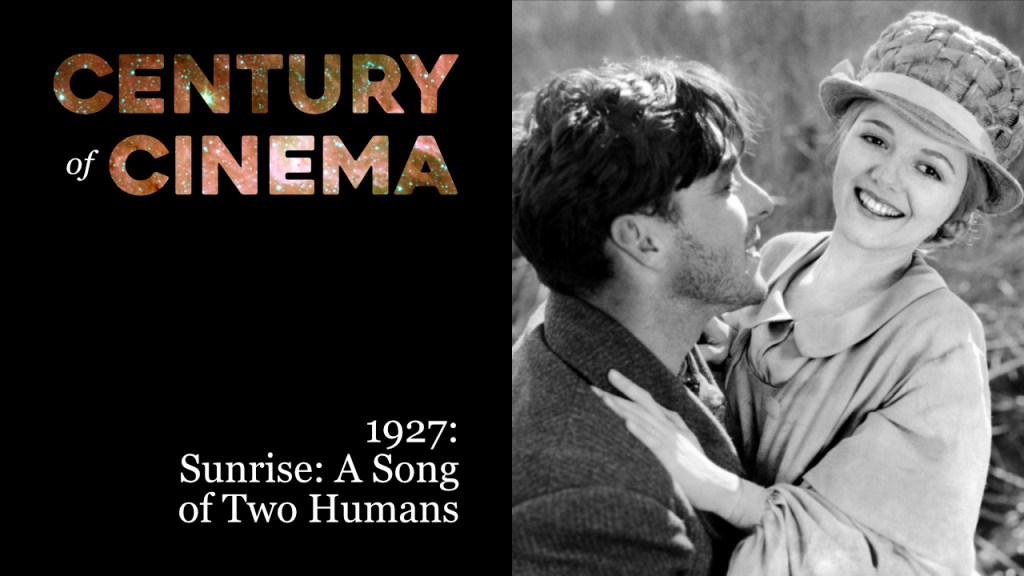
    Title: Sunrise: A Song of Two Humans
    Director: F.W. Murnau
    Writer: Carl Mayer
    Year: 1927
    Country: USA

    Format: Blu-ray
    Length: 95 minutes
    Seen: 6 March 2026
    Rewatch

    Picking a film for 1927 was tricky. This was the year that gave us the seminal sci-fi classic Metropolis, and the Oscars’ first Best Picture, Wings. But in the end I settled for the first American film by German Expressionist pioneer F.W. Murnau: Sunrise: A Song of Two Humans.

    A Man (George O’Brien) is seduced by a glamorous Woman From the City (Margaret Livingston), who persuades him to murder his Wife (Janet Gaynor). The Man takes his Wife out in a rowboat, planning to push her overboard. But as she cowers and pleads for mercy, he is stricken with guilt and cannot do the terrible deed. He begs her forgiveness, but can their fractured relationship be healed?

    Sunrise: A Song of Two Humans won three of the first ever Academy Awards. One was for cinematography, one for Janet Gaynor’s performance. Its third Oscar was in a category never since repeated: Unique and Artistic Picture. (I wish they’d bring that one back!) It’s almost a mirror image of another film I watched recently: Varieté. That film started with a man leaving his wife and ends in murder; this one starts with attempted murder and ends in reconciliation. I question whether reconciliation with a would-be murderer is really A Good Thing, but Sunrise is such a visually stunning piece of cinematic storytelling, I find myself swept along by it regardless.

    The film uses a variety of German Expressionist techniques to vividly evoke the characters’ emotional landscapes. There are too many enchanting images to count. I particularly love the shot of the Man surrounded by ghostly images of the Woman From the City, clinging to him seductively as he contemplates the murder of his Wife.

    Its use of sound is equally inventive. Despite being a “silent” film, it came with an early example of a synchronised soundtrack—no “talkie” dialogue, just music and occasional sounds effects. The music, like the imagery, overlaps different styles and tones to create complex sonic textures.

    Sunrise is an incredibly evocative film. Admittedly it has an uneven structure and a troubling central premise, but the sheer artistry of its construction kept me utterly beguiled.