Day 36 of Project Glowing Rectangle, in which I try to divert some of my daily doomscrolling time back towards a more nourishing oblong: Cinema.
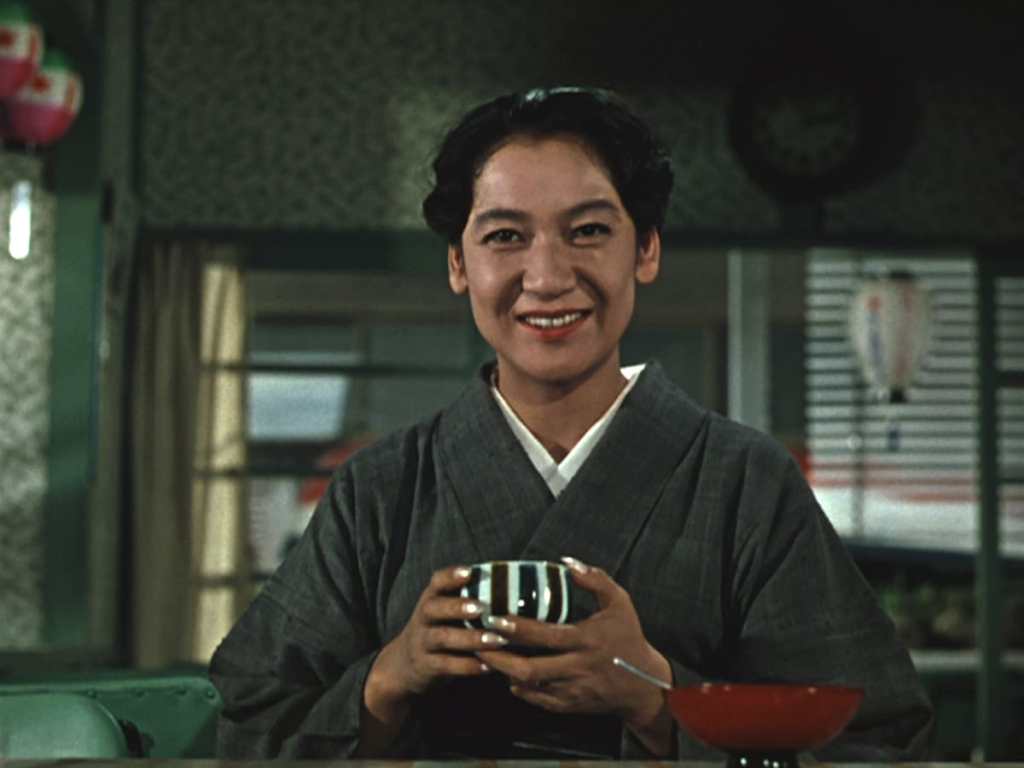
Title: Late Autumn Director: Yasujiro Ozu Writer: Kogo Noda, Yasujiro Ozu Year: 1960 Country: Japan
Format: Blu-ray Length: 128 minutes Seen: 10 February 2026 First viewing
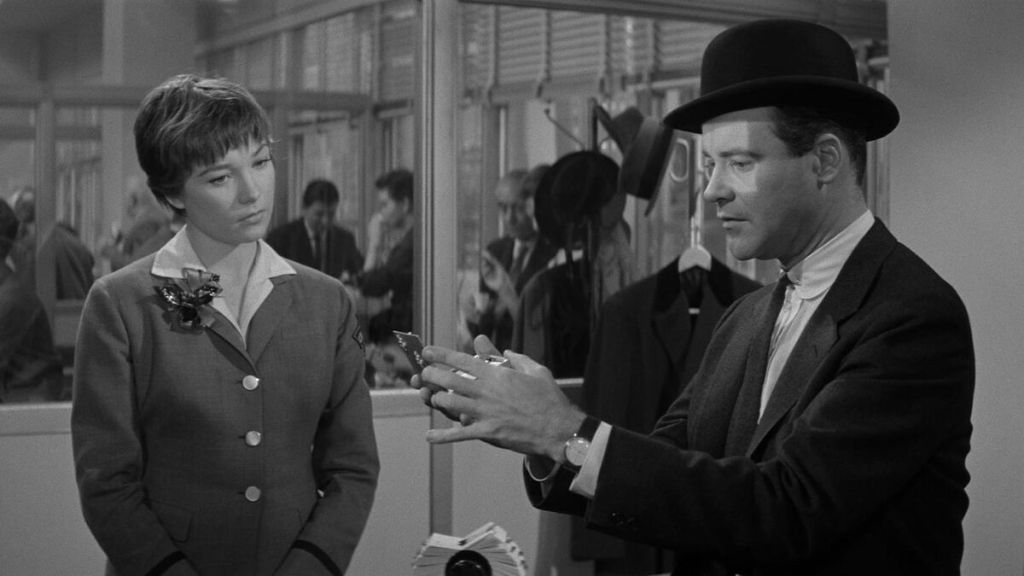
Late Autumn is one of Yasujiro Ozu’s last films. Setsuko Hara stars as Akiko Miwa, a widow living alone with her daughter Ayako (Yoko Tsukasa). Three old friends of the late Mr Miwa take it upon themselves to find Ayako a match, but she is hesitant to marry and leave her mother alone. Maybe the three meddling friends can solve that problem by finding a match for Akiko too…
This feels almost like a remake of Ozu’s 1949 film Late Spring: In that film Setsuko Hara played the marriageable daughter, but here she’s the widowed parent. (Chishu Ryu, her father in the earlier film, here plays her brother.) The film balances humour, sadness and social commentary, all in Ozu’s typical, quiet and delicate style—and starring many of his favourite actors. If you’re not already an Ozu devotee, I wouldn’t necessarily recommend this one as an introduction to his work. But if you’re already sold on Ozu, Late Autumn will certainly scratch that itch.
Day 35 of Project Glowing Rectangle, in which I try to divert some of my daily doomscrolling time back towards a more nourishing oblong: Cinema.
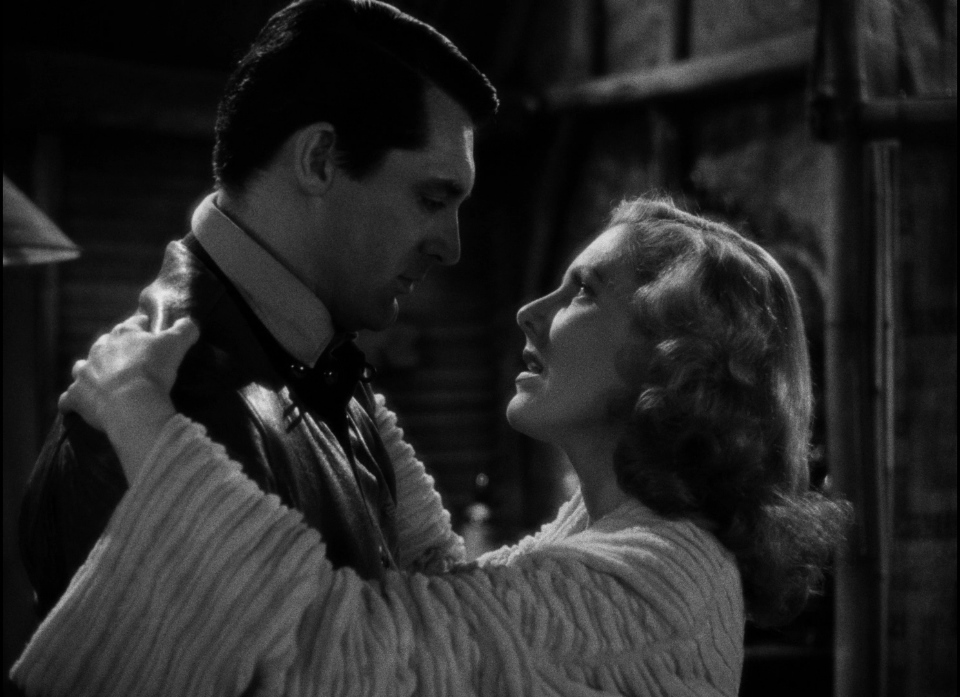
Title: Only Angels Have Wings Director: Howard Hawks Writer: Jules Furthman Year: 1939 Country: USA
Format: Blu-ray Length: 121 minutes Seen: 8 February 2026 Rewatch
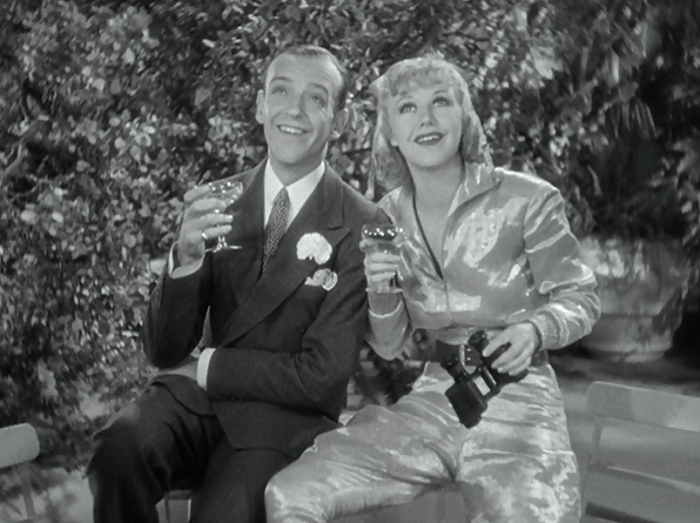
This afternoon’s film was Only Angels Have Wings (1939), a romantic drama directed by Howard Hawks. Cary Grant stars as Geoff Carter, chief pilot of a South American airmail company. The mail route is extremely risky; pilots are frequently killed, which gives the survivors a rather jaded, fatalistic attitude. But when visiting pianist Bonnie Lee (Jean Arthur) falls for Geoff, his determination not to be tied down is put to the test.
“I’m hard to get, Geoff. All you have to do is ask me.”
This film didn’t make a big impression on me when I first saw it about eight years ago. But this time around I was completely sold! The cast is great, especially the central performances by Arthur and Grant. I got fully wrapped up in the will-they-won’t-they romance between Geoff and Bonnie, as well as the fates of the various pilots. The gripping aviation scenes reminded me heavily of Antoine de Saint-Exupéry’s 1939 memoir Wind, Sand & Stars. And there’s a prominent supporting role for a young Rita Hayworth as the woman who once broke Geoff’s heart. Yep, this is good stuff!
Day 34 of Project Glowing Rectangle, in which I try to divert some of my daily doomscrolling time back towards a more nourishing oblong: Cinema.
Title: 42nd Street Director: Lloyd Bacon Writer: Rian James, James Seymour (Based on the novel by Bradford Ropes) Year: 1933 Country: USA
Format: DVD Length: 89 minutes Seen: 5 February 2026 Rewatch
42nd Street (1933) is a backstage musical following the cast and crew of ‘Pretty Lady’, a new show preparing to open on Broadway. The leading lady, Dorothy Brock (Bebe Daniels), is having an affair with the show’s financial backer (Guy Kibbee) whilst continuing to see her old vaudeville partner (George Brent) behind his back. And despite a string of successes, director Julian Marsh (Warner Baxter) is bankrupt thanks to the Great Depression, so he’s staking everything on ‘Pretty Lady’ being a hit. Into this high-pressure environment comes Peggy Sawyer (Ruby Keeler), a wide-eyed ingenue looking for her big break.
But the real star of the show is the legendary Hollywood choreographer Busby Berkeley. He’s responsible for the spectacular, kaleidoscopic dance routines that make 42nd Street so memorable. The musical numbers in the ‘Pretty Lady’ show-within-a-show don’t seem to make much sense or tell any kind of cohesive story… but they’re exactly the kind of spectacle I came to see.
Also there’s legs—lots of legs—a surfeit of legs! “After three weeks, a leg ain’t nothing to me but something to stand on.” Add a wisecracking supporting role from a pre-stardom Ginger Rogers and 42nd Street is a damn good time… despite most of the songs being utterly forgettable!
Title: Watership Down Author: Richard Adams Year: 1972 Country: UK
Format: Paperback Pages: 472 Read: 19 – 31 January 2026 First reading
Fiver, the runt of his litter, has visions. When an ominous man-made object appears in a nearby field, Fiver foresees the destruction of his warren—but the Chief Rabbit refuses to evacuate. Led by Fiver’s brother Hazel, a handful of plucky rabbits flee the warren and set out to make a new home on Watership Down. Along the way they cross hazardous streams, roads, predators, snares, and—worst of all—a ruthless, despotic rabbit called General Woundwort. It will take all of Hazel’s cunning, Fiver’s foresight and Bigwig’s courage to survive.
Watership Down is notorious for its power to traumatise young readers. This is a story about rabbits, but it’s a world away from the cute and cosy tales of Peter Rabbit. It’s part epic quest, part war story… it just happens to star rabbits. Richard Adams keeps the tension consistently high. During the whole thing I felt almost as highly-strung as those nervous bunnies! But the really upsetting, gruesome moments are carefully spaced out. One rabbit’s encounter with a snare is the only bit that truly shocked me—I read those paragraphs through tears. I can easily see how it would be Too Much for a preteen reader.
The story has a mythological quality, not least because the rabbits have their own folklore and language. Their name for the Sun, their God, is ‘Frith’. (As a fan of the experimental musician Fred Frith, this particularly tickled me!) The rabbits also boost their morale by sharing stories of El-arairah, a legendary trickster rabbit. These touches, along with the use of Lapine language, make the book rather immersive. It’s set on downland not far from my house, but it felt like another world entirely. By the end, those strange Lapine words had become second nature to me, so that I didn’t need any translation for Bigwig’s war cry: “Silflay hraka, u embleer rah!”
There’s a lot to love about Watership Down. It’s a thrilling story, engagingly told, with memorable characters and strong commentary about mankind’s relationship with the natural world. The structure is very satisfying: Each obstacle teaches the rabbits a valuable lesson (wood floats in water, rope can be chewed through, etc) which helps them defeat the next. My only real complaint is that it’s maybe a little too long. I enjoyed it and admired it, but by the end I was ready for it to be over. I’d still definitely recommend it though… as long as you’re not too squeamish!
Title: Excellent Women Author: Barbara Pym Year: 1952 Country: UK
Format: E-book Pages: 304 Read: 20 – 30 January 2026 First reading
Mildred Lathbury is one of life’s “excellent women”, those ladies who devote their lives to Good Works and consequently get taken for granted. They make life run smoothly for the men around them, but never set anyone’s pulse racing. But Mildred’s humdrum life is suddenly complicated by the arrival of her new downstairs neighbours; anthropologist Helena Napier and her charming husband Rocky. The couple’s marriage is on the brink of collapse, and Helena pines instead for her anthropology colleague Everard Bone. Mildred finds herself drawn to the dazzlingly handsome Rocky, but remains wary of his (probably empty) charm—not to mention the impossibility of an affair with a married man.
I loved Barbara Pym’s debut novel, Some Tame Gazelle, so much that I picked up her second book almost immediately. The two books share much in common; they’re both bittersweet comedies of manners about spinsters who seem more comfortable at a safe distance from romance. One character from the first book even makes a cameo in this one! It definitely scratched my itch for more Pym, but I can’t help feeling I should’ve waited longer to read it. You can have too much of a good thing, and I think I read too much Pym in quick succession. As a result I didn’t enjoy this book nearly as much as it probably deserved. I still want to read more Pym, but first I’ll give myself a chance to start missing her.
Day 33 of Project Glowing Rectangle, in which I try to divert some of my daily doomscrolling time back towards a more nourishing oblong: Cinema.
Title: Almost Famous (The ‘Untitled’ Cut) Director: Cameron Crowe Writer: Cameron Crowe Year: 2000 Country: USA
Format: 4K Blu-ray Length: 161 minutes Seen: 3 February 2026 Rewatch
Almost Famous (2000) follows fifteen-year-old William Miller (Patrick Fugit), an aspiring rock journalist who goes on tour with the fictional band Stillwater. William befriends band members, roadies, and fans alike—including the famed “band aide” Penny Lane (Kate Hudson)—and witnesses firsthand their decadent rock and roll lifestyle. Meanwhile William’s strait-laced mother (Frances McDormand) grows increasingly concerned as she waits for him to come home.
This film is a heartfelt tribute to the music of Cameron Crowe’s youth, inspired by his own experiences as a teenage rock journalist. It’s a film powered by nostalgia; and it was a huge favourite of my teenage self, meaning I now have my own nostalgia for it. I first saw it when I was around William’s age, and probably just as wide-eyed as he was. Rewatching it today was a potent emotional experience. My favourite scenes still hit deep: ‘Tiny Dancer’ had me in floods of tears just like it did 25 years ago. And I love the scenes with Philip Seymour Hoffman as William’s mentor, Lester Bangs.
“The only true currency in this bankrupt world is what we share with someone else when we’re uncool.”
Is it a perfect film? Probably not. Did I love every second? Absolutely!
(Fun fact: I once watched Almost Famous as an in-flight movie. Considering the climactic electrical storm scene, this was probably not a great idea…)
Day 32 of Project Glowing Rectangle, in which I try to divert some of my daily doomscrolling time back towards a more nourishing oblong: Cinema.
Title: The Life of Oharu Director: Kenji Mizoguchi Writer: Kenji Mizoguchi, Yoshikata Yoda (based on stories by Saikaku Ihara) Year: 1952 Country: Japan
Format: Blu-ray Length: 136 minutes Seen: 29 January 2026 First viewing
It’s been a disruptive few weeks, but things have finally settled down enough for me to watch a film: The Life of Oharu (1952), a period drama directed by Kenji Mizoguchi. Kinuyo Tanaka stars as the eponymous Oharu, whose life is one of ever-increasing misery. We are introduced to her as a fiftysomething prostitute, walking the streets and struggling to find a client. She takes shelter in a Buddhist temple where the statues’ faces remind her of figures from her past. What follows is the heartrending story of how she fell from a life of nobility to one of such hardship.
First an affair with a lowly retainer (Toshiro Mifune) ends with her lover executed and her family banished. Then her father sells her, first to a Lord as a mistress to bear him a child, and later to a pleasure district as a courtesan. From there things only get worse for Oharu, almost always due to circumstances beyond her control. But the film does end with the faintest glimmer of hope… at least if you subscribe to Buddhist philosophy.
You’re bought and paid for. You’re no different from a fish on a chopping board. We can serve you up any way we like.
This was my second Mizoguchi film: Ugetsu (also starring Tanaka) was a highlight of last year. Both films are beautifully directed, very gripping, and intensely emotional. But while Ugetsu is a spine-tingling, supernatural tale, The Life of Oharu is horribly realistic. Oharu’s suffering comes not from personal hubris or ghostly tricks, but from the cruel treatment of other people—mainly men. Throughout the whole film I found myself bristling at the sheer injustice of it all.
Kinuyo Tanaka is brilliant in the title role. I’ve seen her in several films recently, each one displaying a different facet of her talent. (She was also one of Japan’s first female directors, so I’m excited to explore that side of her work too.) As far as Mizoguchi goes I definitely preferred Ugetsu, but I can’t deny this film’s power—it left my heart feeling, like a fish on a chopping board, rather battered!
Title: Moominvalley in November (Moomins #9) Author: Tove Jansson (Translated by Kingsley Hart) Year: 1970 Country: Finland
Format: E-book Pages: 160 Read: 11 – 19 January 2026 First reading
Moominvalley in November is the final book in Tove Jansson’s Moomins series. The Moomin family themselves don’t actually appear, having moved suddenly in the previous book to a remote lighthouse. Instead this book follows a disparate group of visitors who are disappointed to find the Moomin family home abandoned. The visitors (including Moomintroll’s mercurial bestie Snufkin) stay for a while, hoping for the family to return, while gradually learning how to be comfortable with each other… and with themselves.
Snufkin padded along calmly, the forest closed round him and it began to rain. The rain fell on his green hat and on his raincoat, which was also green, it pittered and pattered everywhere and the forest wrapped him in a gentle and exquisite loneliness.
The Moomins books always did have a streak of melancholy, but in this one it’s more pronounced than ever; most likely influenced by Tove Jansson’s grief at the loss of her mother. The Moomin family’s absence is keenly felt, especially by the young orphan Toft, a storyteller who yearns to be adopted by Moominmamma. Then there’s Grampa-Grumble, who has decided to make the most of his dementia by deliberately forgetting his family; and Fillyjonk, who struggles with anxiety after a near-death experience.
These are troubled characters—and they don’t always understand, or openly express, their troubles. The whole book (apart from its quietly hopeful ending) is shrouded in sadness, loneliness, and unspoken loss. I can’t guess how younger readers would react to such a book, but my melancholic inner child (and my equally melancholic adult self) found it a moving and absorbing read. I love that Tove Jansson never patronises her readers. She trusts them to understand what remains unspoken.
I’m sad to have reached the end of the Moomins series, but it certainly ended on a high note—albeit in a minor key. I still plan to circle back and read the very first book, so my personal journey through Moominvalley isn’t quite finished. (And the comic book series is starting to look mighty tempting too!) Ever since I read Comet in Moominland back in April of ’25, I’ve fallen completely in love with the Moomins. I fully expect to reread the whole series in the coming years.
Rocannon’s World is Ursula K. Le Guin’s debut novel and the first in her loosely-connected Hainish series. It follows Gaveral Rocannon, an ethnographer for the League of All Worlds. When anti-League rebels attack and destroy his ship, Rocannon is stranded on the alien planet of Fomalhaut II. The planet is home to multiple intelligent (but technologically primitive) species, each with their own unique social structures and customs. Rocannon, aided by a diverse group of Fomalhaut natives, goes on a dangerous quest to contact the League and end the rebellion.
Rocannon’s World is ostensibly a sci-fi novel, but the whole thing is steeped in fantasy. Rocannon comes from a hi-tech world of interstellar travel, ansible communication, and weapons of mass destruction; but he’s stuck on a planet of feudal lords and heroic quests. I’m not opposed to such a blend of genres, but I don’t think Le Guin quite pulls it off here. The book establishes many of her enduring themes, but with little of her best work’s profundity or poetic brilliance. It didn’t take her too long to hone her skills, but Rocannon’s World is very much A First Attempt. As an established fan, I enjoyed it the same way I enjoy listening to early demos by my favourite bands: It’s interesting in context, but I wouldn’t recommend it for first-time readers of Le Guin.
My favourite part of the book is the prologue, which was first published as a separate short story. In fact the story, Semley’s Necklace, was included in Le Guin’s anthology The Wind’s Twelve Quarters, which I read just a few months ago. It was fascinating to read the story both as its own thing and the introduction to a longer work. That gave me some insight into Le Guin’s creative process—glimpsing the seeds from which she grew an entire universe.
I read Rocannon’s World as part of a group reading project led by my BookTube friend Gareth (Books Songs and Other Magic). We’ll be reading all of Le Guin’s Hainish books during the year, discussing them in the group chat as we go. It’s been a great experience so far—my fellow readers have shared some valuable insights into the book and Le Guin’s career as a whole. Gareth also plans to host live-chat videos about each book, so be sure to tune your ansible devices accordingly!
Title: Star Trek: Enterprise Year: 2001-05 Country: USA
Format: Blu-ray Seasons: 4 Episodes: 98 Seen: 9 August 2025 – 16 January 2026 First viewing (mostly)
Captain’s Blog: Back in August of ’25, a few weeks before I started Project Glowing Rectangle, I also started a months-long telly-watching project. On days when I don’t have the time, energy or inclination to watch a film but I still need something to lure me away from doomscrolling, my main Thing To Watch has been Star Trek: Enterprise. It has seen me through some rough times and big changes these past five months. And yesterday I watched the final three episodes.
I had seen a handful of Enterprise eps when they originally aired—T’Pol made a big impression on my adolescent self! But this was my first time watching the entire series. Overall I enjoyed it… but it did play everything very safe. Maybe this is inevitable for a prequel series; it had to slot into the existing Star Trek continuity, so it could never take big swings. The riskiest aspect of the whole show was the theme tune, a godawful country power ballad that I ended up skipping for most of the run.
The cast is decent but mostly pretty bland. Being something of an outsider myself—let me count the ways!—naturally I’m most drawn to Star Trek’s outsider characters. I was spoilt for choice with Deep Space Nine, but there’s slim pickings on Enterprise. Jonathan Archer (Scott Bakula), a dog dad and water polo fan, is easily the least interesting of all the pre-streaming Star Trek captains. The standouts for me are the two alien crew members, science officer T’Pol (Jolene Blalock) and Dr Phlox (John Billingsley), but even they don’t get to shine as often as I would like. I also enjoyed the recurring character Commander Shran (Jeffrey Combs), an Andorian who keeps trading favours with Archer. Jeffrey Combs’ many, many guest appearances were a highlight of DS9, so I was happy to see him again here.
Enterprise has none of the truly atrocious episodes that make me yell at the telly, ‘WTF was that?!’ (I’m looking at you, Sub Rosa…) Equally there are none of the stunning, profoundly moving stories that make me rejoice to be a fan of Star Trek. There’s nothing here that approaches the level of Darmok, The Inner Light, The Visitor, or Far Beyond the Stars. But maybe it’s unfair to ask lightning to strike twice. Or even once!
The high point for me was season 2, episode 2: Carbon Creek, in which a Vulcan crew—including T’Pol’s great-grandmother (also played by Jolene Blalock)—is stranded on 1950s Earth. It’s quite telling that the best episode was one that didn’t involve the regular crew at all, aside from the framing device of T’Pol relating the story over dinner. But if you watch only one episode of Enterprise, make it this one.
I also enjoyed the third season, a completely serialised story about the Xindi plot to destroy Earth. This was something unique for pre-streaming Trek, and I think they pulled it off. After that, the final season reverted to more episodic storytelling; not in itself a bad thing, but a lot of these two- or three-part stories felt like desperate fan service. There’s a two-parter devoted to explaining why Original Series Klingons had smooth foreheads. Give me a break!
The final episode, These Are the Voyages…, is notoriously detested by fans. The whole thing is a holodeck simulation run by Riker, taking place in the middle of a Next Generation episode. As a finale to Enterprise, it doesn’t really work. As a celebration of Star Trek in general, it… doesn’t really work either. I didn’t hate it like the fandom seems to, but I agree the preceding two-parter is a more fitting and emotionally resonant finale to Enterprise.
So yeah… all in all, a pretty middling iteration of Star Trek. Not much I hated, but not much I really loved. It felt like a show that could never fully decide what it wanted to be. But it was nice to see some new-to-me Trek with a substantial number of episodes per season. Enterprise has been a good companion to me these past five months, for which I’m grateful.