Tag: film reviews

  • Day 5 of Century of Cinema. Also day 48 of Project Glowing Rectangle, in which I try to divert some of my daily doomscrolling time back towards a more nourishing oblong: Cinema.
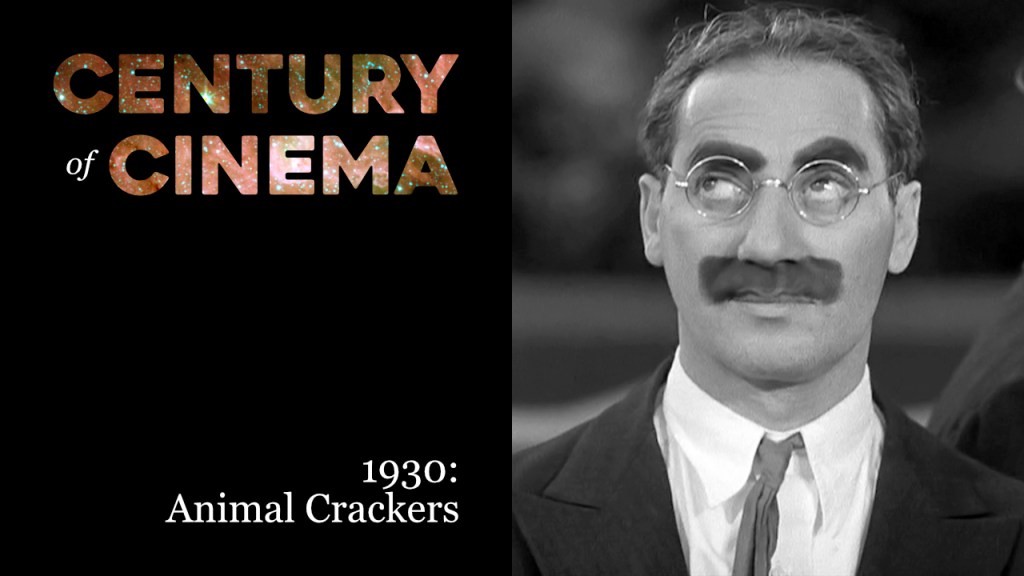
    Title: Animal Crackers
    Director: Victor Heerman
    Writer: Morrie Ryskind
    Year: 1930
    Country: USA

    Format: Blu-ray
    Length: 99 minutes
    Seen: 22 April 2026
    Rewatch

    I haven’t made much time for films this past month, but today I finally resumed my Century of Cinema project with Animal Crackers (1930), a Marx Brothers musical comedy directed by Victor Heerman. The first full talkie of the project!

    As with most Marx Brothers films, the plot is largely irrelephant. The action takes place at a high society party, hosted by Mrs Rittenhouse (Margaret Dumont), to celebrate the return of the famous explorer Captain Jeffrey T. Spaulding (Groucho)—the T. stands for Edgar. Also at the party are Signor Emanuel Ravelli (Chico) and the Professor (Harpo), a pair of musicians and petty criminals. The two of them get involved in a scheme to steal a valuable painting and replace it with a fake. But when some other guests hit upon a similar plan, all three paintings go missing and chaos ensues.

    Captain Spaulding: One morning I shot an elephant in my pajamas. How he got in my pajamas, I don’t know.

    Is Animal Crackers a perfect film? No. Did I have a great time watching it? Yes! The Marx Brothers’ madcap antics never fail to delight me. Groucho’s quickfire quips come at a dizzying pace, complemented perfectly by Chico’s malapropisms and Harpo’s silent slapstick. (Zeppo is also there.) Margaret Dumont is the perfect ‘straight man’ amid all the chaos: the stern and stately authority figure for all the Marxes (Groucho especially) to undermine. Then there’s the musical interludes. Chico’s fancy fingerwork on the piano always makes me grin, as does Harpo’s harping. It’s a welcome respite from the otherwise constant madcap energy.

    Animal Crackers, being an early talkie and an adaptation of a stage play, has a certain ‘stagey’ quality that might put off some viewers. It took me a few minutes to tune back into that frequency myself. But once I got there, the smile never left my face.

    ~

    On a personal note: I plan to continue blogging Century of Cinema, but I will probably do less blogging of my general film-viewing. The self-imposed pressure of blogging every film I watch has discouraged me from actually watching films, which is supposed to be a relaxing activity to re-centre myself. So from now on I plan to reclaim films as a leisure activity.
  • Day 4 of Century of Cinema. Also day 46 of Project Glowing Rectangle, in which I try to divert some of my daily doomscrolling time back towards a more nourishing oblong: Cinema.

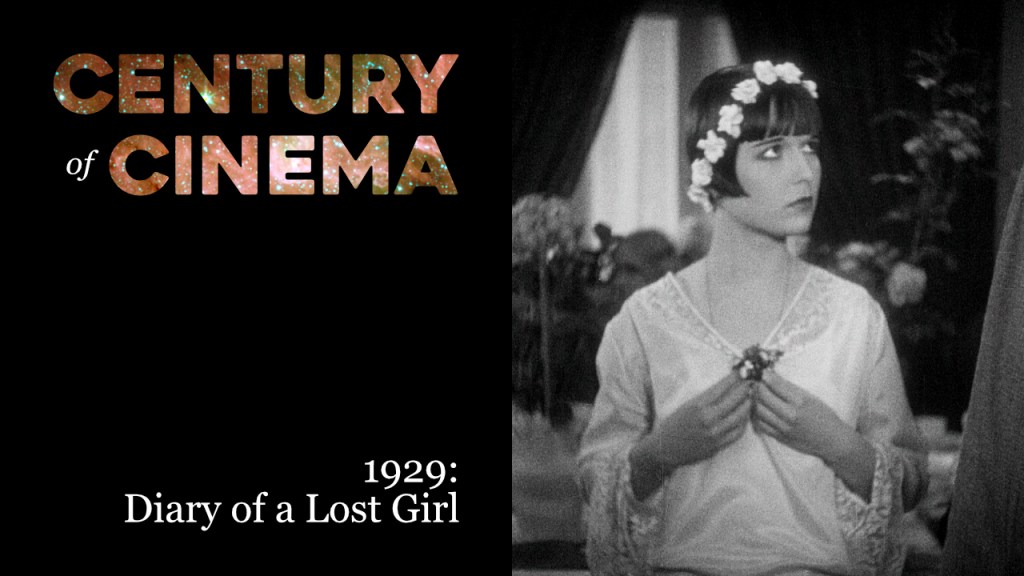
    Title: Diary of a Lost Girl
    Director: G.W. Pabst
    Writer: Rudolf Leonhard
    Year: 1929
    Country: Germany

    Format: Blu-ray
    Length: 113 minutes
    Seen: 23 March 2026
    Rewatch

    My collection doesn’t have many 1929 films, so today I had just three choices: Talkie comedy (the Marx Brothers’ debut film The Cocoanuts), silent sci-fi (Fritz Lang’s Frau im Mond), or silent drama. In the end, since it was the longest time since my last viewing, I picked the silent drama: Diary of a Lost Girl, directed by G.W. Pabst and starring Louise Brooks.

    Thymian (Brooks) is the young, naive daughter of a pharmacist (Josef Rovensky). When her father’s sleazy assistant (Fritz Rasp) gets her pregnant, Thymian is forced to give up her daughter. The family disowns young Thymian, sending her to a reformatory for wayward girls ruled by a sadistic matron (Valeska Gert).

    From then on the film is a relentless series of unfortunate events, a misery memoir with precious few joyful moments. Louise Brooks gives an understated, dignified performance that is never less than engaging—she obviously deserves her place in film history, and not just for her iconic style and bewitching beauty. But the film itself is just too grim for my taste. It sparks no joy and will soon be pruned from my collection!

  • Day 3 of Century of Cinema. Also day 43 of Project Glowing Rectangle, in which I try to divert some of my daily doomscrolling time back towards a more nourishing oblong: Cinema.

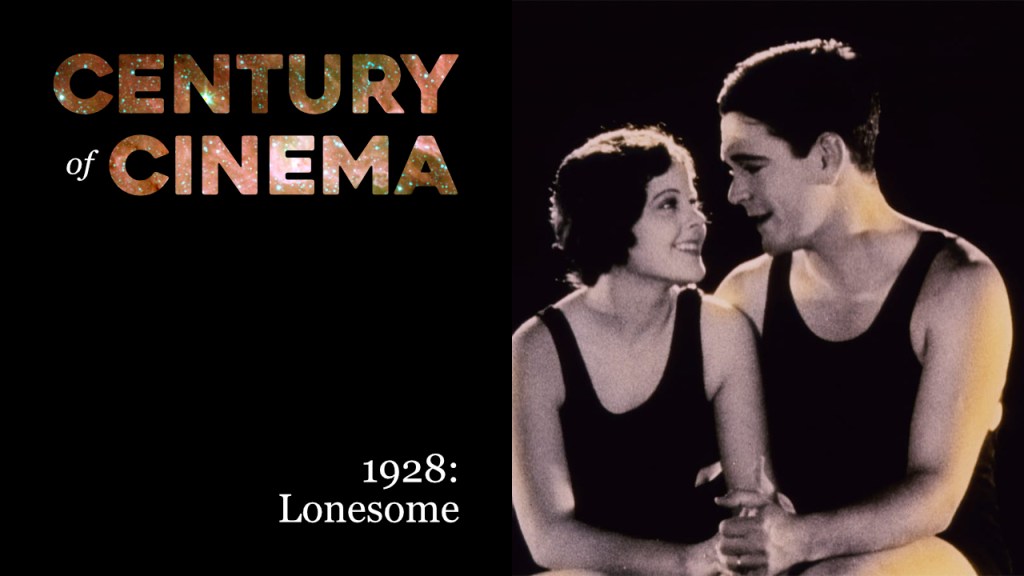
    Title: Lonesome
    Director: Paul Fejös
    Writer: Tom Reed, Edward T. Lowe Jr
    Year: 1928
    Country: USA

    Format: Blu-ray
    Length: 65 minutes
    Seen: 12 March 2026
    Rewatch

    Picking my 1928 film wasn’t quite as tricky as 1927… but it still wasn’t easy. I could easily rule out two Buster Keaton films (Steamboat Bill Jr and The Cameraman), since I started this whole project with Buster. And I eliminated Fritz Lang’s Spione (Spies) because I wasn’t in the mood for such a long film today. That left me with two possibilities. I was tempted by Speedy, a Harold Lloyd vehicle I’ve only seen once before. But in the end I went for Lonesome (1928), a mostly-silent romance directed by Paul Fejös.

    Among the crowds of New York City, Mary (Barbara Kent) and Jim (Glenn Tryon) each live alone. Every morning they rush to work, then come home at night to empty apartments. When the two meet by chance at Coney Island, it’s love at first sight. They spend a whirlwind evening together at the funfair, quickly confessing their love for one another. But when the pair are separated just as suddenly as they met, can they ever find each other again?

    Lonesome is a very sweet little film about two lonely people finding love. Fejös finds some visually creative ways to evoke the stress and drudgery of their busy workdays, as well as the chaos of the crowded funfair at which they meet. Some scenes have hand-tinted colour, adding an extra visual ‘pop’. The two stars make a cute couple onscreen, I found myself rooting for them immediately. But things grind to a halt during the studio-mandated talkie scenes. The roving camera is suddenly locked to one angle, the actors forced into stilted vocal performances that can’t match the charm of their expressive silent faces. Talkies were still very new at this point—and it shows!

    In many ways this is a good companion to Sunrise: A Song of Two Humans. Both films were made during the last gasp of silent cinema, both are very visually creative, and both centre on the fate of a couple. But while Sunrise is about a married couple repairing their broken relationship, Lonesome is a much lighter, sweeter film about the first flushes of love. I’d say Sunrise is a better constructed, more compelling film, but Lonesome certainly has its charm.

    It’s just a shame about those clunky talkie scenes.